
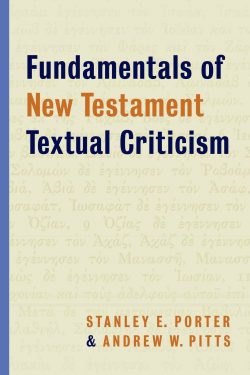
Fundamentals of New Testament Criticism
DESCRIPTION
theWord Features
- Verse popups
- Footnote popups
- Terms explained popups
- Fully searchable text
- Easy navigation via topics tree display.
- Special Text Colors
- Normal: Text
- Hyperlink: Nom | Rev. 7:12
- Page Number: [pg 21>
- Latin: exempli gratia
- Transliteration: ang-gelos
- Greek: σωμάτων
- Hebrew: א
Neue Genfer Übersetzung (NGU)
Ja! Schon wieder eine neue Bibelübersetzung. Vielleicht fragen Sie sich, ob wir wirklich wissen, was wir tun. Da können wir Sie beruhigen. Seit bereits 15 Jahren sind wir davon überzeugt, dass wir genau das Richtige tun. In den Jahren 2000 und 2003 erschienen erste Teilausgaben des Neuen Testaments der NGÜ und wir haben seitdem viele begeisterte Menschen kennen gelernt, die uns bestätigt haben, dass unsere Arbeit richtig ist.
Andere Übersetzungen sind oft schwerer verständlich, da sie entweder eine eher altertümliche Sprache verwenden oder eine sehr moderne Sprache benutzen, inhaltlich aber relativ weit vom Originaltext entfernt sind. Wir wollen, dass Sie die Botschaft der Bibel besser verstehen können. Deswegen ist es uns wichtig, so urtexttreu wie möglich zu sein, ohne die Verständlichkeit zu vernachlässigen.
Mit der NGÜ können Sie nun das gesamte Neue Testament in der Sprache von heute lesen. Leicht verständlich und lesefreundlich gestaltet. Höchste inhaltliche und sachliche Genauigkeit erschließen Ihnen neue Dimensionen bei der Lektüre. Entdecken Sie das Neue Testament ganz neu!
Website des Herausgebers: http://www.societebiblique.com/
The New King James Bible (NKJV)
The New King James Version is a total update of the 1611 King James Version, also known as the “Authorized Version.” Every attempt has been made to maintain the beauty of the original version while updating the English grammar to contemporary style and usage. The result is much better “readability.” It is noteworthy that the NKJV is one of the few modern translations still based on the “Western” or “Byzantine” manuscript tradition. This makes the New King James Version an invaluable aid to comparative English Bible study.
Commissioned in 1975 by Thomas Nelson Publishers, 130 respected Bible scholars, church leaders, and lay Christians worked for seven years to create a completely modern edition of the King James Version that would continue the classic tradition of the original King James. With unyielding faithfulness to the original Greek, Hebrew, and Aramaic texts, the translators applied the most recent research in archaeology, linguistics, and textual studies. The resulting work provides today’s Bible reader with an accurate and modern translation of the Scriptures with the stylistic beauty and memorable quality of the King James.
Reina Valera 1960 Biblia
La mayoría del mundo hispano usa la Reina Valera 1960. Es una Biblia que fue traducida antes del Rey Jaime (King James Version), y los traductores del Rey Jaime hicieron referencia a la Reina Valeria en hacer su obra en inglés.
The Message
PRODUCT HIGHLIGHTS:
- Includes passage headings, paragraph and poetry indentations, italic words
DESCRIPTION
Many people assume that a book about a holy God should sound elevated, stately, and ceremonial. If this is how you’ve always viewed the Bible, you’re about to make a surprising discovery. The Message brings the life-changing power of the New Testament, the vibrant passion of the Psalms, and the rich, practical wisdom of Proverbs into easy-to-read modern language that echoes the rhythm and idioms of the original Greek and Hebrew.Written in the same kind of language you’d use to talk with friends, write a letter, or discuss politics, The Message preserves the authentic, earthy flavor and the expressive character of the Bible’s best-loved books. Whether you’ve been reading the Bible for years or are exploring it for the first time, The Message will startle and surprise you. And it will allow you to experience firsthand the same power and directness that motivated its original readers to change the course of history so many centuries ago.
Eugene Peterson, translator and editor, set out to give us that word in language we use every day, a reading Bible that would enable the Word to penetrate our hearts and minds, transforming us day by day into the person God desires us to become. Features:
- Written in clear, direct language that brings the Bible to life
- Covers all 66 books of the Bible
- A paraphrase from the original Hebrew and Greek languages
God’s Word to the Nations
Description
Why Choose GOD’S WORD?
As a Bible reader, you should be confident that your Bible helps you to know God. To impact your spiritual growth and learn how the Bible applies to your life, you need a Bible translation that’s accurate, understandable, and relevant.
With so many translations available, how can you know which one is right for you? We believe you deserve a Bible that brings God’s saving truths to life for today’s world. When you choose the GOD’S WORD Translation, you can trust that the words you read are true to their meaning in the ancient texts.
This is the Bible that speaks in today’s English so people of all ages—including second-language learners—can study and comprehend it. You will hear God’s voice clearly from an easy-to-read, easy-to-understand Bible.
Don’t miss out on a closer relationship with God and profound spiritual growth by reading an out-of-date translation, filled with theological jargon instead of clear, natural English.
Imagine how deep your faith will grow when you read the GOD’S WORD Translation Bible!
theWord Features
• Fully searchable text
• Footnotes (F key toggles)
• Cross-references (X key toggles)
• Passage Headings (H key toggles)
• Paragraph formatting or Verse-per-line (P key toggles)
A Short Guide to the Pronunciation of New Testament Greek
DESCRIPTION
What did the apostles’ Greek sound like?
How should New Testament Greek be pronounced in our classrooms? Often students are taught Erasmian pronunciation, which does not even reproduce Erasmus’s own pronunciation faithfully, let alone that of the New Testament authors. But if we want to process the language of the New Testament the same way its original authors and readers did, we should use their pronunciation. In his new book, Benjamin Kantor breaks a path toward an authentic pronunciation of Koine Greek at the time of the New Testament, seeking to improve students’ reading proficiency.
A Short Guide to the Pronunciation of New Testament Greek distills Kantor’s new monograph, The Pronunciation of New Testament Greek, with an eye toward practical instruction. The first comprehensive phonological and orthographic study of Judeo-Palestinian Koine Greek, The Pronunciation of New Testament Greek surveys thousands of inscriptions and papyri to determine historical pronunciation. A Short Guide gives students an overview of the basics of phonology before explaining the pronunciation of each Greek letter and phoneme individually. Perfect for classroom use, this guide explains Kantor’s cutting-edge research accessibly and includes sample texts for reading practice.
theWord Features:
- Chapter and named-section topic navigation
- Searchable chapter text
- Greek, transliteration, IPA, and pronunciation tables
- Greek and Hebrew language examples
- Exact single-footnote popups
- Internal cross-references
- Native tables and images
- Special Text Colors
- Normal: Text
- Internal link: The International Phonetic Alphabet
- Greek: λόγχη
- Transliteration: lonχi(-yoθ)
- IPA: [x] / [χ]
- Hebrew comparison: לוֹנְכִֿייוֹתֿ
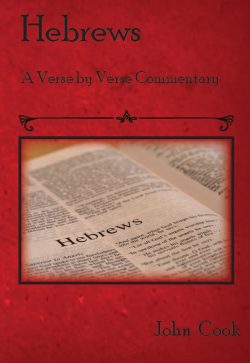
Hebrews a verse by verse commentary by John Cook
Description
John Cook was a true son of Texas. Born here in 1954, John grew up in a Christian family and was riding bulls in rodeos while still in high school. After graduation, John honorably served in the Army, in both South Korea and Germany. Following his enlistment in the Army, John returned to Texas, got married and moved to Oklahoma to work in the oil fields while raising a family.
John Cook was also a true, born again, child of God. He and his wife Pam raised their children in the church and it was during this period of his life that John started questioning some of the teachings coming from the pulpit in his church.
However, he did not feel qualified to debate these teachings with the pastor. This was when he decided it was time to go to Bible college.
John arrived at Tyndale Theological Seminary and Biblical Institute about six months after I did. As students, sharing many of the same classes, and as members of Seminary Bible Fellowship Church (later renamed Tyndale Bible Church), we quickly became friends. Little did we know that, together, we would pursue bachelors, masters, and doctoral degrees.
Throughout our course of studies, John took particular interest in the biblical languages and Latin. Tyndale has always emphasized the study of the original biblical languages: Hebrew, Aramaic and Greek, but John pursued additional studies past those required by his program, eventually taking, I believe, every language course offered, including those from guest lecturers.
His greatest love was biblical Greek, and during his course of studies, John started working at Tyndale as the school Registrar. After graduation he began teaching Greek and Theology to undergraduate, graduate, and seminary level students.
John rose to become Vice President of Tyndale Theological Seminary and, to help our educational efforts, moved with his wife, Pam, to Louisiana, where he established and oversaw a branch campus of Tyndale for a few years before he retired. He came back to Texas, but our Lord saw fit to take our brother to his heavenly home at the young age of 58.
It was during his years at Tyndale that John wrote this commentary on the book of Hebrews. Even to an excellent Greek exegete like John, the book of Hebrews presents its challenges, not the least of which is deciding on who the author was and to whom it was written: unsaved Jews, saved Jews, or a combination of both.
These were the types of challenges that John liked the most, and in this volume you will find an excellent commentary, worthy of your time, written by my friend and colleague, whom I look forward to seeing again!
Patrick E. Belvill
Hurst, Texas
“Now the God of peace, that brought again from the dead our Lord Jesus, that great shepherd of the sheep, through the blood of the everlasting covenant,
Make you perfect in every good work to do his will, working in you that which is wellpleasing in his sight, through Jesus Christ; to whom be glory for ever and ever. Amen.” Heb. 13:20-21
John Cook (1954-2012) was Vice President of Tyndale Theological Seminary and Biblical Institute and a Professor of Greek and Theology. He received his Bachelors (Dip.Th.S.), from Tyndale Biblical Institute and his Masters (M.T.S.), and Doctor of Theology (Th.D.), degrees from Louisiana Baptist Theological Seminary.
theWord Features:
- Verse popups
- Verse synchronization
- Fully searchable text
- Footnotes
- Commentary link popup can be set in Bible view.
- Easy navigation of topics via topics tree display.
Note: Does not display commentary under Bible text.
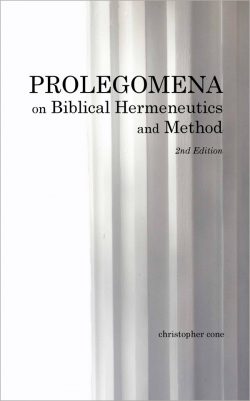
Prolegomena on Biblical Hermeneutics and Method
Description
proh-li-gom– uh-nah
From the Greek pro (before) and legomen (we speak), prolegomena refers to preliminary or introductory words on a course of study.
Prolegomena on Biblical Hermeneutics and Method, 2nd Edition, explores four important pillars that support a Biblical theology, and provides guidance on how we can study and understand the Bible for ourselves, along with background on how others have understood the Bible throughout history.
Christopher Cone, Th.D., Ph.D., is President of Tyndale Theological Seminary & Biblical Institute (DFW, TX), teaches there as Professor of Bible & Theology, and serves as a pastor of Tyndale Bible Church. He has authored and edited several books, including: The Bible in Government and Society, Biblical Sufficiency Applied, Practical Aspects of Pastoral Theology, Life Beyond the Sun: An Introduction to Worldview & Philosophy Through the Lens of Ecclesiastes, Dispensationalism Tomorrow & Beyond: A Theological Collection in Honor of Dr. Charles C. Ryrie, and The Promises of God: A Synthetic Bible Survey.
theWord Features:
- Verse popups
- Fully searchable text
- Footnotes
- Easy navigation of topics via topics tree display.
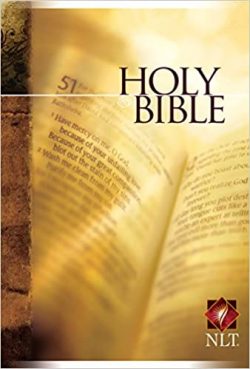
New Living Translation®, Second Edition (NLT)
The Holy Bible, New Living Translation provides a wonderful balance of readability and authority. It is easy to understand, poetically beautiful, powerful, and emotive. At the same time, due to the careful work of ninety leading Bible scholars, it is accurate to the original Greek and Hebrew text. The New Living Translation makes the Bible accessible, useful, and enjoyable for every situation. The easy-to-read, clear text is perfect for comparative study of difficult passages.
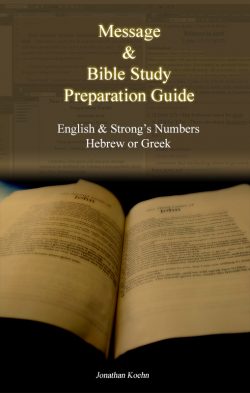
Message & Bible Study Preparation Guide (English & Strong’s Numbers, Hebrew or Greek)
- Do you feel like you need better structure when putting together a Bible study?
- Do you want to make sure you’re getting as much as possible from your message preparation?
- Or maybe you need a fresh perspective on your study of the Bible.
- Have you wanted to do a Word Study in Hebrew, Greek, English or Strong’s but didn’t know where to start?
Product Highlights:
- Usable with theWord, or Physical book resources.
- Practical and tailored to Biblical Hebrew Studies, Biblical Greek Studies or to English/Strong’s Studies.
- 104 pages in print.
“Koehn uses the word “Guide” in his title. Good choice! As I was preparing the review, I kept thinking “field manual,” like a bird watcher might use; perhaps lacking in some detail, but quickly pointing out “what it is” and “what it isn’t.” The text is less academic, and more practical, than a typical “hermeneutics” or “homiletics” book.” by Dr. Dave Thomason — See full Review by Dr. Dave Thomason below!
theWord Features:
- Verse popups
- Fully searchable text
- Easy navigation of topics via topics tree display.
- Special Text Colors
- Normal: Text
- Hyperlink: Gen. 9:8
- Strong’s Numbers: H3034
- Greek: πλάνος
- Hebrew: אֱלֹהִ֑ים
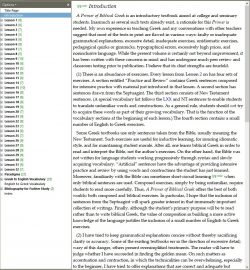
A Primer of Biblical Greek, Croy
DESCRIPTION
Download student resources
Request instructor resources
Though there are currently a number of texts for teaching biblical Greek, most of them are plagued by various deficiencies. Written with these flaws in mind, this new primer by N. Clayton Croy offers an effective, single-volume introduction to biblical Greek that has proven successful in classrooms around the country.
This volume takes a primarily deductive approach to teaching biblical Greek and assumes that students have no prior knowledge of the language. Divided into 32 separate lessons, each containing a generous number of exercises, the text leads students from the Greek alphabet to a working understanding of the language of the Septuagint and the New Testament.
Special features of A Primer of Biblical Greek:
- An abundance of exercises Each lesson includes practice sentences taken from the Septuagint and the New Testament as well as Greek sentences composed by the author. Exercises in English-to-Greek translation are also included.
- Concise but accurate grammatical explanations Great care has been taken to insure that grammatical explanations are clear, correct, and succinct. In particular, the Greek participle receives a fuller-than-usual treatment.
- A natural order of presentation Material is presented according to the natural structure of Greek and the traditional terminology of grammarians. Declensions and principal parts, for example, are presented in numerical order.
- Inclusive language The book uses inclusive language for human beings throughout.
- Helpful appendixes for quick reference Included at the back of the book are the Greek paradigms, Greek-to-English vocabulary, English-to-Greek vocabulary, and a bibliography for further study.
theWord Features
- Verse popups
- Terms explained popups
- Footnote popups
- Fully searchable text
- Easy navigation via topics tree display.
- Greek Lemmas
- Special Text Colors
- Normal: Text
- Hyperlink: LXX| Luke 20:21
- Page Number: [pg 21>
- Latin: septuaginta
- Transliteration: Gamma
- Greek: Καλλίμαχος
IVP Bible Background Commentary, Old Testament
The unique commentary joins The IVP Bible Background Commentary: New Testament in providing historical, social and cultural background for each passage of the Old Testament. From Genesis through Malachi, this single volume gathers and condenses an abundance of specialized knowledge–making it available and accessible to ordinary readers of the Old Testament. Expert scholars John Walton, Victor Matthews and Mark Chavalas have included along with the fruits of their research and collaboration
- a glossary of historical terms, ancient peoples, texts and inscriptions
- maps and charts of important historical resources
- expanded explanations of significant background issues
- introductory essays on each book of the Old Testament
Biblia Hebraica Stuttgartensia 5th Revision (text only)
Biblia Hebraica Stuttgartensia (BHS) is known to be the definitive edition of the Hebrew Bible. It is widely regarded as a reliable edition of the Hebrew and Aramaic scriptures and is the most widely used original-language edition among scholars.
theWord Features:
- Note (Lemma and Morphology not available in this version, text only)
- The text is pointed Hebrew. To toggle on/off pointings use the V key.
- The text contains both Ketiv and Qere variants. Ketiv variants are displayed in brown color, Qere in blue. Qere variants can be toggled on/off with the R key.
New International Commentary: The Epistle to the Galatians
PRODUCT HIGHLIGHTS:
- Verse-by-verse commentary
- In-depth discussion of textual and critical matters
- Introductions to each book’s authorship, date, purpose, structure, and theology
- Detailed bibliography
DESCRIPTION
This commentary by Ronald Y.K. Fung has been added to the NICNT series to address significant new questions regarding the study of Galatians that have arisen since the publication of Herman N. Ridderbos’s commentary—the original NICNT volume on Galatians—in 1953.
Begun under the mentorship of F.F. Bruce at the University of Manchester, England, Fung’s work on Galatians offers solid, reliable exposition of the text while also providing a fresh assessment of the large number of interpretive questions—past and present—raised by Paul’s letter. This work also examines Galatians specifically as Paul’s most direct defense and exposition of justification by faith, which Fung says is the central motif of Paul’s understanding of the Gospel.
….
NET Bible, version 2.1, full notes edition, plus Strong’s numbers
New separate commentary notes!
Version 2.1 Released!
The NET Bible is a powerful new translation of the Bible (having 58,504 translators’ notes by experts in the original biblical languages). When you combine theWord Bible software program with this Bible, you can easily see the translator’s many notes by simply mousing over the translator’s note’s number, and the actual text will pop up.
These translator’s notes are an excellent commentary for Bible students knowing Greek and Hebrew in that they point out the original words, how their underlying forms (grammatical structure) affects the translation of the verse. But at the same time, while this highly technical information is available for the experienced scholar, it is also very clear and understandable for the common Bible student as far as what it means. For example, the moods and tenses of Greek verbs often have comments when they reflect on the meaning of the text. This is very helpful and insightful to common Bible student.
This is an updated version 2 of this work. It also adds Strong’s numbers to the text.
IF UPGRADING FROM NET 1
Using NET2 Commentary Notes – notes are now available again as separate Commentary notes, and yet also remain in the footnotes as well.
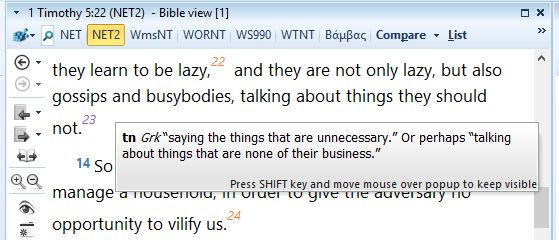
How to use NET2 footnotes, click in Bible, then press just “f” to toggle on and off, and then hover over the footnote you want to see.
New International Commentary: The First Epistle of Peter
PRODUCT HIGHLIGHTS:
- Verse-by-verse commentary
- In-depth discussion of textual and critical matters
- Introductions to each book’s authorship, date, purpose, structure, and theology
- Detailed bibliography
DESCRIPTION
The First Epistle of Peter constitutes an important work of New Testament theology and pastoral care, serves as an example of how the early church applied Jesus’ sayings and the Old Testament writings to contemporary concerns, and presents some extremely useful perspectives on living the Christian life today. This commentary by Peter Davids does an excellent job of mining the rich wealth of instruction to be found in this very significant section of Scripture.
Davids’s commentary contains several notable features: a unique grasp of 1 Peter’s structure, a systematically arranged introduction that summarizes the commentary proper, a perceptive excursus on suffering in 1 Peter and the New Testament, Davids’s own study translation, thorough and incisive comments on each verse of the text, frequent parallels to ancient literature, an exceptionally clear and lively writing style, and one of the most comprehensive bibliographies on 1 Peter available anywhere.
….
Twenty-first Century Biblical Commentary: The Gospel of John: Believe and Live
This book will provide an in-depth and comprehensive look at where Bible prophecy, both fulfilled and yet-to-come, fits into God’s plan for believers and the nation of Israel. This book will take you through a detailed look at the difficult subject of prophecy using the incredible wealth of research and study provided by Dr. Edward Hindson, Dr. Mal Couch, Dr. Elmer Towns, and Dr. Robert Lightner. Their ultimate goal is to teach and encourage believers to know their Bibles in a more clear way. A series of study questions at the end of each chapter is designed to enable the reader to study the details of the book, which they can use on their own or in a group setting.
The message of the book of John is underlined by the use of two key words, believe, used ninety-eight times and life, used thirty-six times. In The Gospel of John, Elmer Towns places a particular emphasis on these words. The Apostle John wrote with a twofold purpose—as noted in 20:31—to communicate Christ through His miracles and teachings so men might, first, believe that Jesus was indeed who He said He was, the Son of God; and second, they might have eternal life because of their belief.
theWord Features:
Note: This is a Hybrid module and does not display commentary under Bible text as a Commentary module would.