
New International Commentary: The Gospel of Luke
PRODUCT HIGHLIGHTS:
- Verse-by-verse commentary
- In-depth discussion of textual and critical matters
- Introductions to each book’s authorship, date, purpose, structure, and theology
- Detailed bibliography
DESCRIPTION
This highly original commentary on the Gospel of Luke is unique for the way it combines concerns with first-century culture in the Roman world with understanding the text of Luke as a wholistic, historical narrative. Focusing primarily on how each episode functions within Luke’s narrative development, Joel B. Green provides countless fresh perspectives on and new insights into the Third Gospel. His extended examination of Luke’s literary art and Luke’s narrative theology allows the Evangelist to address clearly and convincingly both ancient and contemporary readers.
Insisting on the narrative unity of Luke–Acts, Green highlights in this volume the centrality of God’s purpose to bring salvation to all people. Against the backdrop of the conflicted first-century world of the Mediterranean, Green proposes that the purpose of Luke–Acts would have been to strengthen the early Christians in the face of opposition by assuring them in their interpretation and experience of the redemptive purpose and faithfulness of God and by calling them to continued faithfulness and witness in God’s salvific project.
….
New International Commentary: The Book of Ezekiel (2 vols.)
PRODUCT HIGHLIGHTS:
- Verse-by-verse commentary
- In-depth discussion of textual and critical matters
- Introductions to each book’s authorship, date, purpose, structure, and theology
- Detailed bibliography
DESCRIPTION
This collection includes the two volumes of Daniel Block’s study of Ezekiel from The New International Commentary on the Old Testament
Volume 1
To many modern readers the prophecies of Ezekiel are a mystery. This commentary by Daniel Block—Part I of his two-volume study of the whole book of Ezekiel—seeks to answer the questions that contemporary readers bring to the text by examining the language, the message, and the methods of this obscure and often misunderstood Hebrew prophet. The result of twelve years of study, this volume provides an excellent discussion of the background of Ezekiel and offers a verse-by-verse exposition of each literary/prophetic unit in Ezekiel 1–24 that not only makes clear the prophet’s message to his original readers but also shows that Ezekiel’s ancient wisdom and vision are still very much needed by the church in the twenty-first century.
Volume 2
To many modern readers the prophecies of Ezekiel are a mystery. This commentary by Daniel Block—which completes his two-volume study of the whole book of Ezekiel—seeks to answer the questions that contemporary readers bring to the text by examining the language, the message, and the methods of this obscure and often misunderstood Hebrew prophet. The result of twelve years of study, this volume, like the one on chapters 1–24, provides an excellent discussion of the background of Ezekiel and offers a verse-by-verse exposition of each literary/prophetic unit in Ezekiel 25–48 that not only makes clear the prophet’s message to his original readers but also shows that Ezekiel’s ancient wisdom and vision are still very much needed by the church in the twenty-first century.
….
New International Commentary: The Book of Isaiah (2 vols.)
PRODUCT HIGHLIGHTS:
- Verse-by-verse commentary
- In-depth discussion of textual and critical matters
- Introductions to each book’s authorship, date, purpose, structure, and theology
- Detailed bibliography
DESCRIPTION
This collection includes the two volumes of John N. Oswalt’s study of Isaiah from The New International Commentary on the Old Testament
Volume 1
The first of John N. Oswalt’s two-part study of the book of Isaiah for the NICOT series, this commentary on chapters 1–39 combines theological acumen, literary sensitivity, philological expertise, and historical knowledge to present a faithful and accurate reading of one of the Old Testament’s most important books.
In the introduction to this work, Oswalt considers Isaiah’s background, unity of composition, date and authorship, canonicity, Hebrew text, theology, and problems of interpretation, and he offers a select bibliography for further research. Oswalt also provides substantial discussions of several issues crucial to the book of Isaiah. He notes, for example, that scholars often divide Isaiah into three divisions, with chapters 1–39 addressing Isaiah’s contemporaries in the eighth century b.c., chapters 40–55 presupposing the exile of the sixth century, and chapters 56–66 presupposing the eventual return from exile. While taking this scholarship into account Oswalt defends the unity of the prophetic book and argues convincingly that the whole book can be attributed to the Isaiah of the eighth century.
The commentary proper, based on Oswalt’s own translation of the Hebrew text, provides pastors, scholars, and students with a lucid interpretation of the book of Isaiah in its ancient context as well as an exposition of its message for today.
Volume 2
The second of John N. Oswalt’s two-part study of the book of Isaiah for the NICOT series, this commentary provides exegetical and theological exposition on the latter twenty-seven chapters of Isaiah for scholars, pastors, and students who seek to know the perennial meaning of the text in contemporary terms.
Though Oswalt’s main introduction to Isaiah is found in his commentary on chapters 1–39, this second volume opens with an important discussion of scholarly debate over the unity/diversity of Isaiah. In this work Oswalt makes stronger his case for reading the entire book of Isaiah as written by a single author—a position not common in other recent commentaries. Oswalt’s work stands alone, then, as an attempt to take seriously Israel’s historical situation at the time chapters 40–66 were composed while also seeking to understand how these chapters function as a part of Isaiah’s total vision written in the late 700s or early 600s b.c.
Assuming the single authorship of Isaiah, the verse-by-verse commentary aims to interpret chapters 40–66 in light of the book as a whole. While not neglecting issues of historical criticism or form criticism, the commentary focuses mainly on the theological meaning of the text as indicated especially by the literary structure. Building on his earlier argument that the central theme of Isaiah is servanthood, Oswalt keeps readers focused on the character of Israel’s sovereign Redeemer God, on the blind servant Israel, and on the ultimate work of the Suffering Servant in whom the world can find its Savior.
….
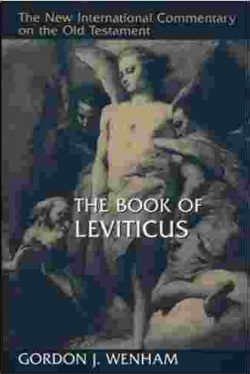
New International Commentary: The Book of Leviticus
PRODUCT HIGHLIGHTS:
- Verse-by-verse commentary
- In-depth discussion of textual and critical matters
- Introductions to each book’s authorship, date, purpose, structure, and theology
- Detailed bibliography
DESCRIPTION
Leviticus used to be the first book that Jewish children studied in the synagogue. In the modern church it tends to be the last part of the Bible that anyone looks at seriously. Because Leviticus is largely concerned with subjects that seem incomprehensible and irrelevant today—rituals for sacrifice and regulations concerning uncleanness—it appears to have nothing to say to twenty-first-century Christians.
In this excellent commentary on Leviticus, Gordon Wenham takes with equal seriousness both the plain original meaning of the text and its abiding theological value. To aid in reconstructing the original meaning of the text, Wenham draws from studies of Old Testament ritual and sacrifice that compare and contrast biblical customs with the practices of other Near Eastern cultures. He also closely examines the work of social anthropologists and expertly utilizes the methods of literary criticism to bring out the biblical author’s special interests.
In pursuit of his second aim, to illumine the enduring theological value of Leviticus, Wenham discusses at the end of each section how the Old Testament passages relate to the New Testament and to contemporary Christianity. In doing so, he not only shows how pervasive Levitical ideas are in the New Testament but also highlights in very practical ways the enduring claim of God’s call to holiness on the lives of Christians today.
….


theWord-App Advanced Subscription (Beta)
theWord-App Advanced Features
Includes every feature available in theWord-App Basic, plus:
- Bible Search
- Create and manage custom cross-reference sets and files
- Reading plans, daily readings, and devotionals
- Saved layouts and multi-view workspace layouts
- Create new user modules
- Create, organize, format, edit, and save user-module topics
- Paste Bible selections directly into the editor
- Copy Verses dialog with advanced copying and printing
- Bible View List and Compare modes
- Create, save, manage, copy, and print verse lists
- Display commentaries inline within Bible View
- Bible text-formatting toolbar, advanced colors, and link styling
- Advanced Strong’s, morphology, and lemma colors, fonts, substitutions, and display styling
- Book View background images with placement controls
- Fuzzy topic matching, diacritic reorientation, and matching highlights
- Advanced startup, update, and view preferences
30 Day Trial below so you can try before you buy https://app.theword.net (or download it first from a link below).
Android, iPhone, iPad, macOS, Linux, Windows

New International Dictionary of Old Testament Theology and Exegesis
DESCRIPTION
Only one hermeneutical text published prior to the New International Dictionary of Old Testament Theology & Exegesis can be held up reasonably to its measure of quality and the exhaustive nature of the research that produced this immense work. That singular collection worthy of comparison is its counterpart, the New International Dictionary of New Testament Theology, edited by Colin Brown.
This 5 volume addition to that acclaimed work, though intimidating in the achievement it embodies, is intended for serious Old Testament and exegetical study by men and women of all walks of life — both academics and pastors, students and laypersons. Volume one contains a Guide to Old Testament Theology and Exegesis in which ten essays have been compiled to thoroughly explain proper hermeneutics and interpretation, as well as guidelines for using this source material.
Volumes one through four contain the Lexicon of the Old Testament, all words found in the text ordered by Hebrew alphabetization for easy reference, and coupled with a Goodrick / Kohlenberger cross-referencing number to be used in conjunction with Strong’s numbering system. The relationship of each word in different contexts and languages is also explained, including alternative words, and the particulars of their semantic domain. All this information is, of course, complete with bibliography. Volume four also begins the Topical Dictionary. Therein can be found articles on the theology of each Old Testament book individually, as well as discussion of biblical concepts, people, places, events, and literary pieces, all information that is cross-referenced to the preceding Hebraic Lexicon.
Finally, volume five contains a series of indexes: Hebrew Index, Scripture Index, Subject Index, and an index of Semantic Fields. Taken as a whole, the New International Dictionary of Old Testament Theology & Exegesis is an unparalleled accomplishment in the field of biblical hermeneutics.
theWord Features:
- Verse popups
- Fully searchable text
- Footnotes
- Easy navigation of topics via topics tree display.
- Special Text Colors
- Normal: Text
- Hyperlink: Glossary | Gen. 9:8
- Hebrew: אֱלֹהִים
- Hebrew Transliteration: ʾelōhîm
- Page numbers: v1p104>
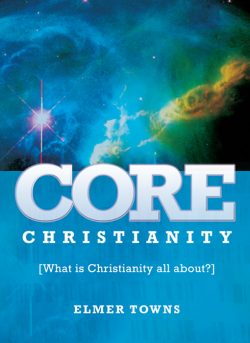
Core Christianity: What Is Christianity All About?
DESCRIPTION
There are a growing number of people who have mistaken ideas about Christianity. Why? Because the media’s politically correct agenda has redefined historical religious terms. Meanwhile, liberal Christianity denies the supernatural and explains away anything miraculous. Dr. Towns attempts to answer these problems. He takes the Bible at face value and explains Christianity’s basic concepts beginning with the premise that Christianity is a Person—Jesus Christ. Then chapter-by-chapter, he builds a coherent and consistent case so the reader will correctly understand what Christianity is all about.
- The book gives a rational overview of Christianity so the modern mind will interact with God’s claim upon its life.
- The book gives a comprehensive coverage of Christianity so the reader will intelligently understand what Christians believe and how they should live.
theWord Features:
- Verse popups (John 1:1)
- Fully searchable text
- Easy navigation of topics via topics tree display.
- Footnotes
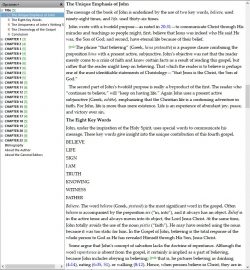
Twenty-first Century Biblical Commentary: The Gospel of John: Believe and Live
DESCRIPTION
This book will provide an in-depth and comprehensive look at where Bible prophecy, both fulfilled and yet-to-come, fits into God’s plan for believers and the nation of Israel. This book will take you through a detailed look at the difficult subject of prophecy using the incredible wealth of research and study provided by Dr. Edward Hindson, Dr. Mal Couch, Dr. Elmer Towns, and Dr. Robert Lightner. Their ultimate goal is to teach and encourage believers to know their Bibles in a more clear way. A series of study questions at the end of each chapter is designed to enable the reader to study the details of the book, which they can use on their own or in a group setting.
The message of the book of John is underlined by the use of two key words, believe, used ninety-eight times and life, used thirty-six times. In The Gospel of John, Elmer Towns places a particular emphasis on these words. The Apostle John wrote with a twofold purpose—as noted in 20:31—to communicate Christ through His miracles and teachings so men might, first, believe that Jesus was indeed who He said He was, the Son of God; and second, they might have eternal life because of their belief.
theWord Features:
- Verse popups
- Verse synchronization
- Fully searchable text
- Footnotes
- Pages links
- Easy navigation of topics via topics tree display.
Note: This is a Hybrid module and does not display commentary under Bible text as a Commentary module would.
The New International Greek Testament Commentary: The Epistle to the Romans
DESCRIPTION
This highly anticipated commentary on the Greek text of Romans by veteran New Testament scholar Richard Longenecker provides solid scholarship and innovative solutions to long-standing interpretive problems. Critical, exegetical, and constructive, yet pastoral in its application, Longenecker’s monumental work on Romans sets a course for the future that will promote a better understanding of this most famous of Paul’s letters and a more relevant contextualization of its message.
Author:
Richard N. Longenecker (1930–2021) was a distinguished New Testament scholar who taught for many years at Wycliffe College, University of Toronto. He was the author of numerous books, including Paul, Apostle of Liberty; The Christology of Early Jewish Christianity; New Testament Social Ethics for Today; Introducing Romans: Critical Issues in Paul’s Most Famous Letter, and the New International Greek Testament Commentary volume on Romans.
theWord Features:
- Verse popups
- Verse (span) synchronization
- Fully searchable text
- Footnotes
- Pages links
- Index of Ancient Sources
- Easy navigation of topics via topics tree display.
- Special Text Colors
- Normal: Text
- Hyperlink: Gen 3:15
- Page Number: [pg 21>
- Greek: σκανδάλων
- Hebrew: לבנות
Pocket Guide to World Religions
DESCRIPTION
Have you ever wondered . . .
- what the red dot on an Indian woman’s forehead means?
- whether all Buddhist monks practice martial arts?
- if the Emperor of Japan is still considered a god?
Here is a concise, informative guide for anyone looking for answers to basic questions about the world’s varied religions. In short, incisive chapters, Winfried Corduan introduces readers to twelve of the world’s major religions, including Baha’i, Buddhism, Christianity, Confucianism, Daoism, Hinduism, Islam, Jainism, Judaism, Parsi, Shinto and Sikhism. For each, he offers brief descriptions of its name, numbers and distribution, key symbols, history, Scriptures, major beliefs, subgroups, worship practices, home practices, clothing, diet and calendar. Also included are even briefer descriptions of sixteen new religious movements and traditional or tribal religions.
This book is for students, pastors and other busy people who want the quick, bare-facts scoop on current religions.
theWord Features
- Fully searchable text
- Easy navigation of topics via topics tree display.
- Special Text Colors
- Normal: Text
- Hyperlink: Link
- Page Number: [pg1>
Pocket Dictionary of Christian Spirituality
DESCRIPTION
The Pocket Dictionary of Christian Spirituality is an A to Z introduction and resource for curious newcomers and novice students of spirituality. From our first call to Abba until we arrive at Zion, the heavenly Jerusalem, Don Thorsen charts the Christian spiritual pilgrimage through its many traditions, schools of thought, and tested practices.
Among the over 300 definitions you’ll find
- terms and ideas
- traditions and movements
- practices and rituals
- texts and theology
A reliable guide and launching pad for learning, the Pocket Dictionary of Christian Spirituality is a basic resource for the pilgrimage travel bag.
theWord Features
- Verse popups
- Fully searchable text
- Easy navigation of topics via topics tree display.
- Special Text Colors
- Normal: Text
- Hyperlink: Link | Jn 3:36
- Page Number: [pg1>
Pocket Dictionary of Biblical Studies
DESCRIPTION
So many words about the Word. The study of anything seems to generate its own special vocabulary, and biblical studies is no different. What’s more, it’s got nearly a two-thousand-year lead on you! How can you catch up? Here is the answer!
If you are puzzled by parataxis or rankled by recensions, the Pocket Dictionary of Biblical Studies is the companion you need. Whether you are studying Old Testament or New Testament or both at once, this little book is your private tutor, your ever-ready guide to over three hundred biblical-studies terms. Here’s your glossary for reading course textbooks, your decoder for listening to lectures, your review sheet for cramming for finals and your “help” key for writing research papers.
Among the more than 300 terms defined you’ll discover
- types of biblical criticism, from genre criticism to tradition criticism
- Greek and Latin terms, from agrapha to vaticinium ex eventu
- German terms, from Frühkatholizismus to Wissenschaft
- ancient texts, from Aleppo Codex to Zadokite Document
- literary features, from acrostic to woe oracle
- theories, from the Augustinian hypothesis to the Yahwist source
- textual criticism terms, from codex to Western text
Written by Arthur G. Patzia and Anthony J. Petrotta, two biblical studies professors who know what you need to know, Pocket Dictionary of Biblical Studies will be your essential guide into a fascinating world of understanding.
theWord Features
- Verse popups
- Fully searchable text
- Easy navigation of topics via topics tree display.
- Special Text Colors
- Normal: Text
- Hyperlink: Link | Jn 3:36
- Greek: λογος
- Hebrew: א
Pocket Dictionary of Apologetics and Philosophy of Religion
DESCRIPTION
For philosophers, the pursuit of truth travels on precise definitions. For Christian apologists, the defense of the faith is founded on the defining Word. And for beginning students of either discipline, the difference between success and frustration begins with understanding the terms and ideas and identifying the thinkers and movements.
The Pocket Dictionary of Apologetics Philosophy of Religion is designed to be a companion to your study of these two related disciplines. Among its 300 entries are
- terms, from a posteriori to worldview
- apologists, from Abelard to Van Til
- philosophers of religion, from Alston to Wolterstorff
- movements, from analytic philosophy to voluntarism
- apologetic arguments, from the cosmological to the wager
- theologies, from Arminianism to Zoroastrianism
Here is an affordable and easily accessible “help key” for your readings, lectures, writing assignments and exam preparation. It’s a must-have study aid for any student who expects to cogitate on coherentism or ruminate on Ricouer.
theWord Features
- Verse popups
- Fully searchable text
- Easy navigation of topics via topics tree display.
- Special Text Colors
- Normal: Text |
- Hyperlink: Link | Jn 3:36
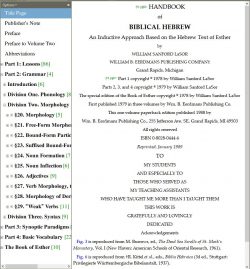
Handbook of Biblical Hebrew
DESCRIPTION
The Handbook, designed as a complete tool for the student of Biblical Hebrew, is the result of over twenty- five years of teaching the language. While it is primarily intended for use in Hebrew courses, it is also an excellent tool for a refresher course or useful as a basic grammatical reference work to aid the exegete. Similar in format to the author’s Handbook of New Testament Greek, it combines reading lessons (vol. 1) with grammar, paradigms, and basic vocabulary (vol. 2). William LaSor uses the inductive method, studying directly from the text, rather than the conventional method of language study in which beginning students learn the rules of grammar and syntax and memorize vocabulary, often without reading the actual text. Instead of memorizing numerous forms that will never be encountered in actual reading, the student learns only what he or she encounters.
The lessons are based on the Hebrew text of Esther, chosen because it presents little difficulty in theological or textual matters and has an excellent vocabulary. LaSor has included readings from other portions of the Bible, such as several chapters from Genesis, to introduce the student to Hebrew other than that found in Esther.
The diligent student of this method will learn not only the elements of Hebrew but also how to inductively study the language and how to learn by induction what the Hebrew text says.
theWord Features
- Verse popups
- Fully searchable text
- FootNotes
- Easy navigation of topics via topics tree display.
- Hebrew Lemmas: אָב
- Special Text Colors
- Normal: Text
- Hyperlink: §11.325| Esther 1:2BHS
- Page Number: [v2 pg1>
- Latin: plene
- Transliteration: bay-yā-mîym
- Hebrew: בַּיָּמִ֖ים
People in the Bible: Barnabas
Description
If Christians were to vote for their favourite Bible character, Barnabas would surely be in the top ten. Most of us feel drawn to this warm-hearted disciple, who so wonderfully lives up to his name, ‘Son of Encouragement’. In these character studies based on passages in Acts, Robert Dale helps us to appreciate and encourages us to imitate this wonderful man, who himself is a reflection of a still greater Man, our Lord Jesus Christ, the greatest Encourager of all.
theWord Features:
- Verse popups
- Fully searchable text
- Footnotes
- Easy navigation of topics via topics tree display.
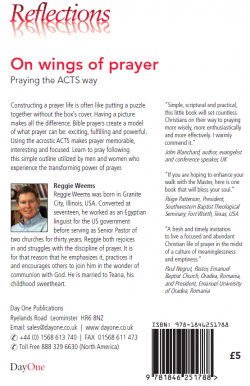
On wings of prayer Praying the ACTS way (On Wings of Prayer)
Constructing a prayer life is often like putting a puzzle together without the box’s cover. Having a picture makes all the difference. Bible prayers create a model of what prayer can be: exciting, fulfilling and powerful. Using the acrostic ACTS makes prayer memorable, interesting, and focused. Learn to pray following this simple outline utilized by men and women who experience the transforming power of prayer.
Reggie Weems
Reggie Weems was born in Granite City, Illinois, USA. Converted at seventeen, he worked as an Egyptian linguist for the US government before serving as Senior Pastor of two churches for thirty years. Reggie both rejoices in and struggles with the discipline of prayer. It is for that reason that he emphasizes it, practices it and encourages others to join him in the wonder of communion with God. He is married to Teana, his childhood sweetheart.
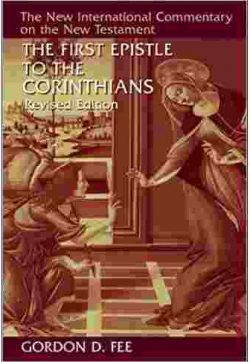
New International Commentary: The First Epistle to the Corinthians
PRODUCT HIGHLIGHTS:
- Verse-by-verse commentary
- In-depth discussion of textual and critical matters
- Introductions to each book’s authorship, date, purpose, structure, and theology
- Detailed bibliography
DESCRIPTION
This award-winning commentary on 1 Corinthians by Gordon D. Fee has been lauded as the best study now available of Paul’s exciting and theologically rich first letter to the Corinthians.
Writing primarily for pastors, teachers, and students, Fee offers a readable exposition of 1 Corinthians that clearly describes the meaning of Paul’s ideas and their larger theological relevance. The more scholarly dimension of the work, including Fee’s considerable interaction with other commentators, is found in the footnotes.
Several features make this commentary unique. First, Fee takes great care to establish the all-important historical/literary context of this letter by including numerous sectional introductions that reconstruct the historical background and trace the flow of Paul’s argument. Fee is also concerned to exegete the whole book from a consistent perspective as to the historical situation. Second, Fee’s expertise in textual criticism has led him to discuss every exegetically significant variant, some at considerable length. Third, Fee concludes almost every paragraph with some observations about application—illustrating his deep concern that the Word of God be a living word for today.
….
New International Commentary: Paul’s Letter to the Philippians
PRODUCT HIGHLIGHTS:
DESCRIPTION
This commentary by respected New Testament scholar Gordon D. Fee is a scholarly yet thoroughly readable study of Paul’s letter to the suffering community of believers in Philippi.
Working directly from the Greek text but basing his comments on the New International Version, Fee sets Paul’s letter to the Philippians squarely within the context of first-century “friendship” and “moral exhortation” to a church facing opposition because of its loyalty to Jesus Christ. At the same time Fee gives equal concern to the letter’s theological and spiritual relevance.
Important features of this commentary include a remarkable comparison of Philippians to two well-known types of letters in the Greco-Roman world: the letter of friendship and the letter of moral exhortation; an introduction that discusses the occasion, authenticity, and theological contributions of Philippians; and scholarly insights that resolve many of the formal and structural issues that have long puzzled New Testament scholars.
….