
The Eerdmans Dictionary of Early Judaism
DESCRIPTION
The Dictionary of Early Judaism is the first reference work devoted exclusively to Second Temple Judaism (fourth century b.c.e. through second century c.e.).
The first section of this substantive and incredible work contains thirteen major essays that attempt to synthesize major aspects of Judaism in the period between Alexander and Hadrian. The second — and significantly longer — section offers 520 entries arranged alphabetically. Many of these entries have cross-references and all have select bibliographies. Equal attention is given to literary and nonliterary (i.e. archaeological and epigraphic) evidence and New Testament writings are included as evidence for Judaism in the first century c.e. Several entries also give pertinent information on the Hebrew Bible.
The Dictionary of Early Judaism is intended to not only meet the needs of scholars and students — at which it succeeds admirably — but also to provide accessible information for the general reader. It is ecumenical and international in character, bringing together nearly 270 authors from as many as twenty countries and including Jews, Christians, and scholars of no religious affiliation.
theWord Features:
- Dictionary lookup and A-Z topic-tree navigation
- Fully searchable articles, bibliographies, and author lines
- Scripture-reference popups and Bible links
- Internal cross-references
- Pgs: 1406
- Maps, illustrations, and tables
- Special Text Colors
- Normal: Text
-
Dictionary link: Apocalypticism
-
Scripture: Genesis 3
-
Page Number: [p1>
-
Hebrew transliteration: halakah
-
Greek transliteration: apokalypsis
The New International Greek Testament Commentary: The Gospel of Luke
“WORK IN PROGRESS!”
(These are resources that are being developed. There is no release date. Pricing is subject to change.)
(These are resources that are being developed. There is no release date. Pricing is subject to change.)
DESCRIPTION
The Gospel of Luke was written, says its author, as an historical account of the ministry of Jesus. Not only would it serve as the basis for a sound faith on the part of professing Christians, but it would also claim a place for Christianity in history. Christ’s ministry, as Luke shows, is realized prophecy; it is that time during which God’s promise of salvation was fulfilled. His teachings, healing, and acts of compassion are all part of the good news. In Luke’s Gospel, Christ’s message of salvation is directed to the weak, poor, and needy, with an emphasis on the importance of self-denial and of whole-hearted discipleship. Thus, while Luke is the most conscious historian of the Gospel writers, his history is a vehicle of theological interpretation in which the significance of Jesus is expressed.
In this commentary I. Howard Marshall calls attention to the theological message of Luke the Evangelist. His primary purpose is to exegete the text as it was written by Luke, so that the distinctiveness of Luke’s Gospel may be seen.
Basing his commentary on the third edition of The Greek New Testament, Dr. Marshall also refers to many variant readings which are significant in this study. He provides fairly full information on the meanings of the Greek words used by Luke and shows which words and constructions occur frequently and are therefore characteristic of his style. It is by this meticulous analysis of the Greek that Luke’s theological intentions can be objectively determined.
Author:
I. Howard Marshall (1934–2015) was professor emeritus of New Testament exegesis and honorary research professor at the University of Aberdeen, Scotland. His many books include New Testament Theology: Many Witnesses, One Gospel and Beyond the Bible: Moving from Scripture to Theology.
theWord Features:
- Verse popups
- Verse (span) synchronization
- Fully searchable text
- Footnotes
- Pages links
- Easy navigation of topics via topics tree display.
- Special Text Colors
- Normal: Text
- Hyperlink: Gen 3:15
- Page Number: [pg 21>
- Greek: σκανδάλων
- Hebrew: לבנות
The New International Greek Testament Commentary: The Second Epistle to the Corinthians
“WORK IN PROGRESS!”
(These are resources that are being developed. There is no release date. Pricing is subject to change.)
(These are resources that are being developed. There is no release date. Pricing is subject to change.)
DESCRIPTION
Series: The New International Greek Testament Commentary (NIGTC)
The reputation of the NIGTC series is so outstanding that the appearance of each new volume is noteworthy. This book on 2 Corinthians is no exception. Master New Testament exegete Murray J. Harris has produced a superb commentary that analyzes the Greek text verse by verse against the backdrop of Paul’s tumultuous relations with his converts at Corinth.
Believing that Scripture cannot be understood theologically unless it has first been understood grammatically, Harris provides a careful, thoroughgoing reading of the text of 2 Corinthians. He gives special attention to matters of translation, making regular references not only to the standard modern English translations but also to influential older versions such as The Twentieth Century New Testament and those by Weymouth, Moffatt, and Goodspeed. His close attention to matters of textual criticism and grammar leads to discussions of the theology of 2 Corinthians that show the relevance of Paul’s teaching to Christian living and church ministry.
Other notable features of the book include a comprehensive introduction in which all the relevant literary and historical issues are discussed, an expanded paraphrase of the letter that conveniently shows Harris’s decisions on exegetical issues and indicates the flow of Paul’s argument, a chronology of the relations of Paul, Timothy, and Titus with the Corinthian church, and an excursus on Paul’s “affliction in Asia” (1:8-11) and its influence on his outlook and theology.
Author:
Murray J. Harris is professor emeritus of New Testament exegesis and theology at Trinity Evangelical Divinity School, Deerfield, Illinois. His numerous other books include Jesus as God: The New Testament Use of Theos in Reference to Jesus, Slave of Christ: A New Testament Metaphor for Total Devotion to Christ, and Prepositions and Theology in the Greek New Testament.
theWord Features:
- Verse popups
- Verse (span) synchronization
- Fully searchable text
- Footnotes
- Pages links
- Easy navigation of topics via topics tree display.
- Special Text Colors
- Normal: Text
- Hyperlink: Gen 3:15
- Page Number: [pg 21>
- Greek: σκανδάλων
- Hebrew: לבנות
New International Commentary: The Book of Genesis (2 vols.)
PRODUCT HIGHLIGHTS:
- Verse-by-verse commentary
- In-depth discussion of textual and critical matters
- Introductions to each book’s authorship, date, purpose, structure, and theology
- Detailed bibliography
DESCRIPTION
This collection includes the two volumes of Victor P. Hamilton’s study of Genesis from The New International Commentary on the Old Testament
Volume 1
The first of Victor P. Hamilton’s two-volume study of Genesis in the NICOT series, this commentary contributes a solid, thorough explication of the wealth and depth of material embedded in Scripture’s foundational book.
Hamilton’s substantive introduction—which serves both this volume and the one covering chapters 18–50—discusses the structure of Genesis and its composition, its theology, the problems involved in its interpretation, its canonicity, and the Hebrew text itself. The commentary proper, based on Hamilton’s own translation, evidences his extensive knowledge of the ancient Near East and of contemporary scholarship, including literary, form, and text criticism. Siding with the arguments in favor of the literary and theological unity of the Genesis text, Hamilton stresses the main theme running throughout the book—God’s gracious promise of blessing and reconciliation in the face of evil and sin.
A unique feature of this book is Hamilton’s emphasis on the reading of Genesis by the New Testament community. Following his commentary on each section of Genesis, he discusses where and how the New Testament appropriated material from that section and incorporated it into the message of the New Covenant.
Volume 2
The second of Victor P. Hamilton’s two-volume study of Genesis for the NICOT series, this prodigious and scholarly work provides linguistic, literary, and theological commentary on Genesis 18–50. Beginning with Abraham’s reception of the three visitors and his intercession before Yahweh on behalf of Sodom and Gomorrah (Gen. 18) and continuing through the end of the Joseph story (Gen. 50), the overarching theme of Hamilton’s commentary is Yahweh’s faithfulness to his promised word and his covenant commitments to those whom he has chosen to receive that promised word.
Special features of this commentary include its serious attention to important matters of biblical translation from the Hebrew language into English, copious footnotes that direct readers to further and more extensive sources of information, and frequent references to the New Testament writers’ reading of Genesis. Hamilton’s work will greatly benefit scholars, seminarians, and pastors who seek solid exegesis of the Bible’s foundational book.
….
Basic Hebrew Package
DESCRIPTION
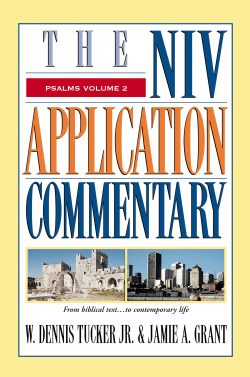
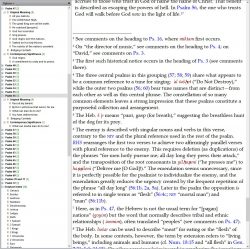
NIV Application Commentary: Psalm Vol2
DESCRIPTION
Perhaps more clearly than any other part of the biblical canon, the book of Psalms includes human words directed to God. Yet, through the Holy Spirit, these honest, sometimes brutal words return to us as the Word of God. Their agonies and exaltations reflect more than the human condition in which they were created. Within the context of the canonical Psalter, they become the source of divine guidance, challenge, confrontation, and comfort. It is possible, however, to misapply them. How can we use the book of Psalms in a way that faithfully connects God’s meaning in them and his intentions for them with our circumstances today?
In continuity with Gerald Wilson’s work in Psalms, Volume 1, Dennis Tucker and Jamie Grant reveal the links between the Bible and our present times. While they consider each psalm independently, they go much further, examining whole groups of psalms and, ultimately, the entire Psalter, seeking its purpose and use for the days of Hebrew temple worship through church history. In so doing, the authors open our eyes to ageless truths for our twenty-first-century lives.
Book Summary
The NIV Application Commentary helps readers with the vital task of bringing the ancient message of the Bible into a contemporary context. It gives preachers and teachers the tools, ideas, and insights they need to communicate God’s Word with the same powerful impact it had when it was first written.
About the Book
The NIV Application Commentary helps you communicate and apply biblical text effectively in today’s context.
To bring the ancient messages of the Bible into today’s context, each passage is treated in three sections:
- Original Meaning. Concise exegesis to help readers understand the original meaning of the biblical text in its historical, literary, and cultural context.
- Bridging Contexts. A bridge between the world of the Bible and the world of today, built by discerning what is timeless in the timely pages of the Bible.
- Contemporary Significance. This section identifies comparable situations to those faced in the Bible and explores relevant application of the biblical messages. The author alerts the readers of problems they may encounter when seeking to apply the passage and helps them think through the issues involved.
This unique, award-winning commentary is the ideal resource for today’s preachers, teachers, and serious students of the Bible, giving them the tools, ideas, and insights they need to communicate God’s Word with the same powerful impact it had when it was first written.
theWord Features:
- Verse popups
- Verse (span) synchronization
- Fully searchable text
- Footnotes
- Pages links
- Easy navigation of topics via topics tree display.
- Scripture Index
- Subject Index
- Author Index
- Special Text Colors
- Normal: Text
- Hyperlink: Glossary | Gen. 9:8
- Page Number: [pg 21>
- Hebrew: יָרֵךְ
Note: Does not display commentary under Bible text.
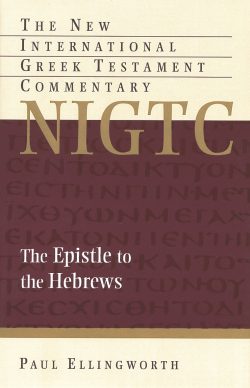
The New International Greek Testament Commentary: The Epistle to the Hebrews
“WORK IN PROGRESS!”
(These are resources that are being developed. There is no release date. Pricing is subject to change.)
(These are resources that are being developed. There is no release date. Pricing is subject to change.)
DESCRIPTION
Series: The New International Greek Testament Commentary (NIGTC)
This superb work is sure to win a name for itself as one of the major commentaries on the Epistle to the Hebrews. The principal purpose of this substantial volume is to clarify the meaning of Hebrews, long considered a complicated and obscure book. Paul Ellingworth’s fine-tooth-comb coverage of Hebrews looks at the text up close and in a broad light, enabling the reader to see the forest as well as the trees.
In his determined quest to understand Hebrews, Ellingworth begins with a detailed study of the Greek text, working outward to consider the wider context, linguistic questions, and the relation of Hebrews to other early Christian writings and to the Old Testament. Nonbiblical writings such as Philo and the Dead Sea Scrolls, though less directly related to Hebrews, are considered where appropriate.
Unveiling the discourse structure of this carefully written letter, Ellingworth’s commentary helps make coherent sense of the complexities of Hebrews. As a result of his exhaustive study, Ellingworth finds Hebrews to be primarily a pastoral, not a polemical, writing. Showing how Hebrews beautifully emphasizes the supremacy of Christ, Ellingworth concludes that the essential purpose of the epistle – which maintains the continuity of God’s people before and after Christ – is to encourage readers to base their lives on nothing other and nothing less than Jesus.
A substantive bibliography and a comprehensive introduction precede Ellingworth’s commentary, and three indexes – of subjects, authors, and Greek words discussed – conclude the volume.
Author:
Paul Ellingworth (1931–2018) was a British biblical scholar who taught at the University of Aberdeen and served as a translation consultant for the United Bible Societies.
theWord Features:
- Verse popups
- Verse (span) synchronization
- Fully searchable text
- Footnotes
- Pages links
- Easy navigation of topics via topics tree display.
- Special Text Colors
- Normal: Text
- Hyperlink: Gen 3:15
- Page Number: [pg 21>
- Greek: σκανδάλων
- Hebrew: לבנות
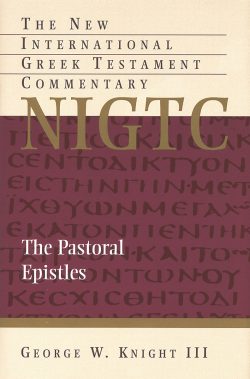
The New International Greek Testament Commentary: The Pastoral Epistles
“WORK IN PROGRESS!”
(These are resources that are being developed. There is no release date. Pricing is subject to change.)
(These are resources that are being developed. There is no release date. Pricing is subject to change.)
DESCRIPTION
This is a thorough, full- scale English commentary on the Greek text of 1 and 2 Timothy and Titus. While author George W. Knight gives careful attention to the comments of previous interpreters of the text, both ancient and modern, his emphasis is on exegesis of the Greek text itself and on the flow of the argument in each of these three epistles.
Besides providing a detailed look at the meanings and interrelationships of the Greek words as they appear in each context, Knight’s commentary includes an introduction that treats at length the question of authorship (he argues for Pauline authorship and proposes, on the basis of stylistic features, that Luke might have been the amanuensis for the Pastoral Epistles), the historical background of these letters, and the personalities and circumstances of the recipients.
Knight also provides two special excursuses: the first gathers together the information in the Pastorals and elsewhere in the New Testament on early church offices and leaders; the other excursus examines the motivations for conduct in Titus 2:1-10 with a view to their applicability to present-day situations.
Author:
George W. Knight III is a teacher at Matthews Orthodox Presbyterian Church in Matthews, North Carolina, and adjunct professor of New Testament at Greenville Presbyterian Theological Seminary’s Charlotte Extension.
theWord Features:
- Verse popups
- Verse (span) synchronization
- Fully searchable text
- Footnotes
- Pages links
- Easy navigation of topics via topics tree display.
- Special Text Colors
- Normal: Text
- Hyperlink: Gen 3:15
- Page Number: [pg 21>
- Greek: σκανδάλων
- Hebrew: לבנות
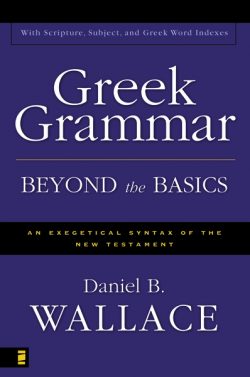

Greek Grammar Beyond the Basics
DESCRIPTION
The first textbook that systematically links syntax and exegesis of the New Testament—perfect for students of Greek who are “second-year” or at an intermediate level.
For seminary students, the goal of studying Greek grammar in the first place is to ultimately get beyond the grammar itself and understand it well enough to use it in the accurate exegesis of biblical texts.
Greek Grammar Beyond the Basics—the most up-to-date Greek grammar available—integrates the technical requirements for proper Greek interpretation with the actual interests and needs of Bible students. It explores numerous syntactical categories, some of which have not previously been dealt with in print, and has a number of distinguishing features, including:
Exegetically significant illustrations, discussed in depth.
Semantic situations—or contexts for simple semantics—are developed and analyzed.
Expanded definitions and numerous examples and syntactical categories.
Grammatical statistics listed at the beginning of major sections.
Scores of charts, tables, and graphs.
Sound exegesis requires that the exegete consider grammar within a larger framework that includes context, lexeme, and other linguistic features. This textbook faithfully equips intermediate Greek students with the skills they need to do exegesis of biblical texts in a way that is faithful to their intended meaning.
The expanded edition contains a subject index, a Greek word index, and page numbers in the Syntax Summary section.
About the Author
Daniel B. Wallace (PhD, Dallas Theological Seminary) is professor of New Testament at Dallas Theological Seminary. He is a noted textual critic, serving as head of the Center for the Study of New Testament Manuscripts, and is author of Greek Grammar beyond the Basics, Basics of New Testament Syntax, and (with Grant Edwards) of A Workbook for New Testament Syntax.
theWord Features:
- Verse popups
- Fully searchable text
- Footnotes
- Page Number: [pg21>
- Page links in index
- Easy navigation of topics via topics tree display.
- Greek words index
- Subject index
- Verse page index
- Syntax Summaries
- Cheat Sheet
- Special text colors
- Normal: Text
- Hyperlink: Luke 20:21
- Greek: χρησις
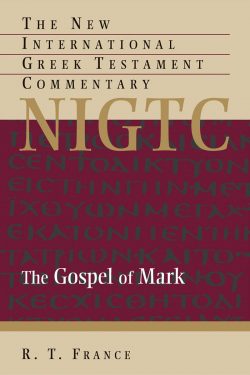
The New International Greek Testament Commentary: The Gospel of Mark
“WORK IN PROGRESS!”
(These are resources that are being developed. There is no release date. Pricing is subject to change.)
(These are resources that are being developed. There is no release date. Pricing is subject to change.)
DESCRIPTION
Drawing on many years of Marcan studies, world-class scholar R. T. France has produced an exegetical commentary on the Greek text of Mark that does what the best of recent Greek commentaries have done but in France’s own inimitable, reader-friendly way.
This work is a commentary on Mark itself, not a commentary on commentaries of Mark. It deals immediately and directly with matters that France himself regards as important. Working from his own translation of the Greek text and culling from helpful research into the world of first-century Palestine, France provides an extensive introduction to Mark’s Gospel, followed by insightful section and verse commentary.
France sees the structure of Mark’s Gospel as an effective “drama in three acts.” Act 1 takes up Jesus’ public ministry in Galilee. Act 2 covers Jesus’ journey to Jerusalem with his disciples. Act 3 focuses on Jesus’ public ministry in Jerusalem, including his confrontation with the Jewish leaders, his explanatory discourse on the future, and his passion, death, and resurrection. France carefully unpacks for modern readers the two central themes of this powerful narrative of Jesus’ life — the nature of Christ and the role of discipleship.
Supported by careful argumentation and impressive in its sensitivity to Mark’s structure, context, and use of the Old Testament, France’s study of the second Gospel is without peer.
Author:
R. T. France (1938-2012) was Hon. Research Fellow in the Department of Theology and Religious Studies, University of Wales, Bangor. His other books include Jesus and the Old Testament, The Evidence for Jesus, and Matthew: Evangelist and Teacher.
theWord Features:
- Verse popups
- Verse (span) synchronization
- Fully searchable text
- Footnotes
- Pages links
- Easy navigation of topics via topics tree display.
- Special Text Colors
- Normal: Text
- Hyperlink: Gen 3:15
- Page Number: [pg 21>
- Greek: σκανδάλων
- Hebrew: לבנות
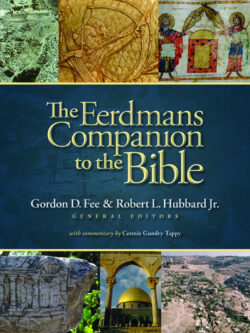
The Eerdmans Companion to the Bible
DESCRIPTION
A quality guidebook that opens up new vistas and insights into the whole Bible
Marked by a broad evangelical perspective, up-to-date research, and contributions from respected biblical scholars, The Eerdmans Companion to the Bible offers a reliable and illuminating guide to the entire Bible. Whether readers find the Bible familiar or foreign, they will appreciate the Companion’s informative articles and its commentary by Connie Gundry Tappy on all of the Old and New Testament books. This comprehensive reference work promises to make the Word of God come alive as never before.
- Compiled by some of the foremost biblical scholars in the world today
- New articles by sixty expert authors on many pertinent biblical topics
- Well-written background information and commentary on every book of the Bible
- Illustrated with maps, photos, and charts throughout
theWord Features:
-
Fully searchable text
-
Chapter, section, and indexed-entry navigation via the topic tree
-
Internal cross-references
-
Pgs: 834
-
Maps, illustrations, and tables
- Special Text Colors
- Normal: Text
- Internal link: Lands of the Bible
- Hebrew: א
- Transliteration: aleph
- Latin: testamentum
- Page Number: [p210>
NIV Application Commentary: Psalm Vol1
DESCRIPTION
Perhaps more clearly than any other part of the biblical canon, the Psalms are human words directed toward God. Yet, through the Holy Spirit, these honest, sometimes brutal words return to us as the Word of God. Their agonies and exaltations reflect more than the human condition in which they were created. Within the context of the canonical Psalter, they become the source of divine guidance, challenge, confrontation, and comfort. It is possible, however, to miss apply them. How can we use the Psalms in a way that faithfully connects God’s meaning in them and his intentions for them with our circumstances today.
Drawing on over twenty years of study Gerald H. Wilson in Psalms, Vol. 1 [NIVAC] provides critical links between the Bible and the modern world. While he considers each psalm in itself, Wilson goes much further, examining whole groups of Psalms and, ultimately, the entire Psalter (though this volume is limited to Psalms 1-72 in terms of Psalms under specific discussion), its purpose, and its use from the days of the Hebrew temple worship onward through church history. In so doing, Wilson opens our eyes to ageless truths for our lives here and now.
Book Summary
The NIV Application Commentary helps readers with the vital task of bringing the ancient message of the Bible into a contemporary context. It gives preachers and teachers the tools, ideas, and insights they need to communicate God’s Word with the same powerful impact it had when it was first written.
About the Book
The NIV Application Commentary helps you communicate and apply biblical text effectively in today’s context.
To bring the ancient messages of the Bible into today’s context, each passage is treated in three sections:
- Original Meaning. Concise exegesis to help readers understand the original meaning of the biblical text in its historical, literary, and cultural context.
- Bridging Contexts. A bridge between the world of the Bible and the world of today, built by discerning what is timeless in the timely pages of the Bible.
- Contemporary Significance. This section identifies comparable situations to those faced in the Bible and explores relevant application of the biblical messages. The author alerts the readers of problems they may encounter when seeking to apply the passage and helps them think through the issues involved.
This unique, award-winning commentary is the ideal resource for today’s preachers, teachers, and serious students of the Bible, giving them the tools, ideas, and insights they need to communicate God’s Word with the same powerful impact it had when it was first written.
theWord Features:
- Verse popups
- Verse (span) synchronization
- Fully searchable text
- Footnotes
- Pages links
- Easy navigation of topics via topics tree display.
- Scripture Index
- Subject Index
- Special Text Colors
- Normal: Text
- Hyperlink: Glossary | Gen. 9:8
- Page Number: [pg 21>
- Greek Transliteration: archon
- Hebrew Transliteration: ʾšrynw
Hebrew: ישׁב
Note: Does not display commentary under Bible text.
NIV Application Commentary: Genesis
DESCRIPTION
Genesis, the newest in the NIV Application Commentary series, traces God’s mastery in creation, covenant, and history. The initial chapters of Genesis show his mastery in bringing order out of chaos. The development of the covenant brought order to his relationship with his people-through revelation and the overcoming of obstacles. Finally,God brought order to the world through his people – by battling the chaos of famine and providing food. In the beginning, as today, God loves the people he created and it is his intention to bless them in spite of rebellion and sin. Noted scholar John Walton follows the three-tiered NIV Application format (Original Meaning, Bridging Contexts, andContemporary Significance) to reveal how this first book of the Bible applies to us today.
Book Summary
The NIV Application Commentary helps readers with the vital task of bringing the ancient message of the Bible into a contemporary context. It gives preachers and teachers the tools, ideas, and insights they need to communicate God’s Word with the same powerful impact it had when it was first written.
About the Book
The NIV Application Commentary helps you communicate and apply biblical text effectively in today’s context.
To bring the ancient messages of the Bible into today’s context, each passage is treated in three sections:
- Original Meaning. Concise exegesis to help readers understand the original meaning of the biblical text in its historical, literary, and cultural context.
- Bridging Contexts. A bridge between the world of the Bible and the world of today, built by discerning what is timeless in the timely pages of the Bible.
- Contemporary Significance. This section identifies comparable situations to those faced in the Bible and explores relevant application of the biblical messages. The author alerts the readers of problems they may encounter when seeking to apply the passage and helps them think through the issues involved.
This unique, award-winning commentary is the ideal resource for today’s preachers, teachers, and serious students of the Bible, giving them the tools, ideas, and insights they need to communicate God’s Word with the same powerful impact it had when it was first written.
theWord Features:
- Verse popups
- Verse (span) synchronization
- Fully searchable text
- Footnotes
- Pages links
- Easy navigation of topics via topics tree display.
- Scripture Index
- Subject Index
- Hebrew Word Index
- Ancient Literature Index
- Author Index
- Allusions, Analogies, and Illustrations Index
- Special Text Colors
- Normal: Text
- Hyperlink: Glossary | Gen. 9:8
- Page Number: [pg 21>
- Greek Transliteration: archon
- Greek: εὐδόκησα
- Hebrew: יָרֵךְ
Note: Does not display commentary under Bible text.
NIV Application Commentary: Matthew
DESCRIPTION
From the Back Cover
The importance of the Gospel of Matthew in church history cannot be overstated. For Jewish readers, it affirmed the Messiahship of Jesus, referring consistently to the Scriptures to establish his credentials. For Gentile disciples, it provided powerful and dramatic support of their inclusion in God’s kingdom. The cross of Christ had removed the division between Jew and non-Jew, and through Matthew’s writings we see Israel’s God drawing the entire world to himself through Jesus.
“The Gospel according to Matthew . . . was the most widely read and frequently used of any of the four Gospels in the formative years of the church,” writes Michael Wilkins. In this volume of the NIV Application Commentary, Wilkins explains Matthew’s broad appeal not only to his ancient readers, but also to us today. Exploring the links between the Bible and our own times, Wilkins shares perspectives on Matthew’s Gospel that reveal its enduring relevance for our twenty-first-century lives.
–This text refers to the hardcover edition.
Book Summary
The NIV Application Commentary helps readers with the vital task of bringing the ancient message of the Bible into a contemporary context. It gives preachers and teachers the tools, ideas, and insights they need to communicate God’s Word with the same powerful impact it had when it was first written.
About the Book
The NIV Application Commentary helps you communicate and apply biblical text effectively in today’s context.
To bring the ancient messages of the Bible into today’s context, each passage is treated in three sections:
- Original Meaning. Concise exegesis to help readers understand the original meaning of the biblical text in its historical, literary, and cultural context.
- Bridging Contexts. A bridge between the world of the Bible and the world of today, built by discerning what is timeless in the timely pages of the Bible.
- Contemporary Significance. This section identifies comparable situations to those faced in the Bible and explores relevant application of the biblical messages. The author alerts the readers of problems they may encounter when seeking to apply the passage and helps them think through the issues involved.
This unique, award-winning commentary is the ideal resource for today’s preachers, teachers, and serious students of the Bible, giving them the tools, ideas, and insights they need to communicate God’s Word with the same powerful impact it had when it was first written.
theWord Features:
- Verse popups
- Verse (span) synchronization
- Fully searchable text
- Footnotes
- Pages links
- Easy navigation of topics via topics tree display.
- Scripture Index
- Subject Index
- Special Text Colors
- Normal: Text
- Hyperlink: Glossary | Gen. 9:8
- Page Number: [pg 21>
- Greek Transliteration: archon
Note: Does not display commentary under Bible text.
New International Commentary: The Gospel According to John
PRODUCT HIGHLIGHTS:
- Verse-by-verse commentary
- In-depth discussion of textual and critical matters
- Introductions to each book’s authorship, date, purpose, structure, and theology
- Detailed bibliography
DESCRIPTION
Hailed as perhaps “the best commentary on any book of the Bible by an evangelical in recent decades” by Christianity Today when it was first published in 1971, Leon Morris’s Gospel According to John has become one of the enduring standard commentaries on John’s Gospel.
Recognizing the central importance of the Fourth Gospel in any series on the New Testament, Morris devoted more than ten years to preparing this volume. Written with considerable acumen and a thorough knowledge of the previous scholarly work on the Johannine text, The Gospel According to John is one of the largest and most comprehensive commentaries ever to come out of the evangelical community.
This revised edition includes significant modifications and additions made in the light of more recent writings on John’s Gospel. While maintaining substantially the same stance as in his original work, Morris here references important secondary sources and studies that have appeared over the last two decades. The commentary is now also based on the New International Version.
….
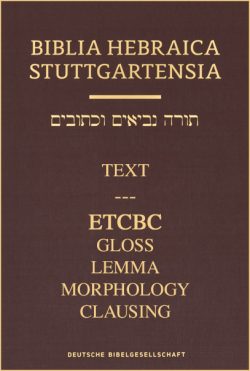
Biblia Hebraica Stuttgartensia 5th Revision + Text, Lemma, Morphology, Clause
DESCRIPTION
BHS5 Description
Biblia Hebraica Stuttgartensia (BHS) is known to be the definitive edition of the Hebrew Bible. It is widely regarded as a reliable edition of the Hebrew and Aramaic scriptures and is the most widely used original-language edition among scholars.
ETCBC (WIVU) Description
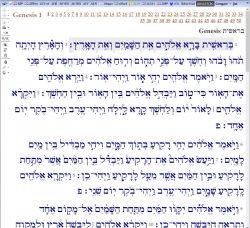
The ETCBC data is comprised of the text of the BHS5. It provides Lemmas which work in sync with our Hebrew dictionaries. Morphology is provided and explained via the morphology dictionary. An English gloss is provided for a quick overview of a word with pronouns in color. A transliteration is provided for those new to learning Hebrew.
Sentence markers indicate where a sentence begins. Clause markers indicate a start to a clause while also explaining the clause for example: “Type: NominalDomain: NarrativeKind: Nominal”. Likewise with Phrase markers indication of start and explanation is given for example: “Type: NominalDetermination: determinedFunction: Subject” all of these markers are toggled via the F key.
The text contains both Ketiv and Qere variants. Ketiv variants are displayed in brown color, Qere in blue. Qere variants can be toggled on/off with the R key.
Lastly the pointings can be toggled on and off using the V key for those who are interested in reading the consonants with out the distraction of the points.
theWord Features:
- BHS5 Text
- Lemma
- Morphology
- English gloss (on hover over word)
- Transliteration (on hover over word)
- Sentences markers.
- Clauses markers with explanation
- Phrases markers with explanation
- Sentence/Clauses/Phrases. To toggle on/off these use the F key.
- The text is pointed Hebrew. To toggle on/off pointings use the V key.
- The text contains both Ketiv and Qere variants. Ketiv variants are displayed in brown color, Qere in blue. Qere variants can be toggled on/off with the R key.
- Morphology Dictionary (in book view)
⦁ Morphology for the BHS5/ETCBC
⦁ Fully searchable text
⦁ Easy navigation of topics via topics tree display.

Give a gift to support Future Appreciation Module/Book Development
theWord’s Official Modules/Books are a result of a great, ongoing effort!
It is interesting to know that about 0.3% of the people that download theWord give to support it. Although this number is small, it does help keep theWord really free for the remaining 99.7% of its users. It has taken countless hours to develop theWord and the “Free to You” official modules/books for theWord.
If you can afford it, and you think that development of theWord’s Official Modules/Books is a worthy ministry you may consider a donation. By doing so you are truly helping provide these modules/books, free of charge to everyone.
There are:
- 375 “Free to You” resources that we have converted or developed. This continues to grow and your support helps this.
- 11 “Appreciation” resources that we have converted or developed. This continues to grow and your support helps this.
In the Official repository.
Want to know what others think of theWord? Read theWord Bible software Guestbook.
Notice: If you want to get a USB flash drive with your gift, select one of the products below instead of this one. This product will not make you eligible for a UFD.
The New International Greek Testament Commentary: The First Epistle to the Corinthians
(These are resources that are being developed. There is no release date. Pricing is subject to change.)
Series: The New International Greek Testament Commentary (NIGTC)
This superb volume in the New International Greek Testament Commentary series provides the most detailed, definitive, and distinctive commentary on 1 Corinthians available in English to date.
One of the world’s most respected Christian theologians, Anthony Thiselton here provides in- depth discussion of the language of 1 Corinthians, presents his own careful translation of the Greek, traces the main issues of interpretation from the church fathers to the present, and highlights topics of theological, ethical, and sociohistorical interest today, including ethics and “rights,” marriage, divorce and remarriage, “headship,” gender, prophecy, and many others.
No other commentary on 1 Corinthians embodies the wealth and depth of detail presented in Thiselton’s work, which takes account of nearly all scholarly research on 1 Corinthians and incorporates substantial bibliographies throughout. In his commentary Thiselton indeed addresses virtually every question that thoughtful, serious readers — scholars, students, pastors, teachers — may wish to ask of or about the text of 1 Corinthians. His work truly offers a fresh, comprehensive, and original contribution to our understanding of this major epistle and its contemporary relevance.
Author:
Anthony C. Thiselton is professor emeritus of Christian theology at the University of Nottingham, England. His many other books include A Shorter Guide to the Holy Spirit, Systematic Theology, and Life after Death: A New Approach to the Last Things.
theWord Features: