

Bible Panorama
Part One: A work surveying the scenery of Scripture: Each chapter of each book of the Bible plainly summarised and explained;
Part Two: Enjoying the unhindered view with confidence including Practical topics about the Bible to help you trust and read it. Chapters on why the bible is trustworthy, how to read all of the bible, bible reading schemes, etc.

Die Bybel in Afrikaans 1983
Die vertaling van die Bybel in Afrikaans wat hiermee aangebied word, is die vrug van vertaalwerk wat in 1970 begin is. Die doel was ’n vertaling wat rekening hou met die ontwikkeling in Afrikaans die afgelope jare en met die resultate van wetenskaplike ondersoek; ’n waardige vertaling waardeur Afrikaanssprekendes aangespreek word, buite en binne die kerk, in die erediens en in huislike gebruik, in ons teenwoordige situasie en tyd.
As grondteks vir die Ou Testament is die Biblia Hebraica Stuttgartensia (1977) gebruik. Hierdie uitgawe van die Hebreeuse, en gedeeltelik Aramese, grondteks is gebaseer op die oudste volledig behoue manuskrip, dieCodex Leningradensis(1008 n.C.). Gegewens uit ouer manuskripte is in die teksuitgawe bygewerk.
Vir die Nuwe Testament is gebruik gemaak van die Griekse grondteks soos gepubliseer deur die Wereldbond van Bybelgenootskappe onder die titel: The Greek New Testament , derde uitgawe (1975).
Die nuwe vertaling word aangebied met die bede dat dit mag dien om die Woord van God in te dra in die hart en lewe van almal wat Afrikaans praat.

Die Bybel in Afrikaans 1933/1953
Hierdie is die volledige Bybel in Afrikaans. Die vertaal-projek is deur die Afrikaanse kerke begin in 1926 en die voltooide Bybel is feestelik deur die kerke ontvang op Sondag 27 Augustus 1933 dwarsoor die land. Gedurende die periode 1933-1953 het die vertalers die teks hersien in die lig van kommentaar wat ontvang is op die 1933 teks. Teen die tyd dat die voltooide hersiening beskikbaar geword het, het nog net een van die vertalers gelewe. Hierdie vertaling het voortreflike hoedanighede gehad en was van besonder groot betekenis vir die vestiging van die Afrikaanse taal.
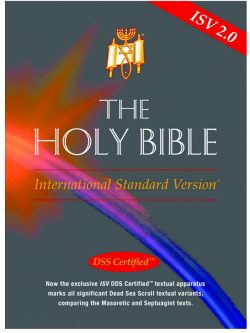
International Standard Version Bible (ISV)
The ISV is a totally new work translated directly from the original languages of Scripture and derived from no other English translation.
The ISV was produced by Bible scholars who believe that “All Scripture is inspired by God and is useful for teaching, for reproof, for correction, and for training in righteousness.” (2 Timothy 3:16 ISV) It takes advantage not only of the most ancient manuscripts available, but also of the most recent archaeological discoveries. The ISV is the first English Bible conceived, designed, translated, and formatted primarily for a computer-literate generation. It is being produced entirely in a computer-aided media (CAM) format.
The ISV is Sensitive to Poetic Literary Forms in the Original Text. It treats subtle nuances of the original texts with special care. For example, several passages of the Bible appear to have been rendered in poetic form when first penned by their authors. The ISV has meticulously crafted these original passages as true poems—thus communicating a sense of their original literary form as well as translating the original intent of the New Testament author.
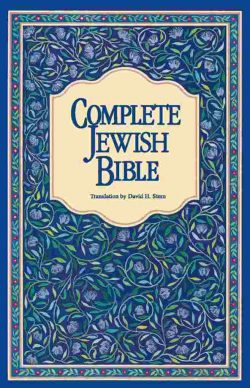
Complete Jewish Bible (CJB)
Presenting the Word of God as a unified Jewish book, the Complete Jewish Bible is a translation for Jews and non-Jews alike. It connects Jews with the Jewishness of the Messiah, and non-Jews with their Jewish roots. Names and key terms are returned to their original Hebrew and presented in easy-to-understand transliterations, enabling the reader to say them the way Yeshua (Jesus) did! For readers familiar with the Jewish New Testament, the Complete Jewish Bible is a welcome sight!
The CJB is a translation of the Bible into English by Dr. David H. Stern. It consists of Dr. Stern’s revised translation of the Old Testament (Tanakh) plus his original Jewish New Testament (B’rit Hadashah) translation in one volume. It was published in its entirety in 1998 by Jewish New Testament Publications, Inc.
The Old Testament translation is a paraphrase of the public domain 1917 Jewish Publication Society version. The New Testament section is Dr. Stern’s original translation from the ancient Greek.
Dr. Stern’s purpose for producing the Complete Jewish Bible was “to restore God’s Word to its original Jewish context and culture as well as be in easily read modern English.”
The CJB follows the order and the names of the Old Testament books in the Jewish Bible, rather than those of typical Christian Bibles. It uses Hebrew names for people and places, such as Eliyahu for “Elijah”, and Sha’ul for “Saul.” The work also incorporates Hebrew and Yiddish expressions, such as matzah for “unleavened bread” and mikveh for “ritual immersion pool”.
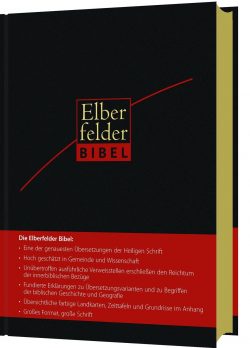
Elberfelder Bibel 2006 R. Brockhaus Verlag Wuppertal
Es ist die erneut durchgesehene Ausgabe der revidierten Elberfelder Bibel unter Berücksichtigung der neuen Rechtschreibung.
Der SCM R.Brockhaus Verlag wirbt für diese Bibelübersetzung mit den folgenden Worten:
„Die Elberfelder Bibel gehört zu den führenden deutschen Bibelübersetzungen“.
Der Name geht auf Elberfeld zurück, den heutigen Stadtteil Wuppertals, wo ein großer Teil der Übersetzungsarbeit geleistet wurde.
Ziel dieser Arbeit ist es, eine Übersetzung der ältesten Handschriften der biblischen Schriften vorzulegen, die möglichst unverfälscht deren Aussagegehalte wiedergibt und dabei möglichst wenig theologische Interpretation von außen an die Schriften heranträgt.
In ihrem Vorwort schreiben der R. Brockhaus Verlag Wuppertal und die Christliche Verlagsgesellschaft mbH Dillenburg:
„Wir wünschen uns, dass die Elberfelder Bibel 2006 allen Lesern zum Segen wird und dass sie weiterhin wichtige Impulse für das geistliche Leben der Christen im deutschsprachigen Raum liefern kann.“
Elberfelder Übersetzung Edition (CSV)
Die vorliegende Bibelausgabe geht zurück auf die so genannte „Elberfelder Übersetzung“, die erstmals in den Jahren 1855 bis 1871 erschien und mit dem Ziel erstellt wurde, unter Berücksichtigung der damals vorhandenen wissenschaftlichen Ausgaben des hebräischen und griechischen Grundtextes eine möglichst wortgetreue Übersetzung des Grundtextes zu bieten.
Durch Gottes Gnade kann jetzt eine Neubearbeitung dieser Übersetzung erscheinen. Dazu wurden unter anderem die heutigen wissenschaftlichen Grundtext-Ausgaben des Alten und Neuen Testaments herangezogen (K. Elliger und W. Rudolph: Biblia Hebraica Stuttgartensia, Stuttgart, 2. Auflage 1984; Nestle-Aland: Novum Testamentum Graece, Stuttgart, 27. Auflage 1993; The New Testament: The Greek Text Underlying the English Authorised Version of 1611, London o. J.) Hier und da bestand die Möglichkeit, die Genauigkeit der Übersetzung etwas zu verbessern. Auch sprachliche und stilistische Glättungen wurden an vielen Stellen vorgenommen. Dabei war es Wunsch und Ziel der Bearbeiter, dass diese Ausgabe der Heiligen Schrift weiterhin dem Anspruch genügt, möglichst wortgetreu und doch verständlich zu sein.
Wie die ursprünglichen Übersetzer lehnen auch die jetzigen Bearbeiter alle Ansätze der Bibelkritik ab, die die Inspiration und Autorität des Wortes Gottes und seine innere Einheit in Frage stellen. Dem Gesamtzusammenhang der Heiligen Schrift muss daher besonders Rechnung getragen werden, wenn der Handschriftenbefund gelegentlich nicht eindeutig ist. Das bedeutet, dass die Bearbeiter nicht kritiklos dem Text der wissenschaftlichen Grundtext-Ausgaben folgen.
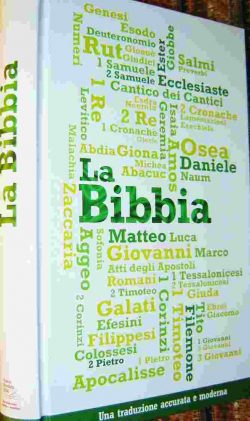
La Sacra Bibbia Nuova Riveduta 2006
Una traduzione accurata e moderna
La versione Nuova Riveduta 2006 è una delle versioni bibliche più diffuse in Italia. Essa si presenta come una revisione della precedente edizione del 1994. La Nuova Riveduta è il frutto di un intenso lavoro di ricerca, di confronto sui testi ebraici e greci e di aggiornamento linguistico sulla base della versione Riveduta del 1924. Essa si colloca nella linea della tradizione del testo tradotto da Giovanni Diodati nel 1607 a Ginevra; allo stesso tempo se ne distingue sia per l’aggiornamento linguistico, sia per la revisione operata sulla base di quei manoscritti greci ed ebraici che non erano disponibili all’epoca del Diodati stesso.
Sito Web dell’editore: http://www.casadellabibbia.it
English
NEW REVISED 2006
an accurate and modern translation
The 2006 New Revised Version is a Bible translation that is widely used in Italy. It is a revision of the 1994 edition. The New Revised Version is the result of intensive linguistic research and translation, comparing the Hebrew and Greek texts and updating language based on the revised version of 1924. It follows the tradition of the 1607 Giovanni Diodati Geneva translation, but at the same time is distinguished by its revisions and updates based on Greek and Hebrew manuscripts that were not available in Diodati’s time.
Publisher’s website: http://www.casadellabibbia.it
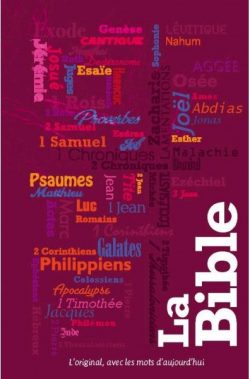
La Bible Segond 21
La version Louis Segond de la Bible est une des plus répandues dans le monde francophone. La Segond 21 est une nouvelle traduction de la Bible, éditée pour la première fois en 2007 par la Société Biblique de Genève, qui s’en inspire. Elle est le fruit de 12 ans de travail sur les textes hébreu, araméen et grec et tient compte des nouvelles informations à disposition. Son objectif ? Proposer une formulation française fidèle à la formulation originale, mais en français courant, d’où la formule «L’original, avec les mots d’aujourd’hui».theWord electronic version includes original Passage Headings and Footnotes.
Site Web de l’éditeur: http://www.societebiblique.com/
Neue Genfer Übersetzung (NGU)
Ja! Schon wieder eine neue Bibelübersetzung. Vielleicht fragen Sie sich, ob wir wirklich wissen, was wir tun. Da können wir Sie beruhigen. Seit bereits 15 Jahren sind wir davon überzeugt, dass wir genau das Richtige tun. In den Jahren 2000 und 2003 erschienen erste Teilausgaben des Neuen Testaments der NGÜ und wir haben seitdem viele begeisterte Menschen kennen gelernt, die uns bestätigt haben, dass unsere Arbeit richtig ist.
Andere Übersetzungen sind oft schwerer verständlich, da sie entweder eine eher altertümliche Sprache verwenden oder eine sehr moderne Sprache benutzen, inhaltlich aber relativ weit vom Originaltext entfernt sind. Wir wollen, dass Sie die Botschaft der Bibel besser verstehen können. Deswegen ist es uns wichtig, so urtexttreu wie möglich zu sein, ohne die Verständlichkeit zu vernachlässigen.
Mit der NGÜ können Sie nun das gesamte Neue Testament in der Sprache von heute lesen. Leicht verständlich und lesefreundlich gestaltet. Höchste inhaltliche und sachliche Genauigkeit erschließen Ihnen neue Dimensionen bei der Lektüre. Entdecken Sie das Neue Testament ganz neu!
Website des Herausgebers: http://www.societebiblique.com/
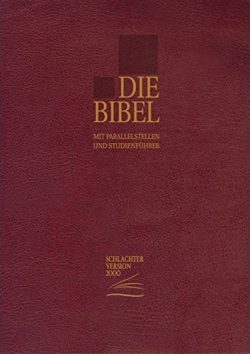
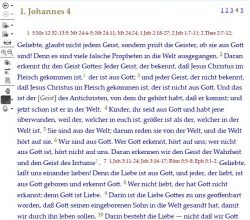
Schlachter Bibel 2000
It was the first German translation of the last century and was published for the first time in 1905. The Bible of the Swiss preacher Franz Eugen Schlachter (1859-1911) was first revised by the Swiss pastors Linder and Kappeler in 1911 after his death. The second revision was made in 1951 by the Geneva Bible Society. It was a reworking of the original 1905 translation, no revision of the Linder and Kappeler edition.
The renewed revision of the slaughtering Bible of 1951 was commissioned by the Geneva Bible Society in 1995 and published as “Schlachter 2000”. Members of this revision were initially responsible for the direct editing of texts by Rudolf Ebertshäuser (editor), Peter Toscan (coordinator), Karl-Hermann Kauffmann (revision director), and for the New Testament by Professor Herbert Jantzen (Grundtextspezialist Altgriechisch) Liebi (Grundtextspezialist Hebrew) and Dr. Martin Heide (Grundtextspezialist Hebrew). As a rule, the commission was convened on Saturdays in the Freie Brüdergemeinde in Albstadt. Additional employees were, among other things, for the parallel positions Gottfried Maron, the former president of the Geneva Bible Society, with his own team and, in time, Gottfried Wüthrich, The former secretary secretary of the Geneva Bible Society, for the tangents to the old butcher’s version. Electronic processing was carried out by the Free Brotherhood of Albstadt, Jürgen Oberwegner and Willi Welte, after the text of the slaughter-edition 1951 as a basis for processing by the Allgäuer communities around Erwin Keck had been recorded. When exchanging obsolete words, Wilfried Dabnar was involved in computer technology. Technical questions were coordinated by the then president of the Geneva Bible Society, Paul André Eicher. In 2003 the revision was completed after nine years of processing. The new revised slavery Bible uses exclusively the basic texts of the Reformation, ie, the textus Receptus with its variants as a basis. For the tangents to the old butcher’s version. The electronic processing was carried out by the Free Brotherhood of Albstadt, Jürgen Oberwegner and Willi Welte, after the text of the slaughter-edition 1951 as a processing basis of the Allgäuer municipalities around Erwin Keck had been captured. When exchanging obsolete words, Wilfried Dabnar was involved in computer technology. Technical questions were coordinated by the then president of the Geneva Bible Society, Paul André Eicher. In 2003 the revision was completed after nine years of processing. The new revised slavery Bible uses exclusively the basic texts of the Reformation, ie, the textus Receptus with its variants as a basis. For the tangents to the old butcher’s version. The electronic processing was carried out by the Free Brotherhood of Albstadt, Jürgen Oberwegner and Willi Welte, after the text of the slaughter-edition 1951 as a processing basis of the Allgäuer municipalities around Erwin Keck had been captured. When exchanging obsolete words, Wilfried Dabnar was involved in computer technology. Technical questions were coordinated by the then president of the Geneva Bible Society, Paul André Eicher. In 2003 the revision was completed after nine years of processing. The new revised slavery Bible uses exclusively the basic texts of the Reformation, ie, the textus Receptus with its variants as a basis. Jürgen Oberwegner and Willi Welte, after the text of the butcher’s edition 1951 as a basis for processing by the Allgäuer communities around Erwin Keck had been recorded. When exchanging obsolete words, Wilfried Dabnar was involved in computer technology. Technical questions were coordinated by the then president of the Geneva Bible Society, Paul André Eicher. In 2003 the revision was completed after nine years of processing. The new revised slavery Bible uses exclusively the basic texts of the Reformation, ie, the textus Receptus with its variants as a basis. Jürgen Oberwegner and Willi Welte, after the text of the butcher’s edition 1951 as a basis for processing by the Allgäuer communities around Erwin Keck had been recorded. When exchanging obsolete words, Wilfried Dabnar was involved in computer technology. Technical questions were coordinated by the then president of the Geneva Bible Society, Paul André Eicher. In 2003 the revision was completed after nine years of processing. The new revised slavery Bible uses exclusively the basic texts of the Reformation, that is, the Textus Receptus with its variants as a basis. Technical questions were coordinated by the then president of the Geneva Bible Society, Paul André Eicher. In 2003 the revision was completed after nine years of processing. The new revised slavery Bible uses exclusively the basic texts of the Reformation, ie, the textus Receptus with its variants as a basis. Technical questions were coordinated by the then president of the Geneva Bible Society, Paul André Eicher. In 2003 the revision was completed after nine years of processing. The new revised slavery Bible uses exclusively the basic texts of the Reformation, ie, the textus Receptus with its variants as a basis.
Publisher’s website: http://www.societebiblique.com/
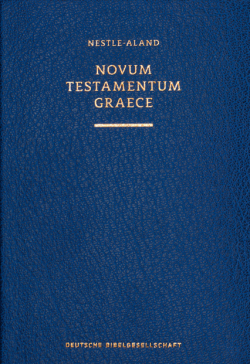
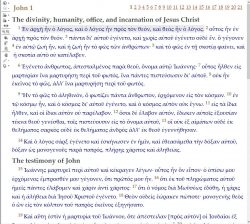
Greek Bible text of the Novum Testamentum Graece, 28th edition (Nestle Aland) (GNT)
Note: If you came here to purchase NA27. Sorry it is no longer available but if you already own NA27you may get the fixes in theWord > Add Titles.
DESCRIPTION
This is the Greek text, sometimes referred to as the “critical text tradition”. It is the most widely used critical version of the Greek New Testament. It includes:
- letter casing
- accents
- breathing marks
- punctuation
- capitalization
- Old Testament quotes in bold
- paragraphs and poetry formatting
- Tagged with:
- Strong’s codes
- morphology (grammatical parsing)
- word lemmas
Strong’s codes and morphology codes can either be displayed next to each word or be hidden away and appear when the mouse moves over a word. The module can be searched on original words, ignoring accents and breathing marks if desired. Complex searches including Strong’s codes, word grammar and even lemmas are also supported, along with any arbitrary combination of these.
We want to make you aware of some similar products that if you like this work, you might consider getting also.
(1.) Student’s Guide to New Testament Textual Variants, A (“Free to You” from theWord.net)
(2.) Variant Readings of the New Testament (“Free to You” from theWord.net)
(click on the link and you will directly download the module from theWord.net)
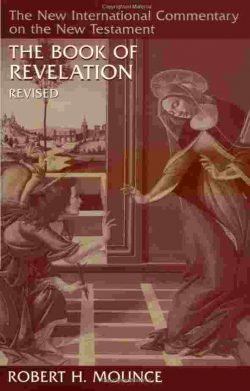
New International Commentary: The Book of Revelation
- Verse-by-verse commentary
- In-depth discussion of textual and critical matters
- Introductions to each book’s authorship, date, purpose, structure, and theology
- Detailed bibliography
DESCRIPTION
No New Testament book has caused as much confusion and been subjected to as many varied interpretations as Revelation. Today we continue to witness a surge of popular interest in Bible prophecy and questions concerning such matters as the “last days” and the second coming of Christ. Scholarly debates continue as well, especially regarding the occurrence, timing, and theological significance of the “tribulation” and the “millennium.” It is therefore the special task of the commentator on Revelation to address such difficult questions in a scholarly and responsible manner while also remaining accessible to pastors, students, and general readers.
When first published, this volume on Revelation by Robert H. Mounce was widely praised as a standard commentary on the Apocalypse. In this new edition, now based on the NIV and Nestle-Aland, Mounce has revised and expanded his work to reflect more than twenty additional years of mature thought on Revelation and to bring his work up to date with the latest scholarship. As in the original edition, Mounce here engages seriously with the various approaches to interpretation and with the conventions common to apocalyptic literature. In affirming more directly his own reading of the Apocalypse, Mounce steers a middle course between an extreme literalism and a highly imaginative subjectivism, believing this to be the way the ancient text spoke to the first-century churches to whom it was addressed—and the way it still speaks to us today.
New International Commentary: The Epistles of John
PRODUCT HIGHLIGHTS:
- Verse-by-verse commentary
- In-depth discussion of textual and critical matters
- Introductions to each book’s authorship, date, purpose, structure, and theology
- Detailed bibliography
DESCRIPTION
The three Epistles of John, according to I. Howard Marshall, are concerned with the fundamentals of Christian belief and life—faith and love. The reader who grasps the message of these short but essential letters will have a sound basis in Christian doctrine. This group of Epistles, says Marshall, is also a good starting point for the study of the Gospel of John. This important commentary, then, was written not only so that students of the Bible might master the content of John’s Epistles, but that they might come to a proper understanding of Johannine theology as a whole.
This volume includes an “invitation” to general readers and an “introduction” addressed to students and specialists. Another fresh feature is a rearrangement of the traditional order of the three letters: 2 John and 3 John are studied before 1 John. This structure assures that the two shorter letters are not relegated to the position of appendices but are treated as important documents of early Christianity in their own right.
See excerpt of NIC Epistles of John
….
New International Commentary: The First Epistle of Peter
PRODUCT HIGHLIGHTS:
- Verse-by-verse commentary
- In-depth discussion of textual and critical matters
- Introductions to each book’s authorship, date, purpose, structure, and theology
- Detailed bibliography
DESCRIPTION
The First Epistle of Peter constitutes an important work of New Testament theology and pastoral care, serves as an example of how the early church applied Jesus’ sayings and the Old Testament writings to contemporary concerns, and presents some extremely useful perspectives on living the Christian life today. This commentary by Peter Davids does an excellent job of mining the rich wealth of instruction to be found in this very significant section of Scripture.
Davids’s commentary contains several notable features: a unique grasp of 1 Peter’s structure, a systematically arranged introduction that summarizes the commentary proper, a perceptive excursus on suffering in 1 Peter and the New Testament, Davids’s own study translation, thorough and incisive comments on each verse of the text, frequent parallels to ancient literature, an exceptionally clear and lively writing style, and one of the most comprehensive bibliographies on 1 Peter available anywhere.
….
New International Commentary: The Epistle of James
PRODUCT HIGHLIGHTS:
- Verse-by-verse commentary
- In-depth discussion of textual and critical matters
- Introductions to each book’s authorship, date, purpose, structure, and theology
- Detailed bibliography
DESCRIPTION
The author of the Epistle of James, a letter distinguished for its passionate commitment to Jewish Christianity, has been dubbed “the Amos of the new covenant.” As a guide to Christian behavior, the letter deals with themes of universal importance, among which are the nature of God and man, the evils of lust and pride, the virtues of faith and hope, and the fruits of faith and love.
James B. Adamson, in contrast to many scholars, is convinced that James was a master writer whose knowledge and choice of Greek bestow on his epistle a sustained unity of style and content that bears a close affinity with the Synoptic Gospels and the sayings of Jesus. The substance and authoritative tone of this epistle follow in the tradition of Elijah and Moses, and the style and diction resemble some of the outstanding qualities of the Psalms the prophets.
In this thorough exegesis of his own working translation, Adamson combats some prevalent notions and corrects misunderstandings of the nature of this unique epistle, which, he says, cannot really be understood apart from the whole context of the New Testament.
….

New International Commentary: The Epistle to the Hebrews
PRODUCT HIGHLIGHTS:
- Verse-by-verse commentary
- In-depth discussion of textual and critical matters
- Introductions to each book’s authorship, date, purpose, structure, and theology
- Detailed bibliography
DESCRIPTION
For many readers the Epistle to the Hebrews is among the most difficult books of the New Testament. Understanding its message calls for a great familiarity with its Old Testament background and a good knowledge of certain phases of first-century biblical exegesis. When first published in 1964, this commentary on Hebrews by F.F. Bruce received critical praise for providing the expertise needed on both these fronts.
The last volume on which Bruce was able to complete revisions before his death in 1990, this edition of The Epistle to the Hebrews evidences twenty-five years of further study on Bruce’s part—especially through thoroughly updated and embellished footnotes that take into account the numerous publications on Hebrews that have appeared in the intervening years. Bruce also replaced the commentary’s use of the American Standard Version of 1901 with his own translation of the original Greek text to make his verse-by-verse exposition as clear as possible.
….
IVP Bible Background Commentary, Old Testament
The unique commentary joins The IVP Bible Background Commentary: New Testament in providing historical, social and cultural background for each passage of the Old Testament. From Genesis through Malachi, this single volume gathers and condenses an abundance of specialized knowledge–making it available and accessible to ordinary readers of the Old Testament. Expert scholars John Walton, Victor Matthews and Mark Chavalas have included along with the fruits of their research and collaboration