
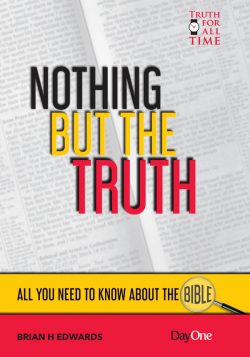
Nothing but the truth
Description
Nothing but the Truth was first published in 1978 and, after many reprints and two revised editions. It was finally reprinted in 2012. Further revision and expansion led to the publication of six small volumes in 2017 under the title All you need to know about the Bible. This edition in one 768 page hardback volume lightly revised version of All you need to know.
It aims to answer in an accessible and accurate way, the many questions that are asked about the main theme of the Bible, how it came to be written, how trustworthy it is, how the individual books were gathered together, and much more. Full references allow the reader to pursue each subject in more depth. In 2020 we are pleased to be able to release a digital version, compatible with theWord Bible software.
Overview of the book and reading plan inside theWord:
theWord Features:
- Verse popups
- Fully searchable text
- Footnotes
- Pages links <p676] indicates the page is above this point.
- Easy navigation of topics via topics tree display.
- Reading Plan for the whole Bible included as a separate resource. (developed from the reading plan in Book 6 Chapter 7)
The reading plan can be used as a basis to make custom plans to allow you to schedule readings to your requirements.
New International Commentary: The Book of Proverbs, Chapters 15–31
PRODUCT HIGHLIGHTS:
- Verse-by-verse commentary
- In-depth discussion of textual and critical matters
- Introductions to each book’s authorship, date, purpose, structure, and theology
- Detailed bibliography
DESCRIPTION
For the modern mind, the book’s cultural setting seems far removed from the twenty-first century. Proverbs puts a high priority on tradition and age, while the modern mind prizes change and youth. For Christians, Proverbs seems irrelevant. For the translator, Proverbs defies translations.
In the second part of his two-volume commentary, Waltke confronts these exegetical and interpretive challenges head on. This historico-grammatical commentary on Proverbs uncovers the profound philosophical and theological insights of this ancient book. Waltke helps readers understand the poetics used in its composition, and challenges modern prejudices toward the book.
….
Theological Wordbook of the Old Testament (TWOT)
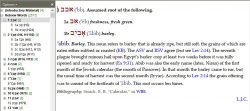
This extensive, scholarly work includes discussions of every Hebrew word of theological significance in the Old Testament, plus brief definitions of all other words found in Brown, Driver and Briggs Hebrew Lexicon. Keyed to Strong’s Concordance, the Theological Wordbook of the Old Testament (TWOT) has been a longtime favorite of serious students of the Bible -pastors and laypeople alike. The busy pastor or earnest Christian worker who has neither the time nor the background for detailed technical study yet desires to understand important terms will enjoy this practical resource.
There are more than 1,400 articles written by 43 Old Testament scholars, plus some 400 sub-entries giving definitions only. The articles focus on theological meanings and importance and do not include lengthy, technical linguistic discussions. Virtually exhaustive bibliographies of published material relating to the words discussed are also included, in addition to a special section of Aramaic words used in the Old Testament.
New International Commentary: The Book of Isaiah, Chapters 1–39
PRODUCT HIGHLIGHTS:
- Verse-by-verse commentary
- In-depth discussion of textual and critical matters
- Introductions to each book’s authorship, date, purpose, structure, and theology
- Detailed bibliography
DESCRIPTION
The first of John N. Oswalt’s two-part study of the book of Isaiah for the NICOT series, this commentary on chapters 1–39 combines theological acumen, literary sensitivity, philological expertise, and historical knowledge to present a faithful and accurate reading of one of the Old Testament’s most important books.
In the introduction to this work, Oswalt considers Isaiah’s background, unity of composition, date and authorship, canonicity, Hebrew text, theology, and problems of interpretation, and he offers a select bibliography for further research. Oswalt also provides substantial discussions of several issues crucial to the book of Isaiah. He notes, for example, that scholars often divide Isaiah into three divisions, with chapters 1–39 addressing Isaiah’s contemporaries in the eighth century b.c., chapters 40–55 presupposing the exile of the sixth century, and chapters 56–66 presupposing the eventual return from exile. While taking this scholarship into account Oswalt defends the unity of the prophetic book and argues convincingly that the whole book can be attributed to the Isaiah of the eighth century.
The commentary proper, based on Oswalt’s own translation of the Hebrew text, provides pastors, scholars, and students with a lucid interpretation of the book of Isaiah in its ancient context as well as an exposition of its message for today.
….
New International Commentary: The Book of Isaiah, Chapters 40–66
PRODUCT HIGHLIGHTS:
- Verse-by-verse commentary
- In-depth discussion of textual and critical matters
- Introductions to each book’s authorship, date, purpose, structure, and theology
- Detailed bibliography
DESCRIPTION
The second of John N. Oswalt’s two-part study of the book of Isaiah for the NICOT series, this commentary provides exegetical and theological exposition on the latter twenty-seven chapters of Isaiah for scholars, pastors, and students who seek to know the perennial meaning of the text in contemporary terms.
Though Oswalt’s main introduction to Isaiah is found in his commentary on chapters 1–39, this second volume opens with an important discussion of scholarly debate over the unity/diversity of Isaiah. In this work Oswalt makes stronger his case for reading the entire book of Isaiah as written by a single author—a position not common in other recent commentaries. Oswalt’s work stands alone, then, as an attempt to take seriously Israel’s historical situation at the time chapters 40–66 were composed while also seeking to understand how these chapters function as a part of Isaiah’s total vision written in the late 700s or early 600s b.c.
Assuming the single authorship of Isaiah, the verse-by-verse commentary aims to interpret chapters 40–66 in light of the book as a whole. While not neglecting issues of historical criticism or form criticism, the commentary focuses mainly on the theological meaning of the text as indicated especially by the literary structure. Building on his earlier argument that the central theme of Isaiah is servanthood, Oswalt keeps readers focused on the character of Israel’s sovereign Redeemer God, on the blind servant Israel, and on the ultimate work of the Suffering Servant in whom the world can find its Savior.
….
New International Commentary: The Book of Jeremiah
PRODUCT HIGHLIGHTS:
- Verse-by-verse commentary
- In-depth discussion of textual and critical matters
- Introductions to each book’s authorship, date, purpose, structure, and theology
- Detailed bibliography
DESCRIPTION
The Old Testament prophets played a crucial role in the history of Israel. Although there were many prophets who brought the message of God to his people, we have records of only a few. Of these, our knowledge of Jeremiah is probably the most complete. In this commentary, J.A. Thompson examines the book of Jeremiah with its message urging the people of Israel to be true to their covenant Lord and to live in conformity with his covenant requirements.
Thompson begins his study by looking at the role of the prophets in Israel, and Jeremiah’s place among them. He then discusses the historical setting of Jeremiah’s message. From this background, Thompson moves to an examination of the book of Jeremiah itself, focusing on its structure and composition before considering some important issues for exegesis—the date of Jeremiah’s call, the significance of the symbolic actions he used, and the relationship between Jeremiah and Hosea. Lastly, Thompson examines the text and poetic forms of Jeremiah.
….
New International Commentary: The Book of Ezekiel, Chapters 1–24
PRODUCT HIGHLIGHTS:
- Verse-by-verse commentary
- In-depth discussion of textual and critical matters
- Introductions to each book’s authorship, date, purpose, structure, and theology
- Detailed bibliography
DESCRIPTION
To many modern readers the prophecies of Ezekiel are a mystery. This commentary by Daniel Block—Part I of his two-volume study of the whole book of Ezekiel—seeks to answer the questions that contemporary readers bring to the text by examining the language, the message, and the methods of this obscure and often misunderstood Hebrew prophet. The result of twelve years of study, this volume provides an excellent discussion of the background of Ezekiel and offers a verse-by-verse exposition of each literary/prophetic unit in Ezekiel 1–24 that not only makes clear the prophet’s message to his original readers but also shows that Ezekiel’s ancient wisdom and vision are still very much needed by the church in the twenty-first century.
….
New International Commentary: The Book of Ezekiel, Chapters 25–48
PRODUCT HIGHLIGHTS:
- Verse-by-verse commentary
- In-depth discussion of textual and critical matters
- Introductions to each book’s authorship, date, purpose, structure, and theology
- Detailed bibliography
DESCRIPTION
To many modern readers the prophecies of Ezekiel are a mystery. This commentary by Daniel Block—which completes his two-volume study of the whole book of Ezekiel—seeks to answer the questions that contemporary readers bring to the text by examining the language, the message, and the methods of this obscure and often misunderstood Hebrew prophet. The result of twelve years of study, this volume, like the one on chapters 1–24, provides an excellent discussion of the background of Ezekiel and offers a verse-by-verse exposition of each literary/prophetic unit in Ezekiel 25–48 that not only makes clear the prophet’s message to his original readers but also shows that Ezekiel’s ancient wisdom and vision are still very much needed by the church in the twenty-first century.
….
New International Commentary: The Gospel of Matthew
PRODUCT HIGHLIGHTS:
- Verse-by-verse commentary
- In-depth discussion of textual and critical matters
- Introductions to each book’s authorship, date, purpose, structure, and theology
- Detailed bibliography
DESCRIPTION
“It is a special pleasure to introduce R. T. (Dick) France’s commentary to the pastoral and scholarly community, who should find it a truly exceptional—and helpful—volume.” So says Gordon Fee in his preface to this work. France’s masterful commentary on Matthew focuses on exegesis of Matthew’s text as it stands rather than on the prehistory of the material or details of Synoptic comparison. The exegesis of each section is part of a planned literary whole supplemented, rather than controlled, by verse-by-verse commentary, allowing the text as a complete story to come into brilliant focus.
Rather than being a “commentary on commentaries,” The Gospel of Matthew is concerned throughout with what Matthew himself meant to convey about Jesus and how he set about doing so within the cultural and historical context of first-century Palestine. France frequently draws attention to the distinctive nature of the province of Galilee and the social dynamics involved when a Galilean prophet presents himself in Jerusalem as the Messiah.
The English translation at the beginning of each section is France’s own, designed to provide the basis for the commentary. This adept translation uses contemporary idioms and, where necessary, gives priority to clarity over literary elegance.
Amid the wide array of Matthew commentaries available today, France’s world-class stature, his clear focus on Matthew and Jesus, his careful methodology, and his user-friendly style promise to make this volume an enduring standard for years to come.
….
All the People in the Bible
DESCRIPTION
“More than any other book, the Bible offers an amazing collection of fascinating characters ranging from the holiest of the holy to some of the most depraved scoundrels imaginable. Many are mentioned only in passing, yet history and archaeology can often fill in the blanks and flesh them out as exciting human beings. For this reason we have in many cases been able to tell much more about them than the Bible alone reveals.”
— Richard R. Losch (from the preface)
A comprehensive gathering of persons found in the Bible, including the Apocrypha, All the People in the Bible really delivers on its title: literally all of the Bible’s characters appear in this fascinating reference work. From the first article on Aaron to the final entry on Zophar, Richard Losch details each person in a lively narrative style.
The bulk of the book consists of Losch’s A–Z articles covering the familiar and the not-so-familiar figures in Scripture. Names of people who are found only in genealogies or who had no significant effect on history are included solely in the alphabetical listing starting on page 452. That listing, “All the People in the Bible and Apocrypha,” includes pronunciations, brief identifications, and biblical references. Persons covered in greater detail in the main part of the book are identified in bold print.
Losch’s intriguing look at all the people in the Bible is anything but a dry reference work. This is a book to dip into and enjoy over and over.
theWord Features:
- Dictionary lookup and A-Z topic-tree navigation
- Fully searchable biographical entries
- Aliases and internal cross-references
- Bible-reference links and verse popups
- Footnotes with exact single-note popups
- Greek, Hebrew, and transliterated name forms
- Images and tables
- Print-page markers and bookmarks
- Pgs: 586
- Special Text Colors
- Normal: Text
-
Dictionary link: Peter
- Greek: Πέτρος
- Hebrew: שמעון
- Transliteration: Kephah
-
Page Number: [p1>
NIV Application Commentary: Proverbs
DESCRIPTION
From the Back Cover
What is wisdom? Does occupying the top of life’s heap mean you have it? Does being near the bottom mean you don’t? Wisdom can certainly help you acquire wealth, influence people, or succeed at your career, yet it involves more than knowledge alone. It’s also a matter of understanding God’s perspectives in applying what you know and having the character to act accordingly. That is why true wisdom—the kind that begins with fear of the Lord—frequently runs counter to what our culture values and applauds. This is the wisdom the book of Proverbs teaches. Proverbs deals with the relationship between heaven and earth on a practical level that covers the broad swath of human activity. We could all use more wisdom in our lives; the book of Proverbs was designed to guide us into it. Proverbs is far from monolithic. It has multiple authors and employs diverse styles. But its goal remains simple: to equip us for living in a way that succeeds first and foremost in God’s eyes. Exploring the links between the Bible and our own times, Paul Koptak shares perspectives on Proverbs that reveal ageless truths for our twenty-first-century lives. Most Bible commentaries take us on a one-way trip from our world to the world of the Bible. But they leave us there, assuming that we can somehow make the return journey on our own. They focus on the original meaning of the passage but don’t discuss its contemporary application. The information they offer is valuable—but the job is only half done! The NIV Application Commentary Series helps bring both halves of the interpretive task together. This unique, award-winning series shows readers how to bring an ancient message into our present-day context. It explains not only what the Bible meant but also how it speaks powerfully today. –This text refers to the hardcover edition.
Book Summary
The NIV Application Commentary helps readers with the vital task of bringing the ancient message of the Bible into a contemporary context. It gives preachers and teachers the tools, ideas, and insights they need to communicate God’s Word with the same powerful impact it had when it was first written.
About the Book
The NIV Application Commentary helps you communicate and apply biblical text effectively in today’s context.
To bring the ancient messages of the Bible into today’s world, each passage is treated in three sections:
- Original Meaning. Concise exegesis to help readers understand the original meaning of the biblical text in its historical, literary, and cultural context.
- Bridging Contexts. A bridge between the world of the Bible and the world of today, built by discerning what is timeless in the timely pages of the Bible.
- Contemporary Significance. This section identifies comparable situations to those faced in the Bible and explores relevant application of the biblical messages. The author alerts the readers of problems they may encounter when seeking to apply the passage and helps them think through the issues involved.
This unique, award-winning commentary is the ideal resource for today’s preachers, teachers, and serious students of the Bible, giving them the tools, ideas, and insights they need to communicate God’s Word with the same powerful impact it had when it was first written.
theWord Features:
- Verse popups
- Verse synchronization
- Fully searchable text
- Footnotes
- Pages Links
- Subject Index
- Scripture and Apocrypha Index
- Easy navigation of topics via topics tree display.
- Special Text Colors
Normal: Text
Hyperlink: Glossary | Gen. 9:8
Page Number: [p21>
Hebrew: בְּרֵאשִׁית
Note: Does not display commentary under Bible text.
NIV Application Commentary: Isaiah
DESCRIPTION
It seems that every commentary series produces one truly great classic commentary. While the NIVAC series has produced many wonderful volumes, none compares to the over 500 pages of sheer excellance in commentary writing that John Oswalt has produced in Isaiah [NIVAC].
Oswalt, who has written multiple major commentaries on Isaiah, here skillfully sorts through the complex historical details and the timeless prophecies Isaiah made in light of those circumstances, and brilliantly applies them to our world and our lives as those living under reign of the messiah that the prophet could only see from a distance.
Book Summary
The NIV Application Commentary helps readers with the vital task of bringing the ancient message of the Bible into a contemporary context. It gives preachers and teachers the tools, ideas, and insights they need to communicate God’s Word with the same powerful impact it had when it was first written.
About the Book
The NIV Application Commentary helps you communicate and apply biblical text effectively in today’s context.
To bring the ancient messages of the Bible into today’s context, each passage is treated in three sections:
- Original Meaning. Concise exegesis to help readers understand the original meaning of the biblical text in its historical, literary, and cultural context.
- Bridging Contexts. A bridge between the world of the Bible and the world of today, built by discerning what is timeless in the timely pages of the Bible.
- Contemporary Significance. This section identifies comparable situations to those faced in the Bible and explores relevant application of the biblical messages. The author alerts the readers of problems they may encounter when seeking to apply the passage and helps them think through the issues involved.
This unique, award-winning commentary is the ideal resource for today’s preachers, teachers, and serious students of the Bible, giving them the tools, ideas, and insights they need to communicate God’s Word with the same powerful impact it had when it was first written.
theWord Features:
- Verse popups
- Verse (span) synchronization
- Fully searchable text
- Footnotes
- Pages links
- Easy navigation of topics via topics tree display.
- Scripture Index
- Subject Index
- Special Text Colors
- Normal: Text
- Hyperlink: Glossary | Gen. 9:8
- Page Number: [pg 21>
- Greek Transliteration: moreyka
- Greek: μετανοέω
- Hebrew Transliteration: torah
- Hebrew: יָרֵךְ
Note: Does not display commentary under Bible text.

NIV Application Commentary: 1 & 2 Kings
DESCRIPTION
Readers of 1 and 2 Kings commonly approach these books as a straightforward chronology of post-Davidic Israel: the inauguration of Solomon’s reign, the division of the kingdom following his death, and Israel’s and Judah’s ensuing kings, conflicts, captivities, and overarching spiritual decline. In reality, however, the books of the Kings fall into the collection known as the Former Prophets, and their true story and underlying theme center on such striking personalities as Nathan, Elijah, Elisha, and other divinely appointed spokesmen. It is God’s interaction with his people by way of his prophets and their kings his pleadings, his warnings, and the fulfillment of his words that comes across again and again with forcefulness and clarity. God speaks; now will his people hear, believe, and respond?
In 1&2 Kings August Konkel shows us that these questions and issues remain pertinent for us today. Bridging the centuries Konkel connects past context to contemporary circumstances, helping us grasp the meaning and significance of 1 and 2 Kings and understand how its myriad lessons and circumstances can inform our knowledge of God and decisions to act in today’s world.
Book Summary
The NIV Application Commentary helps readers with the vital task of bringing the ancient message of the Bible into a contemporary context. It gives preachers and teachers the tools, ideas, and insights they need to communicate God’s Word with the same powerful impact it had when it was first written.
About the Book
The NIV Application Commentary helps you communicate and apply biblical text effectively in today’s context.
To bring the ancient messages of the Bible into today’s context, each passage is treated in three sections:
- Original Meaning. Concise exegesis to help readers understand the original meaning of the biblical text in its historical, literary, and cultural context.
- Bridging Contexts. A bridge between the world of the Bible and the world of today, built by discerning what is timeless in the timely pages of the Bible.
- Contemporary Significance. This section identifies comparable situations to those faced in the Bible and explores relevant application of the biblical messages. The author alerts the readers of problems they may encounter when seeking to apply the passage and helps them think through the issues involved.
This unique, award-winning commentary is the ideal resource for today’s preachers, teachers, and serious students of the Bible, giving them the tools, ideas, and insights they need to communicate God’s Word with the same powerful impact it had when it was first written.
theWord Features:
- Verse popups
- Verse (span) synchronization
- Fully searchable text
- Footnotes
- Pages links
- Easy navigation of topics via topics tree display.
- Scripture Index
- Subject Index
- Author Index
- Special Text Colors
- Normal: Text
- Hyperlink: Glossary | Gen. 9:8
- Page Number: [pg 21>
- Hebrew Transliteration: sanwērîm
- Hebrew: יָרֵךְ
Note: Does not display commentary under Bible text.
NIV Application Commentary: 1 & 2 Chronicles
DESCRIPTION
The Chronicles are more than a history of ancient Israel under the ascent and rule of the Davidic dynasty. They are a story whose grand theme is hope. Great battles are fought, heroes and tyrants vie for power, Israel splits into rival kingdoms, and the soul of God’s holy nation oscillates between faithlessness and revival. Yet above this tossing sea of human events, God’s covenant promises reign untroubled and supreme.
In 1&2 Chronicles [NIVAC] demonstrates how the revelation of Yahweh moves the purposes of teh divine plan forward in the midst of fallible people. Andrew Hill shows that God has a plan to which he is committed, in the ancient world and therefore also today. God redirects our vision from our circumstances in this turbulent world to the surety of his kingdom and to himself as our source of confidence and peace.
Book Summary
The NIV Application Commentary helps readers with the vital task of bringing the ancient message of the Bible into a contemporary context. It gives preachers and teachers the tools, ideas, and insights they need to communicate God’s Word with the same powerful impact it had when it was first written.
About the Book
The NIV Application Commentary helps you communicate and apply biblical text effectively in today’s context.
To bring the ancient messages of the Bible into today’s context, each passage is treated in three sections:
- Original Meaning. Concise exegesis to help readers understand the original meaning of the biblical text in its historical, literary, and cultural context.
- Bridging Contexts. A bridge between the world of the Bible and the world of today, built by discerning what is timeless in the timely pages of the Bible.
- Contemporary Significance. This section identifies comparable situations to those faced in the Bible and explores relevant application of the biblical messages. The author alerts the readers of problems they may encounter when seeking to apply the passage and helps them think through the issues involved.
This unique, award-winning commentary is the ideal resource for today’s preachers, teachers, and serious students of the Bible, giving them the tools, ideas, and insights they need to communicate God’s Word with the same powerful impact it had when it was first written.
theWord Features:
- Verse popups
- Verse (span) synchronization
- Fully searchable text
- Footnotes
- Pages links
- Easy navigation of topics via topics tree display.
- Scripture Index
- Subject Index
- Author Index
- Special Text Colors
- Normal: Text
- Hyperlink: Glossary | Gen. 9:8
- Page Number: [pg 21>
- Hebrew Transliteration: ʾaḥuzzah
Hebrew: יָרֵךְ
Note: Does not display commentary under Bible text.
The New International Greek Testament Commentary: The Epistles to the Colossians and to Philemon
“WORK IN PROGRESS!”
(These are resources that are being developed. There is no release date. Pricing is subject to change.)
(These are resources that are being developed. There is no release date. Pricing is subject to change.)
DESCRIPTION
Series: The New International Greek Testament Commentary (NIGTC)
Paul’s Epistle to the Colossians merits detailed study for at least two reasons. First, it provides an unexpectedly interesting window into the character of Christianity in Asia Minor in the second half of the first century. With the information it gives about the religious tensions within which emergent Christianity was caught up, not least those between Christianity and diaspora Judaism, we begin to gain more insight into the influences and factors that shaped the transition from apostolic to subapostolic Christianity in the region. Second, Colossians represents a crucial stage in the development of Pauline theology itself. Whether it was written at the end of Paul’s life or soon after his death, it indicates how Pauline theology retained its own vital character and did not die with Paul.
In this volume in the celebrated New International Greek Testament Commentary, James D. G. Dunn, author of numerous well-received works on the historical origin and theological interpretation of the New Testament, provides detailed expositions of the text of Paul’s letters to the Colossians and to Philemon.
Dunn examines each of these letters within the context of the Jewish and Hellenistic cultures in the first century, and discusses the place of Colossians and Philemon in the relationship between the Pauline mission and the early churches that received these letters. Particular stress is also placed on the role of faith in Jesus Christ within and over against Judaism and on the counsel of these two important letters with regard to the shaping of human relationships in the community of faith.
Author:
James D. G. Dunn (1939–2020) was a renowned New Testament scholar and the longtime Lightfoot Professor of Divinity at Durham University. His numerous books include The Theology of Paul the Apostle, Jesus according to the New Testament, and the magisterial Christianity in the Making trilogy.
theWord Features:
- Verse popups
- Verse (span) synchronization
- Fully searchable text
- Footnotes
- Pages links
- Easy navigation of topics via topics tree display.
- Special Text Colors
- Normal: Text
- Hyperlink: Gen 3:15
- Page Number: [pg 21>
- Greek: σκανδάλων
- Hebrew: לבנות
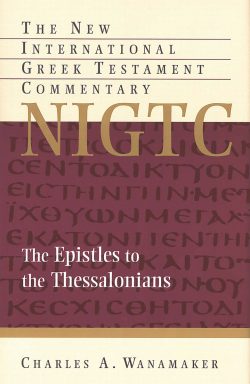
The New International Greek Testament Commentary: The Epistles to the Thessalonians
“WORK IN PROGRESS!”
(These are resources that are being developed. There is no release date. Pricing is subject to change.)
(These are resources that are being developed. There is no release date. Pricing is subject to change.)
DESCRIPTION
The letters of Paul to the newly founded Christian community at Thessalonica hold a special place within the Christian tradition as possibly the earliest extant Christian writings. They are also of special interest not only for their theological value but for their sociological context. Among the communities established by Paul, the church at Thessalonica appears to have been the only one to have suffered serious external oppression. These two important epistles, then, speak uniquely to contemporary Christians living in a society often ideologically, if not politically, opposed to Christian faith.
In this innovative commentary Charles A. Wanamaker incorporates what may be called a social science approach to the study of 1 and 2 Thessalonians, taking into full account the social context that gave rise to Paul’s correspondence. While Wanamaker in no way ignores traditional historical-critical, linguistic, literary, and theological approaches to writing a commentary — in fact, at several points he makes a significant contribution to the questions raised by traditional exegesis — at the same time he goes beyond previous commentaries on the Thessalonian correspondence by taking seriously the social dimensions both of Christianity at Thessalonica and of the texts of 1 and 2 Thessalonians themselves. In blending traditional exegetical methods with this newer approach, Wanamaker seeks to understand Pauline Christianity at Thessalonica as a socio-religious movement in the first-century Greco-Roman world and attempts to grasp the social character and functions of Paul’s letters within this context.
Author:
Charles A. Wanamaker, Associate professor in the department of religious studies and director of postgraduate studies at the University of Cape Town in South Africa. He received his doctorate in New Testament studies at the University of Durham under C. K. Barrett.
theWord Features:
- Verse popups
- Verse (span) synchronization
- Fully searchable text
- Footnotes
- Pages links
- Easy navigation of topics via topics tree display.
- Special Text Colors
- Normal: Text
- Hyperlink: Gen 3:15
- Page Number: [pg 21>
- Greek: σκανδάλων
- Hebrew: לבנות
Chafer’s Systematic Theology
Written by Lewis Sperry Chafer, the founding president of Dallas Theological Seminary and long-time editor of Bibliotheca Sacra, this is the first dispensational, premillenial systematic theology ever published. It is a complete, unabridged systematic theology meaning it covers a lot of ground that many earlier theologies did not, such as ecclesiology (e.g., the doctrine of the universal church, the church’s rule of life), angelology (e.g., the relationship between Satan and sin), and typology. This is truly one of the heavyweight works of the evangelical movement, very much in demand today.
New International Commentary: The Book of Proverbs, Chapters 1–15
PRODUCT HIGHLIGHTS:
DESCRIPTION
Over twenty-five years in the making, this much-anticipated commentary promises to be the standard study of Proverbs for years to come. Written by eminent Old Testament scholar Bruce Waltke, this two-volume commentary is unquestionably the most comprehensive work on Proverbs available.
Grounded in the literary criticism that has so strengthened biblical interpretation, Waltke’s commentary on Proverbs demonstrates the profound, ongoing relevance of this Old Testament book for Christian faith and life. A thorough introduction addresses such issues as text and versions, structure, authorship, and theology. The detailed commentary itself explains and elucidates Proverbs as “theological literature.” Waltke’s highly readable style—evident even in his original translation of the Hebrew text—makes his scholarly work accessible to teachers, pastors, Bible students, and general readers alike.