

Reading Jesus’s Bible – How the New Testament Helps Us Understand the Old Testament
DESCRIPTION
For Jesus and his contemporaries, what we now know as the Old Testament was simply the Scriptures—and it was the fundamental basis of how people understood their relationship with God. In this book John Goldingay uncovers five major ways in which the New Testament uses the Old Testament. His discussion paves the way for contemporary readers to understand and appreciate the Old Testament more fully.
Along with an overview of how Jesus and the first Christian writers read the Old Testament, illustrated with passages from Matthew, Romans, 1 Corinthians, and Hebrews, Goldingay offers a straightforward introduction to the Old Testament in its own right. Reading Jesus’s Bible will shed fresh Old Testament light on Jesus, God, and the church for readers today.
theWord Features:
- Chapter and named-section topic navigation
- Direct subject topics and testament/book Scripture indexes
- Fully searchable text
- Verse popups and Bible links
- Internal cross-references
- Exact single-footnote popups
- Native tables and images
- Special Text Colors
- Normal: Text
- Scripture reference: Matthew 5:17
- Page Number: [p21>
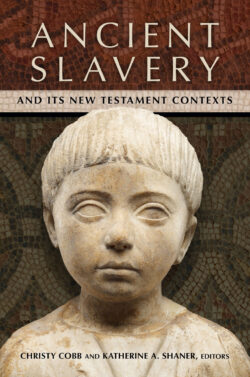
Ancient Slavery and Its New Testament Contexts
DESCRIPTION
An essential resource for understanding slavery in the New Testament and early Christianity
Slavery permeated society in the ancient world. The realities of slavery and its shadows pervade the New Testament and other early Christian texts. Yet enslavement remains an under-taught aspect of the context of the New Testament and early Christianity. Because of this, readers are left with numerous questions about ancient slavery. How did people become enslaved? What kinds of work did enslaved people do? Who enslaved people? How did ancient slavery compare with more contemporary enslavement eras? Did anyone in the ancient world criticize slavery? Was ancient slavery racialized? Did Christians have a different understanding of slavery than others? These are just some of the questions students ask in higher education and in Bible study classrooms alike.
This volume takes on these questions, introducing students to the textures, complexities, and material realities of slavery in the Greco-Roman world. Ancient Slavery and Its New Testament Contexts draws on the expertise of scholars around the world with a focus on introductory information, accessibility, and readability. It does not attempt to dismiss or downplay the role of New Testament texts in the perpetuation of either ancient slavery or slavery in the North American context. Rather, the volume helps students and teachers alike wrestle with the ongoing historical, theological, and ethical legacies of slavery in their own faith formation and engagement with the biblical text.
theWord Features:
- Fully searchable text
- Chapter and glossary-entry navigation via the topic tree
- Internal cross-references
- Bible-reference links and verse popups
- Footnotes with exact single-note popups
- Tables and illustrations
- Special Text Colors
- Normal: Text
- Internal link: Ethics of Interpretation
- Bible reference: Acts 16:16–40
- Greek: βασιλεία τοῦ θεοῦ
- Greek transliteration: paidiskē
- Latin: operae

New International Commentary: Paul’s Letter to the Philippians
PRODUCT HIGHLIGHTS:
- Verse-by-verse commentary
- In-depth discussion of textual and critical matters
- Introductions to each book’s authorship, date, purpose, structure, and theology
- Detailed bibliography
DESCRIPTION
This commentary by respected New Testament scholar Gordon D. Fee is a scholarly yet thoroughly readable study of Paul’s letter to the suffering community of believers in Philippi.
Working directly from the Greek text but basing his comments on the New International Version, Fee sets Paul’s letter to the Philippians squarely within the context of first-century “friendship” and “moral exhortation” to a church facing opposition because of its loyalty to Jesus Christ. At the same time Fee gives equal concern to the letter’s theological and spiritual relevance.
Important features of this commentary include a remarkable comparison of Philippians to two well-known types of letters in the Greco-Roman world: the letter of friendship and the letter of moral exhortation; an introduction that discusses the occasion, authenticity, and theological contributions of Philippians; and scholarly insights that resolve many of the formal and structural issues that have long puzzled New Testament scholars.
….
New International Commentary: The Books of Ezra and Nehemiah
PRODUCT HIGHLIGHTS:
- Verse-by-verse commentary
- In-depth discussion of textual and critical matters
- Introductions to each book’s authorship, date, purpose, structure, and theology
- Detailed bibliography
DESCRIPTION
Providing clear exposition based on solid contemporary scholarship, this commentary by F. Charles Fensham examines the books of Ezra and Nehemiah—two books of Scripture that are especially important for understanding the last century of Old Testament Jewish history and for marking the beginnings of Judaism.
A biblical scholar well known for his expertise in ancient Near Eastern studies, especially Ugaritic, Fensham places Ezra and Nehemiah against the ancient Near Eastern environment. In his introduction Fensham discusses the original unity of the books as well as the problems of authorship. He then treats the historical and religious background of the books, taking special note of the development of a Jewish religious society in postexilic times. Text and language are examined next, followed by a thorough bibliography.
The commentary proper, based on Fensham’s own fresh translation of the biblical texts, is richly documented and displays cautious good judgment, willingness to consider different options, a sensible approach, and keen insight into the religious meaning of these key Hebrew texts.
….
New International Commentary: The Book of Ruth
PRODUCT HIGHLIGHTS:
- Verse-by-verse commentary
- In-depth discussion of textual and critical matters
- Introductions to each book’s authorship, date, purpose, structure, and theology
- Detailed bibliography
DESCRIPTION
The Book of Ruth contains one of the Bible’s best-known and most-loved stories. This major commentary by Robert L. Hubbard shows how the author of Ruth used, with great literary artistry, the story of Ruth and Naomi to convey important theological themes.
In his introduction, Hubbard discusses the issues of text, canonicity, literary criticism, authorship and date, purpose, setting, genre, legal background, and themes and theology, and concludes with an outline of the book and a thorough bibliography. The commentary proper is based on Hubbard’s own fresh translation and is accented by copious footnotes on textual, philological, and literary matters.
Gleaning the best from recent research on Ruth, Hubbard gives the story’s rich literary, grammatical, and theological dimensions a careful, rigorous treatment. He allows for the possibility that the anonymous author was a woman and argues that the narrative itself aims to counter opposition to the Davidic monarchy in Israel and Judah during Solomon’s reign. Throughout, Hubbard’s sensitivity to the literary genius of Ruth’s author and his coherent explication of the outworking of the book’s theological themes make this volume an invaluable tool for anyone desiring to explore the beautiful story of Ruth in depth.
….
New International Commentary: The Book of Ecclesiastes
PRODUCT HIGHLIGHTS:
- Verse-by-verse commentary
- In-depth discussion of textual and critical matters
- Introductions to each book’s authorship, date, purpose, structure, and theology
- Detailed bibliography
DESCRIPTION
Ecclesiastes is one of the most fascinating—and hauntingly familiar—books of the Old Testament. The sentiments of the main speaker of the book, a person given the name Qohelet, sound incredibly modern. Expressing the uncertainty and anxieties of our own age, he is driven by the question, “Where can we find meaning in the world?”
But while Qohelet’s question resonates with readers today, his answer is shocking. “Meaningless,” says Qohelet, “everything is meaningless.” How does this pessimistic perspective fit into the rest of biblical revelation? In this commentary Tremper Longman III addresses this question by taking a canonical-Christocentric approach to the meaning of Ecclesiastes.
Longman first provides an extensive introduction to Ecclesiastes, exploring such background matters as authorship, language, genre, structure, literary style, and the book’s theological message. He argues that the author of Ecclesiastes is not Solomon, as has been traditionally thought, but a writer who adopts a Solomonic persona. In the verse-by-verse commentary that follows, Longman helps clarify the confusing, sometimes contradictory message of Ecclesiastes by showing that the book should be divided into three sections—a prologue (1:1–11), Qohelet’s autobiographical speech (1:12–12:7), and an epilogue (12:8–14)—and that the frame narrative provided by prologue and epilogue is the key to understanding the message of the book as a whole.
Recommendations:
On John Pipers recommended commentaries list.
….
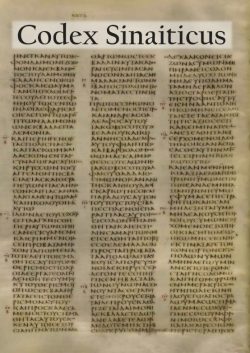
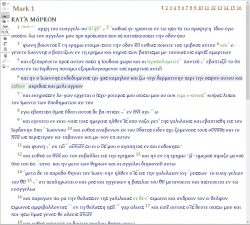
Codex Sinaiticus
Description:
Created by the Codex Sinaiticus Project
Sponsor The Institute for Textual Scholarship and Electronic Editing University of Birmingham
Funded by the Arts and Humanities Research Council
Transcription D.C. Parker Amy Myshrall T.A.E. Brown with Members of the Institüt für neutestamentliche Textforschung, Münster Transcription,
reconciliation and proofreading Rachel Kevern Conversion to XML and proofreading H.A.G. Houghton Version 1.04, last updated 25.3.2014 The Codex Sinaiticus Project Board 3.11.2010

theWord Features:
- Search the Bible for Nomina sacra such as: Ι̅Υ̅ , Θ̅Ν̅ , θ̅ν̅ or ι̅υ̅
- Use toggle key ‘e’ for main corrector color
This is the main corrector of the Codex Sinaiticus. (Correctors are in Strong’s number color when activated) - Use toggle key ‘y’ for other corrector
The symbol ┬ is used for other correctors of the Codex Sinaiticus. (Other corrector symbol ┬ is in Strong’s number color) - Use toggle key ‘k’ for column mode
The Codex Sinaiticus was written in a column format. We have used the column data that was provided in the transcription to attempt to replicate this. - Use toggle key ‘b’ to make the Greek into Uncials (Uppercase)
This should cause the content to be much closer to the original. The lowercase Greek is easier to read but not as close to the original Codex Sinaiticus. - Use toggle key ‘r’ for removing spaces
The spaces are helpful for reading but are placed based on the opinion of those who provided the transcription among others. The original Codex Sinaiticus did not have spaces. - Use toggle key ‘v’ for symbols
This will toggle the following symbols (symbols are in morphology color)
︴ + Ρ̶ ﹏ ※ ·:· ‾̷‾ ‾̷‾ ‾‾ ˜ s̵ ≀ :· ·:– ωᵨ ωᵨ̲ ( » ONLY for use in margins) - footnote indicators
- pg = page
- c = column
- a = apparatus
- g = graphic
- l = lectionary
- s = section
- t = title
- rt = running title
- red text = rubricated text
(Apocrypha not included at present – if you are interested in the apocrypha content in book form please complete the survey here.)
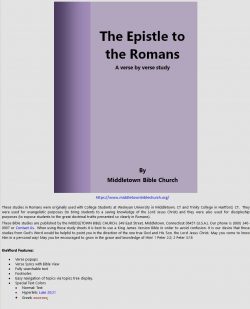
The Epistle to the Romans (Verse by Verse Study)
Description:
These studies in Romans were originally used with College Students at Wesleyan University in Middletown, CT and Trinity College in Hartford, CT. They were used for evangelistic purposes (to bring students to a saving knowledge of the Lord Jesus Christ) and they were also used for discipleship purposes (to expose students to the great doctrinal truths presented so clearly in Romans).
theWord Features:
- Verse popups
- Verse Syncs with Bible View
- Fully searchable text
- Footnotes
- Easy navigation of topics via topics tree display.
- Special Text Colors
- Normal: Text
- Hyperlink: Luke 20:21
- Greek: εαυτους
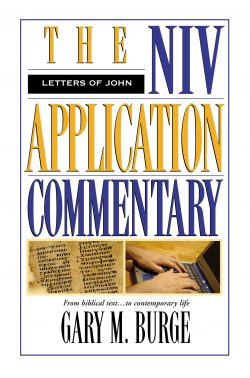
NIV Application Commentary: Letters of John
DESCRIPTION
John weaves together themes of light and darkness, falsehood and truth, and what it means to be children of God in community. He explores the theme of love as central to God’s nature and thus as the defining characteristic of those who follow him. The Letters of John teach us about handling conflict, discerning orthodox belief, and measuring Christian conduct. Gary Burge shares perspectives on John’s letters that reveal their enduring relevance for our twenty-first-century lives.
Book Summary
The NIV Application Commentary helps readers with the vital task of bringing the ancient message of the Bible into a contemporary context. It gives preachers and teachers the tools, ideas, and insights they need to communicate God’s Word with the same powerful impact it had when it was first written.
About the Book
The NIV Application Commentary helps you communicate and apply biblical text effectively in today’s context.
To bring the ancient messages of the Bible into today’s context, each passage is treated in three sections:
- Original Meaning. Concise exegesis to help readers understand the original meaning of the biblical text in its historical, literary, and cultural context.
- Bridging Contexts. A bridge between the world of the Bible and the world of today, built by discerning what is timeless in the timely pages of the Bible.
- Contemporary Significance. This section identifies comparable situations to those faced in the Bible and explores relevant application of the biblical messages. The author alerts the readers of problems they may encounter when seeking to apply the passage and helps them think through the issues involved.
This unique, award-winning commentary is the ideal resource for today’s preachers, teachers, and serious students of the Bible, giving them the tools, ideas, and insights they need to communicate God’s Word with the same powerful impact it had when it was first written.
theWord Features:
- Verse popups
- Verse (span) synchronization
- Fully searchable text
- Footnotes
- Pages links
- Easy navigation of topics via topics tree display.
- Scripture Index
- Subject Index
- Special Text Colors
- Normal: Text
- Hyperlink: Glossary | Gen. 9:8
- Page Number: [pg 21>
- Greek Transliteration: archon
- Greek: εὐδόκησα
Note: Does not display commentary under Bible text.
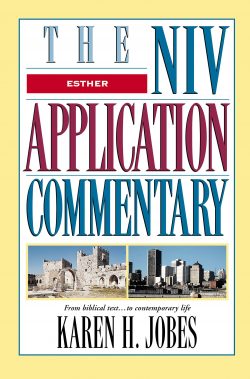
NIV Application Commentary: Esther
DESCRIPTION
This commentary shows how Esther is perfect guidance for us when we find ourselves in a situation where right and wrong are not so clearly defined and every choice we have seems to be a troubling mixture of good and bad. Esther is perfect inspiration for us when we find ourselves in situations we never sought, never planned for, and don’t think we have the gifts to succeed at.
Book Summary
The NIV Application Commentary helps readers with the vital task of bringing the ancient message of the Bible into a contemporary context. It gives preachers and teachers the tools, ideas, and insights they need to communicate God’s Word with the same powerful impact it had when it was first written.
About the Book
The NIV Application Commentary helps you communicate and apply biblical text effectively in today’s context.
To bring the ancient messages of the Bible into today’s context, each passage is treated in three sections:
- Original Meaning. Concise exegesis to help readers understand the original meaning of the biblical text in its historical, literary, and cultural context.
- Bridging Contexts. A bridge between the world of the Bible and the world of today, built by discerning what is timeless in the timely pages of the Bible.
- Contemporary Significance. This section identifies comparable situations to those faced in the Bible and explores relevant application of the biblical messages. The author alerts the readers of problems they may encounter when seeking to apply the passage and helps them think through the issues involved.
This unique, award-winning commentary is the ideal resource for today’s preachers, teachers, and serious students of the Bible, giving them the tools, ideas, and insights they need to communicate God’s Word with the same powerful impact it had when it was first written.
theWord Features:
- Verse popups
- Verse (span) synchronization
- Fully searchable text
- Footnotes
- Pages links
- Easy navigation of topics via topics tree display.
- Scripture Index
- General Index
- Special Text Colors
- Normal: Text
- Hyperlink: Glossary | Gen. 9:8
- Page Number: [pg 21>
- Greek Transliteration: Diaspora
- Hebrew Transliteration: Yahweh
Note: Does not display commentary under Bible text.
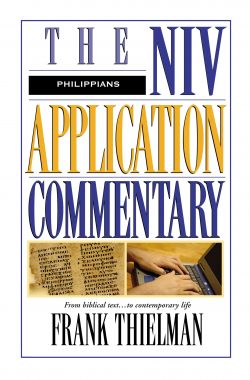
NIV Application Commentary: Philippians
DESCRIPTION
From the Back Cover
Sprinkled with cherished and memorable verses, Paul’s letter to the Philippians is for many a favorite book of the Bible. Written from prison, it serves as Paul’s missionary report and thank you to a faithful church, as well as a warm pastoral exhortation to make the advancement of the gospel their top priority. Paul models and calls for joy in the midst of suffering, warns against dangerous false teaching, and calls for Christian unity grounded in the example of the Lord Jesus.
In a day often marked by selfish ambition, spiritual laziness, disunity, and joyless living, Philippians contains an eminently practical message for contemporary Christians. Exploring the links between the Bible and our own times, Frank Thielman skillfully draws out the timeless truths of this loving letter in a lucid and powerful way.
–This text refers to the hardcover edition.
Book Summary
The NIV Application Commentary helps readers with the vital task of bringing the ancient message of the Bible into a contemporary context. It gives preachers and teachers the tools, ideas, and insights they need to communicate God’s Word with the same powerful impact it had when it was first written.
About the Book
The NIV Application Commentary helps you communicate and apply biblical text effectively in today’s context.
To bring the ancient messages of the Bible into today’s context, each passage is treated in three sections:
- Original Meaning. Concise exegesis to help readers understand the original meaning of the biblical text in its historical, literary, and cultural context.
- Bridging Contexts. A bridge between the world of the Bible and the world of today, built by discerning what is timeless in the timely pages of the Bible.
- Contemporary Significance. This section identifies comparable situations to those faced in the Bible and explores relevant application of the biblical messages. The author alerts the readers of problems they may encounter when seeking to apply the passage and helps them think through the issues involved.
This unique, award-winning commentary is the ideal resource for today’s preachers, teachers, and serious students of the Bible, giving them the tools, ideas, and insights they need to communicate God’s Word with the same powerful impact it had when it was first written.
theWord Features:
- Verse popups
- Verse (span) synchronization
- Fully searchable text
- Footnotes
- Pages links
- Easy navigation of topics via topics tree display.
- Scripture Index
- Special Text Colors
- Normal: Text
- Hyperlink: Glossary | Gen. 9:8
- Page Number: [pg 21>
- Greek Transliteration: archon
- Greek in footnotes: κοινωνός
Note: Does not display commentary under Bible text.
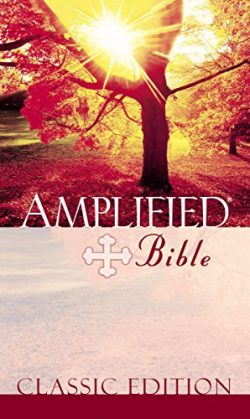
Amplified Bible, Classic Edition (AMPC)
This is a digital Bible for theWord Bible Software
The first complete Bible produced by The Lockman Foundation was the Amplified Bible. The Amplified Bible is a translation that, by using synonyms and definitions, both explains and expands the meaning of words in the text by placing amplification in parentheses and brackets and after keywords or phrases. This unique system of translation allows the reader to more completely grasp the meaning of the words as they were understood in the original languages. Through multiple expressions, fuller and more revealing appreciation is given to the divine message as the original text legitimately permits.
The Amplified Bible is free of personal interpretation and is independent of denominational prejudice. It is a translation from the accepted Hebrew, Aramaic, and Greek manuscripts into literary English. It is based on the American Standard Version of 1901, Rudolph Kittel’s Biblia Hebraica, the Greek text of Westcott and Hort, and the 23rd edition of the Nestle Greek New Testament as well as the best Hebrew and Greek lexicons available at the time. Cognate languages, the Dead Sea Scrolls, and other Greek works were also consulted. The Septuagint and other versions were compared for interpretation of textual differences. In completing the Amplified Bible, translators made a determined effort to keep, as far as possible, the familiar wording of the earlier versions, and especially the feeling of the ancient Book.
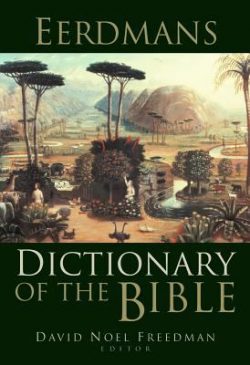
Eerdmans Dictionary of the Bible
Nearly 5,000 articles written by 600 first-rate Bible authorities thoroughly explaining books, persons, places and significant terms of the Bible. The Dictionary also explores the background of each biblical book and related writings and discusses cultural, natural, geographical, and literary phenomena–matters that Bible students at all levels may encounter in reading or discussion.
The Eerdmans Dictionary of the Bible gathers nearly 5,000 alphabetically ordered articles that thoroughly yet clearly explain all the books, persons, places, and significant terms found in the Bible. The Dictionary also explores the background of each biblical book and related writings and discusses cultural, natural, geographical, and literary phenomena—matters that Bible students at all levels may encounter in reading or discussion.
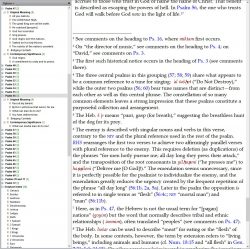
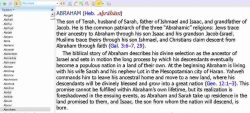
For actual samples of articles in the dictionary, click on the image at left (a popup viewer should open) and then use the left-right arrow keys on the keyboard, or click on the far left or far right arrows on the image itself.
The samples are:
abraham
Agriculture
alpha and omega
amos, book of
anathema
apostle
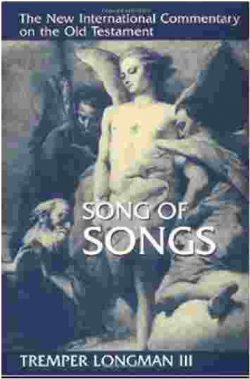
New International Commentary: Song of Songs
PRODUCT HIGHLIGHTS:
- Verse-by-verse commentary
- In-depth discussion of textual and critical matters
- Introductions to each book’s authorship, date, purpose, structure, and theology
- Detailed bibliography
DESCRIPTION
Relationships are a wonderful, mysterious, often elusive, sometimes painful part of the human experience. The most intimate of all human relationships, according to the Bible, is that between a husband and a wife. It is no surprise, therefore, that there is a book of the Bible, the Song of Songs, that focuses on this relationship. What is surprising is how little attention is given to the Song of Songs by scholars, by the church, and by readers of the Bible. With this volume Tremper Longman III unpacks for modern people what this ancient love poem says about the male-female relationship—and, by analogy, about God’s love for his people.
Longman’s superb study begins with a thorough introduction to the Song of Songs and its background. Longman discusses the book’s title, authorship, date, literary style, language, structure, cultural milieu, and theological content. He also canvasses the long history of interpretation of the Song of Songs, a history too often characterized by repression of the text. In the commentary itself, Longman structures the Song of Songs according to its twenty-three poetic units and explains its message verse by verse. The exposition is made clearer by Longman’s adoption of an anthropological approach to the text and by his frequent comparisons of the Song of Songs with other ancient Near Eastern literature.
Learned yet highly accessible, innovative yet fully informed by past scholarship, this commentary shows the beautiful Song of Songs to be a timeless celebration of human love and sexuality.
….
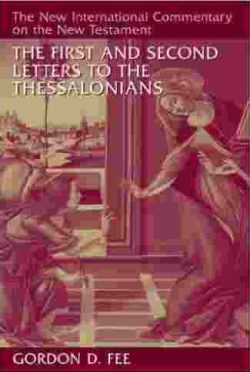
New International Commentary: The First and Second Epistles to the Thessalonians
PRODUCT HIGHLIGHTS:
- Verse-by-verse commentary
- In-depth discussion of textual and critical matters
- Introductions to each book’s authorship, date, purpose, structure, and theology
- Detailed bibliography
DESCRIPTION
In this commentary Gordon Fee aims first and foremost to offer a fresh exposition of the text of 1 and 2 Thessalonians. He shows the reader what is in the biblical text, what the text meant in the first century, and what it means now. Fee reveals the logic of each argument or narrative before moving on to the details of each verse, and he concludes each section with a theological-practical reflection on the meaning of the text today. Among other things, Fee explores the occasion for writing for each epistle, restoring 2 Thessalonians to the place it deserves as a full companion to the first letter, rather than merely a tagalong to 1 Thessalonians.
….
New American Standard Bible 2020 and Dictionary
DESCRIPTION
Bundle contents:
- NASB 2020
- NASBHGD-2020
The NASB 2020 is an update of the NASB 1995 that further improves accuracy where possible, modernizes language, and improves readability. These refinements maintain faithful accuracy to the original texts and provide a clear understanding of God’s Word to those who prefer more modern English standards. The long-established translation standard for the NASB remains the same as it always has been, that is to accurately translate the inspired Word of God from the Hebrew, Aramaic, and Greek texts into modern English that is clearly understandable today.
theWord Features
NASB 2020 Bible
- Searchable text (via regular text and Strong’s Numbers)
- Strong’s Numbers
- Words of Jesus in Red
- Headings
- Paragraphs
- Cross references
- Footnotes
- Strong’s Numbers linked to NASBHGD 2020 Dictionary
NASBHGD-2020 Dictionary
- Fully searchable text
- Easy navigation via topics tree display.
- Strong’s Numbers
- Greek Lemmas
- Hebrew Lemmas
- Special Text Colors
- Normal: Text
- Usage: NASB 2020 Usage
- Hyperlink: G10
- Transliteration: Melek
- Hebrew: מֶלֶךְ
- Greek: κοδράντης
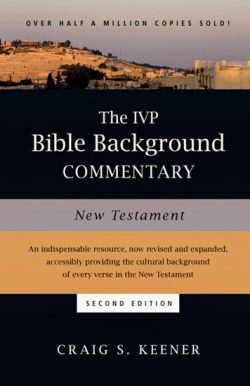
IVP Bible Background Commentary, New Testament 2nd Edition
DESCRIPTION
This revised edition of the standard reference work in its field has been expanded throughout to now provide even more up-to-date information by Craig Keener, one of the leading New Testament scholars on Jewish, Greek and Roman culture.
To understand and apply the Bible well, you need two crucial sources of information. One is the Bible itself. The other is an understanding of the cultural background of the passage you’re reading.
Only with the background can you grasp the author’s original concerns and purposes. This unique commentary provides, in verse-by-verse format, the crucial cultural background you need for responsible–and richer–Bible study. It includes a glossary of cultural terms and important historical figures, maps and charts, up-to-date bibliographies, and introductory essays about cultural background information for each book of the New Testament.
Based on decades of in-depth study, this accessible and bestselling commentary is valuable for pastors in sermon preparation, for Sunday-school and other church teachers as they build lessons, for missionaries concerned not to import their own cultural biases into the Bible, for college and seminary students in classroom assignments, and for everyday Bible readers seeking to deepen and enhance their study of Scripture.
THEWORD ENHANCEMENTS
theWord version of this resource is enhanced for your convenience in a Hybrid-form module. It is a book, that acts more like a commentary. Bible passages can be syncronized so that the book follows along as you study verses and passages of the Bible. Most verse references have popups of the verse when hovered. Also Glossary words have links and popups to the Glossary for easy reference of terms marked with *.
New International Commentary: The Epistles to the Colossians, to Philemon and to the Ephesians
PRODUCT HIGHLIGHTS:
DESCRIPTION
This collection of three commentaries in one volume completes F. F. Bruce’s lifelong study of Paul’s writings. With the publication of this volume, Bruce—one of the most respected New Testament scholars in the world—finished writing commentaries on all the Pauline epistles except the Pastorals.
According to Bruce, there are important reasons for linking Colossians, Philemon, and Ephesians together in one work. The study of both Ephesians and Colossians, says Bruce, confirms his belief that Ephesians continues the line of thought followed in Colossians—in particular because it draws out the implications of Christ’s cosmic role (set forth in Colossians) for the church, which is his body. At the same time Ephesians constitutes the crown of Paulinism, gathering up the main themes of the apostle’s teaching into a unified presentation sub specie aeternitatis. The letter to Philemon, too, has a close association to Colossians, and is appropriately included in this volume.
….