
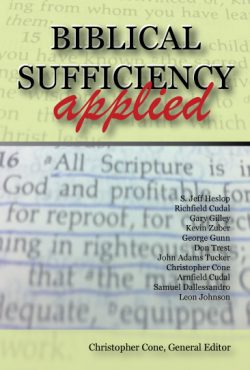
Biblical Sufficiency Applied
Description
God-breathed. Profitable. These two words Paul conveys in 2 Timothy 3:16 to describe the word of God. That the Text is God-breathed attests to its authority, and that it is profitable attests to its sufficiency. The authority of Scripture has no limit for the believer – in its pages God demands complete submission of His children. Likewise the sufficiency of Scripture reaches to the farthest corners of the believer’s position and practice.
Paul describes the purpose of Scripture’s inspiration: “that the man of God may be adequate, equipped for every good work” (2 Tim 3:17). God’s word is sufficient for the equipping of His people for the works He has planned for them (Eph 2:10). The divine prescriptions explain the believer’s course of action, oftentimes revealing the rationale for the action, and always pointing to the enablement needed and provided. In short, the true knowledge of Him provides everything pertaining to life and godliness (2 Pet 1:3).
As such, we can rely on Scripture in every area of life. We will find no topic out of bounds, and no subject so controversial as to be avoided or lacking illumination in the pages of the Bible. Biblical Sufficiency Applied is an effort on the part of its several contributors to consider certain areas of contemporary controversy in the light of Scripture. We hope and pray that God uses this work both to challenge and encourage the reader to seek the answers in Scripture, and to be confident in the Biblical record as sufficient for every aspect of the believer’s life.
theWord Features:
- Verse popups
- Fully searchable text
- Footnotes
- Easy navigation of topics via topics tree display.
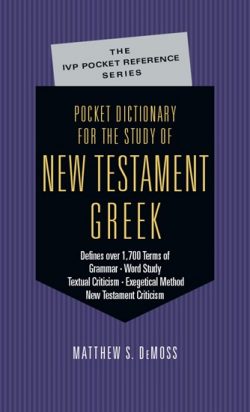
Pocket Dictionary for the Study of New Testament Greek
DESCRIPTION
If you are beginning your study of New Testament Greek or Greek exegesis, this book is for you!
From ablative to zeugma, it defines the tangled terms that infest Greek textbooks, grammars and lexicons.
Here is the book to deliver you from late-night ponderings of the predicate and frantic fumings over the fricative. It is the indispensable lexicon to that third language that is neither Greek nor recognizable English: the technical vocabulary of grammarians, lexicographers, linguists and Greek instructors. What’s more, this pocket dictionary gives you the inside edge on the terminology of exegesis, textual criticism and biblical criticism.
Careful definitions, helpful examples and copious cross-references make this economically priced, brief dictionary easy to use. And its convenient size will make it a constant companion in your study of the Greek New Testament.
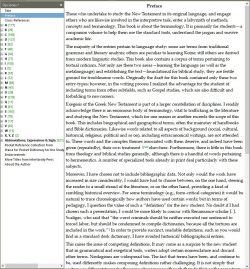
theWord Features
- Verse popups
- Fully searchable text
- FootNote(s)
- Easy navigation of topics via topics tree display.
- Special Text Colors
- Normal: Text
- Hyperlink: Link
- Page Number: [pg1>
- Greek: λογος
- Hebrew: א
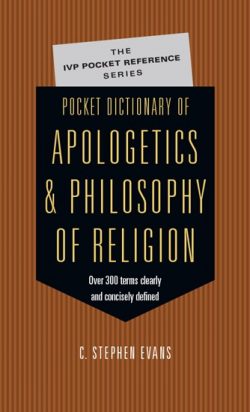
Pocket Dictionary of Apologetics and Philosophy of Religion
DESCRIPTION
For philosophers, the pursuit of truth travels on precise definitions. For Christian apologists, the defense of the faith is founded on the defining Word. And for beginning students of either discipline, the difference between success and frustration begins with understanding the terms and ideas and identifying the thinkers and movements.
The Pocket Dictionary of Apologetics Philosophy of Religion is designed to be a companion to your study of these two related disciplines. Among its 300 entries are
- terms, from a posteriori to worldview
- apologists, from Abelard to Van Til
- philosophers of religion, from Alston to Wolterstorff
- movements, from analytic philosophy to voluntarism
- apologetic arguments, from the cosmological to the wager
- theologies, from Arminianism to Zoroastrianism
Here is an affordable and easily accessible “help key” for your readings, lectures, writing assignments and exam preparation. It’s a must-have study aid for any student who expects to cogitate on coherentism or ruminate on Ricouer.
theWord Features
- Verse popups
- Fully searchable text
- Easy navigation of topics via topics tree display.
- Special Text Colors
- Normal: Text |
- Hyperlink: Link | Jn 3:36
Pocket Dictionary of Biblical Studies
DESCRIPTION
So many words about the Word. The study of anything seems to generate its own special vocabulary, and biblical studies is no different. What’s more, it’s got nearly a two-thousand-year lead on you! How can you catch up? Here is the answer!
If you are puzzled by parataxis or rankled by recensions, the Pocket Dictionary of Biblical Studies is the companion you need. Whether you are studying Old Testament or New Testament or both at once, this little book is your private tutor, your ever-ready guide to over three hundred biblical-studies terms. Here’s your glossary for reading course textbooks, your decoder for listening to lectures, your review sheet for cramming for finals and your “help” key for writing research papers.
Among the more than 300 terms defined you’ll discover
- types of biblical criticism, from genre criticism to tradition criticism
- Greek and Latin terms, from agrapha to vaticinium ex eventu
- German terms, from Frühkatholizismus to Wissenschaft
- ancient texts, from Aleppo Codex to Zadokite Document
- literary features, from acrostic to woe oracle
- theories, from the Augustinian hypothesis to the Yahwist source
- textual criticism terms, from codex to Western text
Written by Arthur G. Patzia and Anthony J. Petrotta, two biblical studies professors who know what you need to know, Pocket Dictionary of Biblical Studies will be your essential guide into a fascinating world of understanding.
theWord Features
- Verse popups
- Fully searchable text
- Easy navigation of topics via topics tree display.
- Special Text Colors
- Normal: Text
- Hyperlink: Link | Jn 3:36
- Greek: λογος
- Hebrew: א
Pocket Dictionary of Theological Terms
DESCRIPTION
Beginning to study theology is like stepping into a conversation that has been going on for two thousand years.
How do you take part in this conversation–or even make sense of it–if you don’t understand the vocabulary or know the contributions made by other participants?
The Pocket Dictionary of Theological Terms is the perfect companion to your theological studies. Among its three hundred-plus definitions are
- English terms, from accomodation to wrath of God
- foreign terms, from a posteriori to via media
- theological movements and traditions, from the Alexandrian School to Wesleyanism
- theologians, from Anselm of Canterbury to Ulrich Zwingli
Here is an affordable and easily accessible resource for your theological readings, lectures and writing assignments. It’s a must-have for every beginning theological student!
theWord Features
- Verse popups
- Fully searchable text
- Easy navigation of topics via topics tree display.
- Special Text Colors
- Normal: Text
- Hyperlink: Link | Jn 3:36
Pocket Guide to World Religions
DESCRIPTION
Have you ever wondered . . .
- what the red dot on an Indian woman’s forehead means?
- whether all Buddhist monks practice martial arts?
- if the Emperor of Japan is still considered a god?
Here is a concise, informative guide for anyone looking for answers to basic questions about the world’s varied religions. In short, incisive chapters, Winfried Corduan introduces readers to twelve of the world’s major religions, including Baha’i, Buddhism, Christianity, Confucianism, Daoism, Hinduism, Islam, Jainism, Judaism, Parsi, Shinto and Sikhism. For each, he offers brief descriptions of its name, numbers and distribution, key symbols, history, Scriptures, major beliefs, subgroups, worship practices, home practices, clothing, diet and calendar. Also included are even briefer descriptions of sixteen new religious movements and traditional or tribal religions.
This book is for students, pastors and other busy people who want the quick, bare-facts scoop on current religions.
theWord Features
- Fully searchable text
- Easy navigation of topics via topics tree display.
- Special Text Colors
- Normal: Text
- Hyperlink: Link
- Page Number: [pg1>
Lutherbibel 2017 mit Apokryphen
Die Lutherbibel 2017 ist der zum Gebrauch empfohlene Bibeltext der Evangelischen Kirche in Deutschland (EKD). Die klassische deutsche Bibelübersetzung ist nach wie vor die in Deutschland am weitesten verbreitete.
theWord Besonderheiten in der Bibel enthalten:
- Popup-Fußnoten (Umschalttaste F)
- Vers pro Zeile und Gedicht- / Absatzformat (Umschalttaste P)
- Überschriften (Umschalttaste H)
- In den Bibeltext eingebaute Querverweise. (Umschalttaste X)
- Verbunden mit dem zugehörigen Hybrid-Apokryphen-Modul über Vers-Synchronisation.
theWord special features included in Bible:
- Popup footnotes (toggle key F)
- Verse per line and Poetry/Paragraph format (toggle key P)
- Headings (toggle key H)
- Cross-references built into Bible text. (toggle key X)
- Linked to accompanying Hybrid Apocrypha Module via verse synchronization.
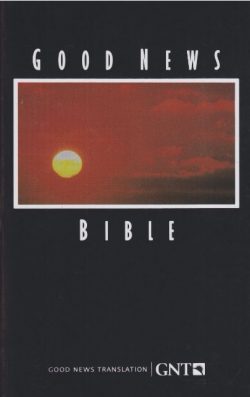
Good News Translation in Today’s English Version with Apocrypha (GNT)
The GNT (also known as Today’s English Version or Good News Bible) was one of the first meaning-based (or functional equivalent) translations of the Bible into English. It was originally published in 1976, then it was revised in 1992. The GNT presents the message of the Bible in a level of English that is common to most of the English-speaking world. The GNT is still used widely in youth Bible study groups and in less formal worship services.
A very contemporary translation that is designed to be easy to read for those who are not familiar with the Bible. Also known as the Good News Bible, this translation of the Bible follows a dynamic equivalence theory of translation. Published in 1966, revised in 1992.

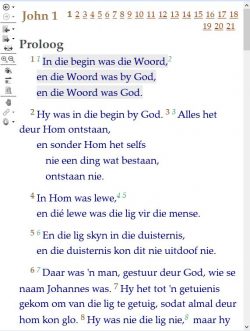
Die Bybel 2020-vertaling
DESCRIPTION
DIE BYBEL 2020-VERTALING: HOOFLETTERUITGAWE
Hierdie bronteksgeoriënteerde direkte vertaling streef daarna om só te vertaal asof die Bybelskrywers in hulle eie woorde van duisende jare gelede self aan die woord gestel word in vloeiende, idiomatiese Afrikaans. Geskik vir voorlesing en gebruik in eredienste, asook vir kategese, Bybelstudie en persoonlike gebruik.
Omdat die Bybelgenootskap van Suid-Afrika (BSA) die toepassing van die Ou Testamentiese tekste in die Nuwe Testament op Jesus as die Christus aanvaar, is daar besluit om in sodanige tekste met behulp van voetnote in die Ou en Nuwe Testament oor en weer deur middel van kruisverwysings hierna te verwys.
Na aanleiding van gesprekke tussen die BSA en ’n aantal kerke asook ’n besluit van die Kerklike Advieskomitee: Die Bybel in Afrikaans, het die BSA die betrokke kerke genooi om verteenwoordigers te benoem vir ’n werkkomitee om hom hieroor te adviseer. Die komitee se advies was dat hoofletters in Ou Testamentiese tekste wat in die 1933/1953-vertaling met hoofletters geskryf is, so behou word, asook Ou Testamentiese tekste wat deur skrywers in die Nuwe Testament op Jesus as die Christus van toepassing gemaak word. Die BSA het hierdie advies aanvaar, en die vertaling kom verder in alle opsigte ooreen met die ander uitgawes.
Die Werkkomitee het bestaan uit verteenwoordigers van die Afrikaanse Baptiste Kerk, die Afrikaanse Protestantse Kerk, die Apostoliese Geloofsending van Suid-Afrika, die Pinkster Protestantse Kerk, die Volle Evangelie Kerk van God in Suidelike Afrika, met as waarnemers die Vrye Gereformeerde Kerke in Suid-Afrika.
© Bybelgenootskap van Suid-Afrika 2020. Gebruik met toestemming. Alle regte voorbehou.
theWord Features:
- Headings
- Verse popups
- Cross References
- Fully searchable text
- Footnote(s)
- Easy navigation of topics via Bible tree or Verse Reference Entry
- Special Text Colors
- Normal: Text
- Links: Gen 1:1
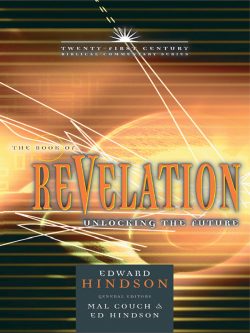
Twenty-First Century Biblical Commentary Series: Book of Revelation: Unlocking the Future
DESCRIPTION
WILL THE HUMAN RACE SURVIVE IN THE FUTURE?
EVERYONE IS CURIOUS ABOUT THE FUTURE. There is something in human nature that wants to know what is going to happen next. God speaks to the need in our lives by revealing the future before it happens. That process is called a prophecy of future events. This book is a study of the prophecies in the book of Revelation.
The book of Revelation is the grand and noble conclusion to the Bible. It captives our attention, stirs our imagination, and points us to our glorious future destiny. It shows the living relationship between the risen Christ and His Bride, the Church. It also records the final days of this world and reveals the glorious new world yet to come. The book of Revelation gives us hope for the future when God will make “all things new” (Rev.21:5.
Dr.Hindson simplifies the message of the Revelation so that you can easily understand it for yourself. He surveys the general content of this captivating book of prophecy with a view to keeping the big picture in mind, rather than getting lost in all the details. His approach is to keep the study focused on the key issues in each chapter.
The Book of Revelation has been called the epilogue of the unfolding drama of redemption. It’s God’s road map to help us understand where human history is going. In the biblical record, human history begins in a garden and ends in the eternal city. It begins with tragedy and ends with triumph. It begins with man’s failure and ends with his exaltation. In between, there stands a cross! and on that cross, Jesus Christ changed the course of human history forever.
The message of the Bible represents the timeless truth of God. As each generation seeks to apply that truth to its specific context it becomes necessary for an up-to-date commentary to be created just for them. The editors and authors of the Twenty-First Century Biblical Commentary” have endeavored to do just that. They represent conservative, evangelical, and dispensational scholarship at its best.
theWord Features:
- Verse popups (Revelation 1:1)
- Fully searchable text
- Easy navigation of topics via topics tree display.
- Footnotes
- Special Colors
- Hyperlinks Rev 1:1
- Transliterated words (Greek/Hebrew/Aramaic, prophēteias)
Revised Standard Version Bible
Removed from publication per “Riggin Rights Request – publisher”
The Revised Standard Version of the New Testament purported to be a revision of the American Standard Version. It is akin to Moffat’s Bible Translation in a lot of ways.
Copyright© 1946, 1952, and 1971 the Division of Christian Education of the National Council of the Churches of Christ in the United States of America
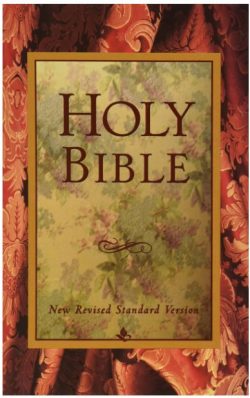
New Revised Standard Version Bible
Removed from publication per “Riggin Rights Request – publisher”
The New Revised Standard Version of the Bible (NRSV) was published in 1989. It’s goal was to appeal to all religions and religious groups. The translation committee was made up of thirty translators from every Protestant denomination, the Roman Catholic as well as Greek orthodox church, and a Jewish scholar as well. It typically comes in a version that includes the Apocrypha (but our version for theWord does not have the Apocrypha, but is the standard edition without the Deuterocanonical books).
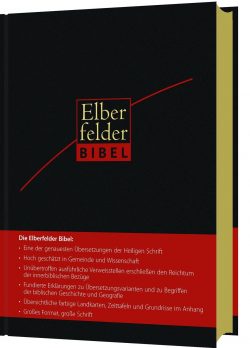
Elberfelder Bibel 2006 R. Brockhaus Verlag Wuppertal
Es ist die erneut durchgesehene Ausgabe der revidierten Elberfelder Bibel unter Berücksichtigung der neuen Rechtschreibung.
Der SCM R.Brockhaus Verlag wirbt für diese Bibelübersetzung mit den folgenden Worten:
„Die Elberfelder Bibel gehört zu den führenden deutschen Bibelübersetzungen“.
Der Name geht auf Elberfeld zurück, den heutigen Stadtteil Wuppertals, wo ein großer Teil der Übersetzungsarbeit geleistet wurde.
Ziel dieser Arbeit ist es, eine Übersetzung der ältesten Handschriften der biblischen Schriften vorzulegen, die möglichst unverfälscht deren Aussagegehalte wiedergibt und dabei möglichst wenig theologische Interpretation von außen an die Schriften heranträgt.
In ihrem Vorwort schreiben der R. Brockhaus Verlag Wuppertal und die Christliche Verlagsgesellschaft mbH Dillenburg:
„Wir wünschen uns, dass die Elberfelder Bibel 2006 allen Lesern zum Segen wird und dass sie weiterhin wichtige Impulse für das geistliche Leben der Christen im deutschsprachigen Raum liefern kann.“
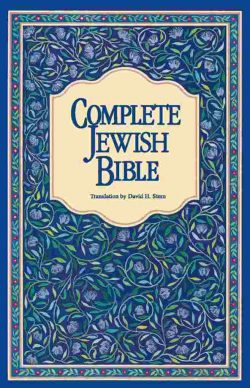
Complete Jewish Bible (CJB)
Presenting the Word of God as a unified Jewish book, the Complete Jewish Bible is a translation for Jews and non-Jews alike. It connects Jews with the Jewishness of the Messiah, and non-Jews with their Jewish roots. Names and key terms are returned to their original Hebrew and presented in easy-to-understand transliterations, enabling the reader to say them the way Yeshua (Jesus) did! For readers familiar with the Jewish New Testament, the Complete Jewish Bible is a welcome sight!
The CJB is a translation of the Bible into English by Dr. David H. Stern. It consists of Dr. Stern’s revised translation of the Old Testament (Tanakh) plus his original Jewish New Testament (B’rit Hadashah) translation in one volume. It was published in its entirety in 1998 by Jewish New Testament Publications, Inc.
The Old Testament translation is a paraphrase of the public domain 1917 Jewish Publication Society version. The New Testament section is Dr. Stern’s original translation from the ancient Greek.
Dr. Stern’s purpose for producing the Complete Jewish Bible was “to restore God’s Word to its original Jewish context and culture as well as be in easily read modern English.”
The CJB follows the order and the names of the Old Testament books in the Jewish Bible, rather than those of typical Christian Bibles. It uses Hebrew names for people and places, such as Eliyahu for “Elijah”, and Sha’ul for “Saul.” The work also incorporates Hebrew and Yiddish expressions, such as matzah for “unleavened bread” and mikveh for “ritual immersion pool”.
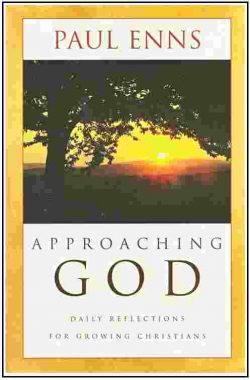
Approaching God
A year’s worth of devotional reading ideal for learning the basics of Christian doctrine. Covering the entire summary of basic Christian doctrine from bibliology to eschatology, Approaching God is organized systematically and divided into 365 portions for daily reading. Enns uses everyday illustrations and non-theology language, resulting in a highly readable and inviting format.
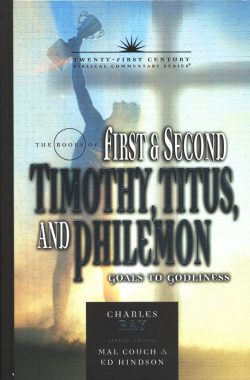
Twenty-first Century Biblical Commentary: The Books of 1 & 2 Timothy, Titus, and Philemon: Goals to Godliness
DESCRIPTION
WHAT ARE YOU DOING TODAY TO BE MORE LIKE CHRIST?
The key to achieving success in anything is to set reasonable goals and strive to meet them. The difficulty in striving to be like Christ is that we never ca be like Him-not perfectly, not until we are made new in His image in heaven. Yet, the fact that we cannot achieve perfection should never top us from anything good. So, the real question is, how is good is good enough? Any Christian who thinks he or she has nothing more to achieve in godliness and personal holiness is utterly deceived.
These books (especially 1 and 2 Timothy and Titus) are often referred to as the “Pastoral Epistles.” The name is certainly appropriate since these books provide the the most thorough statement of church government found anywhere in the New Testament . Paul’s combination of personal advice and apostolic injunction has set the pattern for church government for the past twenty-one centuries.
Yes these books are so much more than official letters on church policy. American scholar Homer Kent Jr. made a career out of studying these important letters in detail. He summed up his opinion of them, saying, “Not only is the content rich in doctrinal and practical discussion, so pertinent to the Christian life, but the historical, geographical, and personal notices make the letters colorful and intensely human.”
Charles Ray’s commentary is unique in that he emphasizes the personal, practical results Paul wanted to encourage every Christian to strive for in their daily walk. Here the reader will be challenged to see the goals Paul had in mind, and to incorporate them in his or her own life.
theWord Features:
- Verse popups
- Verse synchronization
- Fully searchable text
- Footnotes
- Easy navigation of topics via topics tree display.
- Text Colors
- Normal
- Links: 1 Timothy 1:2
- Transliteration: presbuteros
Note: This is a Hybrid module and does not display commentary under Bible text as a Commentary module would.
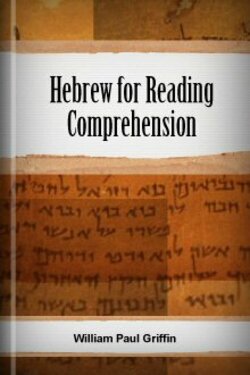
Hebrew for Reading Comprehension
Hebrew for Reading Comprehension is a first year Biblical Hebrew grammar which is designed to promote reading comprehension and translation precision while reducing the confusion of traditional grammars. Two major features which distinguish this from other grammars are a tremendous reduction of emphasis on vowel pointing and a paradigm-less approach to teaching verbs.
This Grammar’s Differences
- The end goal is always kept in mind: reading comprehension and translation precision.
- Vowel pointing is not emphasized. Students learn to read unpointed and pointed Hebrew from the beginning. Exercises have both pointed and unpointed Hebrew.
- Verbs and verbless clauses (i.e., sentences) are introduced at the very beginning so that the student feels like they are learning language as language, not as lists.
- There is an almost complete lack of verb paradigms. Rather, verbs are introduced in the third person (all tenses/aspects), then the second person, then the first.
- Students do not have to be trained linguists in order to utilize the textbook. Instead, the book includes reviews of basic grammatical terminology and explanations of other important terms.
- Some traditional (confusing) linguistic terminology is avoided.
- Here is a chart which compares this grammar with others. Click here to download a .pdf file.
Philosophy of the Grammar
The following essays describe the philosophy underlying the grammar.These were both presented at Central States Society of Biblical Literature meetings.
William P. Griffin, “Killing a Dead Language: A Case against Emphasizing Vowel Pointing when Teaching Biblical Hebrew,” SBL Forum , n.p. [cited May 2007]
William P. Griffin, “Breaking Old Paradigms: Further Reflections on Hebrew Pedagogy,” paper presented at the Central States Society of Biblical Literature meeting, March, 2010.
theWord Features
- Verse popups
- Terms explained popups
- Fully searchable text
- Easy navigation via topics tree display.
- Normal text
- Hebrew text
- Footnotes
- ◌ represents any unspecified Hebrew character.
Exploring the Bible: 1 and 2 Thessalonians
Description
Do you enjoy reading other people’s correspondence, especially the letters of famous people? This book explores two of the great Apostle Paul’s earliest epistles, those to the Thessalonian church. In them he bares his heart to reveal his love for those he led to Christ, and his concern for their welfare, as he provides instructions to new Christians. We also learn something of his travelling companions, his hopes and fears, his personal concerns, his passionate concern for the truth, and much about the Return of the Lord Jesus Christ. Read this book to learn how to live the Christian life, how to avoid false doctrine, and how the Thessalonians’ zeal and the Apostle’s teaching can be applied to your own life.
Overview of the Book inside theWord
theWord Features:
Note: Does not display commentary under Bible text.