

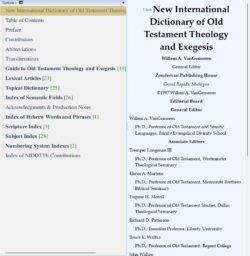
New International Dictionary of Old Testament Theology and Exegesis
DESCRIPTION
Only one hermeneutical text published prior to the New International Dictionary of Old Testament Theology & Exegesis can be held up reasonably to its measure of quality and the exhaustive nature of the research that produced this immense work. That singular collection worthy of comparison is its counterpart, the New International Dictionary of New Testament Theology, edited by Colin Brown.
This 5 volume addition to that acclaimed work, though intimidating in the achievement it embodies, is intended for serious Old Testament and exegetical study by men and women of all walks of life — both academics and pastors, students and laypersons. Volume one contains a Guide to Old Testament Theology and Exegesis in which ten essays have been compiled to thoroughly explain proper hermeneutics and interpretation, as well as guidelines for using this source material.
Volumes one through four contain the Lexicon of the Old Testament, all words found in the text ordered by Hebrew alphabetization for easy reference, and coupled with a Goodrick / Kohlenberger cross-referencing number to be used in conjunction with Strong’s numbering system. The relationship of each word in different contexts and languages is also explained, including alternative words, and the particulars of their semantic domain. All this information is, of course, complete with bibliography. Volume four also begins the Topical Dictionary. Therein can be found articles on the theology of each Old Testament book individually, as well as discussion of biblical concepts, people, places, events, and literary pieces, all information that is cross-referenced to the preceding Hebraic Lexicon.
Finally, volume five contains a series of indexes: Hebrew Index, Scripture Index, Subject Index, and an index of Semantic Fields. Taken as a whole, the New International Dictionary of Old Testament Theology & Exegesis is an unparalleled accomplishment in the field of biblical hermeneutics.
theWord Features:
- Verse popups
- Fully searchable text
- Footnotes
- Easy navigation of topics via topics tree display.
- Special Text Colors
- Normal: Text
- Hyperlink: Glossary | Gen. 9:8
- Hebrew: אֱלֹהִים
- Hebrew Transliteration: ʾelōhîm
- Page numbers: v1p104>
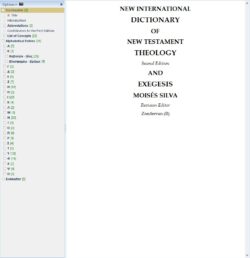
New International Dictionary of New Testament Theology and Exegesis Set
DESCRIPTION
A standard and widely-used reference work for nearly 40 years, the New International Dictionary of New Testament Theology and Exegesis has been thoroughly revised and updated to aid today’s pastors, students, scholars, and teachers in their study of the New Testament.
Offering a wealth of background and information on the meaning of Greek words in the New Testament—as well as related usage in classical Greek sources, the Septuagint, Jewish literature, and more—this important tool offers the following features:
• Alphabetical arrangement according to Greek words instead of previous order according to English topics; this ensures that individual Greek words are not discussed in isolation from one another and are easy to access
• Expanded to include additional Greek words and concepts not covered in the original work, NIDNTTE includes nearly 800 entries covering over 3,000 Greek words
• Discussions have been revised to be in line with modern scholarship and bibliographies are updated
• Corrections have been made to inconsistencies and omissions in earlier versions
• Updated and added consistency to include—for every entry—all necessary background information from classical Greek, the LXX, and Jewish literature.
• A helpful semantic domain index now directs the reader to all of the Greek words that have something to do with a particular English word. For example, under the English word “Anger, Wrath,” there is a list of thirteen Greek words that are related to that topic.
• Significant changes have been made in the presentation and discussion of linguistic details
• and much more!
theWord Features:
- Verse popups
- Fully searchable text
- Footnotes
- Easy navigation of topics via topics tree display.
- Cross-links to NIDOTTE, TDOT and TDNT.
- Special Text Colors
- Normal: Text
- Hyperlink: Glossary | Gen. 9:8
- G/K Numbering G325
Note: The codes H## and G## used in this module refer to the Goodrick–Kohlenberger (G/K) numbering system, not to Strong’s Concordance numbers. This follows the publisher’s data. Strong to Goodrick-Kohlenberger Number Conversion Chart at the end of the resource. - Greek: πατήρ
- Greek Transliteration: pater
- Hebrew: אֱלֹהִים
- Hebrew Transliteration: ʾelōhîm
New International Dictionary of New Testament Theology: Abridged Edition
DESCRIPTION
This abridgment of Colin Brown’s original four volume work is arranged with its entries in Greek alphabet order, which makes it easy to find the discussion of a particular word. All Greek words are transliterated into English and linked with their Goodrick/Kohlenberger numbers. This book was formerly titled The NIV Theological Dictionary of New Testament Words.
theWord Features:
-
Greek-headword dictionary lookup and Greek-alphabetical topic-tree navigation
-
Strong G and Goodrick-Kohlenberger GKG identifier lookup
-
Fully searchable dictionary text
-
Pgs: 734
-
Verse popups and Bible links for canonical Scripture references
-
Internal cross-references and source aliases
-
Subject Index and Scripture Index
-
Greek GKG/Strong and supplemental Hebrew GKH/Strong conversion charts
-
Native tables for conversion charts and transliteration guides
-
Source-mapped transliterations followed by original-language equivalents in square brackets
-
Native images and diagrams retained from the resource
-
Print-page markers and page navigation
- Special Text Colors
- Normal: Text
- Scripture: John 3:16
- Page Number: [p1>
- Greek
- Transliteration: agapaō
- Original Script: ἀγαπάω
- Hebrew
- Transliteration: ʾāhēb
- Original Script: אָהֵב
- Aramaic
- Transliteration: ʾabbāʾ
- Original Script: אַבָּא
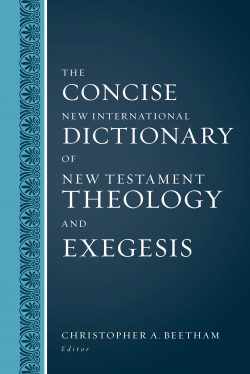
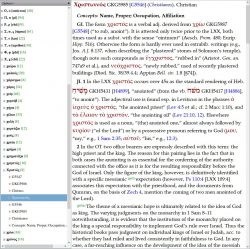
Concise New International Dictionary of New Testament Theology and Exegesis
DESCRIPTION
The Exegesis Quick-Reference Tool Every Pastor, Teacher, Student, and Scholar Needs
The Concise New International Dictionary of New Testament Theology and Exegesis (CNIDNTTE) by Christopher A. Beetham is a significant resource for those looking for a quick-reference guide to aid in exegesis and interpretation. It retains all the essentials of the monumental and magisterial New International Dictionary of New Testament Theology and Exegesis edited by Moises Silva, bringing together its most important elements into one accessible volume. This reference includes the most vital, relevant information needed to delve deep into the study of the Greek words used in Scripture for study of the New Testament–its texts and theology.
This volume offers a wealth of background and information on the meaning of Greek words in the New Testament, as well as related usage in classical Greek sources, the Greek Old Testament (Septuagint), and extrabiblical Second Temple Jewish literature. This significant tool offers the following features:
- All the nearly 800 entries covering over 3,000 Greek words found in the full edition are included and presented in the same order and arrangement
- Retains approximately 60 percent of the original edition, with the emphasis now on synchronic word study and usage in the Greek Old Testament, extrabiblical Second Temple literature, and especially the New Testament
- The unique arrangement according to Greek words and use of English concepts is retained from the full edition and allows all users to access Greek terms regardless of their level of competence in Greek.
- This edition retains the significant semantic-domain tool that directs the reader to all the Greek words that have something to do with a particular English word or concept. For example, under the English words “Resurrection,” there is a list of four Greek words that are related to that topic.
- Discussions reflect the latest in modern scholarship
- Bibliographies retain essential references to other standard lexicons and theological dictionaries
The Concise New International Dictionary of New Testament Theology and Exegesis is the ideal tool for pastors, Bible teachers, students, and scholars engaging in exegesis. It is packed with the essential information needed to study the New Testament.
There is a comparison below of this Concise version and the Full version here.
theWord Features:
- Dictionary topics
- Greek: εὐδόκησα
- Greek Transliteration: archon
- Strong’s Numbers: G25
- Concept(s): Love
- Verse popups
- Fully searchable text
- Footnotes
- Easy navigation of topics via topics tree display.
- Linked to Bible view via Lemma, Word, and Strong’s Numbers
- Special Text Colors
- Normal: Text
- Hyperlink: Glossary | Gen. 9:8
- Page numbers: [piix> | [p9>
- Strong’s Numbers: G25
- Greek Transliteration: archon
- Greek: εὐδόκησα
- Hebrew: יָרֵךְ
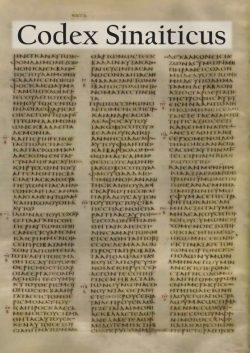
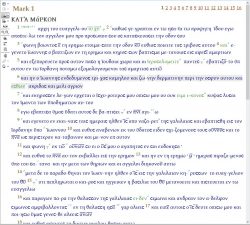
Codex Sinaiticus
Description:
Created by the Codex Sinaiticus Project
Sponsor The Institute for Textual Scholarship and Electronic Editing University of Birmingham
Funded by the Arts and Humanities Research Council
Transcription D.C. Parker Amy Myshrall T.A.E. Brown with Members of the Institüt für neutestamentliche Textforschung, Münster Transcription,
reconciliation and proofreading Rachel Kevern Conversion to XML and proofreading H.A.G. Houghton Version 1.04, last updated 25.3.2014 The Codex Sinaiticus Project Board 3.11.2010

theWord Features:
- Search the Bible for Nomina sacra such as: Ι̅Υ̅ , Θ̅Ν̅ , θ̅ν̅ or ι̅υ̅
- Use toggle key ‘e’ for main corrector color
This is the main corrector of the Codex Sinaiticus. (Correctors are in Strong’s number color when activated) - Use toggle key ‘y’ for other corrector
The symbol ┬ is used for other correctors of the Codex Sinaiticus. (Other corrector symbol ┬ is in Strong’s number color) - Use toggle key ‘k’ for column mode
The Codex Sinaiticus was written in a column format. We have used the column data that was provided in the transcription to attempt to replicate this. - Use toggle key ‘b’ to make the Greek into Uncials (Uppercase)
This should cause the content to be much closer to the original. The lowercase Greek is easier to read but not as close to the original Codex Sinaiticus. - Use toggle key ‘r’ for removing spaces
The spaces are helpful for reading but are placed based on the opinion of those who provided the transcription among others. The original Codex Sinaiticus did not have spaces. - Use toggle key ‘v’ for symbols
This will toggle the following symbols (symbols are in morphology color)
︴ + Ρ̶ ﹏ ※ ·:· ‾̷‾ ‾̷‾ ‾‾ ˜ s̵ ≀ :· ·:– ωᵨ ωᵨ̲ ( » ONLY for use in margins) - footnote indicators
- pg = page
- c = column
- a = apparatus
- g = graphic
- l = lectionary
- s = section
- t = title
- rt = running title
- red text = rubricated text
(Apocrypha not included at present – if you are interested in the apocrypha content in book form please complete the survey here.)
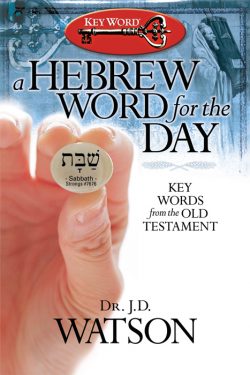
A Hebrew Word for the Day, Key Words from the Old Testament
DESCRIPTION
Unearth the wealth of treasures “buried” in the original language of Scripture! Watson’s 365-day devotional helps those who don’t know Hebrew achieve greater understanding of the Old Testament. Each entry includes a brief word study, a practical application for daily living, and related verses for further exploration. Includes Scripture, English, Hebrew, and Strong’s numbering indexes. The original volume is 384 pages, softcover from AMG, however this is a digital resource for theWord Bible Software.
Publisher’s Description
The purpose of A Hebrew Word for the Day is to share the richness of the Hebrew language words used in the Old Testament and help make them practical in the reader’s Christian living. Simply because words matter, the words of the Bible matter most. And in a day when words don’t seem to mean much, the need for precision in Christian doctrine and practice has never been more critical.
For each day of the year, Watson presents a brief word study and then offers an application to make that particular Hebrew word become real for practical living. To aid reinforcement, each day’s devotion ends with Scriptures for study to apply the truth learned that day.
Doc Watson fulfills his desire of many years to provide daily devotions that not only contain deep spiritual truth, but also are easy to read and understand. In our day of Relativism, the absolutes of God’s Word (and words) are desperately needed. These brief devotionals will enrich the mind, stir the soul, and empower the life of God’s people.
theWord Features:
- Devotional 366 daily sync
- Verse popups
- Fully searchable text
- Footnotes
- Easy navigation of topics via topics tree display.
- Scripture Index
- English Word Index
- Greek & Hebrew Word Index
- Strong’s Number Index
- Special Text Colors
- Normal: Text
- Hyperlink: H3845| Gen. 9:8
- Greek Transliteration: archon
- Hebrew Transliteration: YHWH
- Greek: εὐδόκησα
- Hebrew: יְהוָה
Package: NIV Application Commentary: New Testament
Description
The NIV Application Commentary helps you communicate and apply biblical text effectively in today’s context.

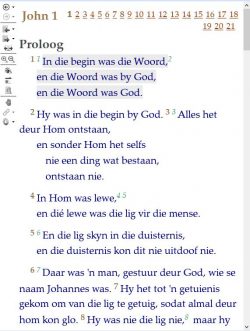
Die Bybel 2020-vertaling
DESCRIPTION
DIE BYBEL 2020-VERTALING: HOOFLETTERUITGAWE
Hierdie bronteksgeoriënteerde direkte vertaling streef daarna om só te vertaal asof die Bybelskrywers in hulle eie woorde van duisende jare gelede self aan die woord gestel word in vloeiende, idiomatiese Afrikaans. Geskik vir voorlesing en gebruik in eredienste, asook vir kategese, Bybelstudie en persoonlike gebruik.
Omdat die Bybelgenootskap van Suid-Afrika (BSA) die toepassing van die Ou Testamentiese tekste in die Nuwe Testament op Jesus as die Christus aanvaar, is daar besluit om in sodanige tekste met behulp van voetnote in die Ou en Nuwe Testament oor en weer deur middel van kruisverwysings hierna te verwys.
Na aanleiding van gesprekke tussen die BSA en ’n aantal kerke asook ’n besluit van die Kerklike Advieskomitee: Die Bybel in Afrikaans, het die BSA die betrokke kerke genooi om verteenwoordigers te benoem vir ’n werkkomitee om hom hieroor te adviseer. Die komitee se advies was dat hoofletters in Ou Testamentiese tekste wat in die 1933/1953-vertaling met hoofletters geskryf is, so behou word, asook Ou Testamentiese tekste wat deur skrywers in die Nuwe Testament op Jesus as die Christus van toepassing gemaak word. Die BSA het hierdie advies aanvaar, en die vertaling kom verder in alle opsigte ooreen met die ander uitgawes.
Die Werkkomitee het bestaan uit verteenwoordigers van die Afrikaanse Baptiste Kerk, die Afrikaanse Protestantse Kerk, die Apostoliese Geloofsending van Suid-Afrika, die Pinkster Protestantse Kerk, die Volle Evangelie Kerk van God in Suidelike Afrika, met as waarnemers die Vrye Gereformeerde Kerke in Suid-Afrika.
© Bybelgenootskap van Suid-Afrika 2020. Gebruik met toestemming. Alle regte voorbehou.
theWord Features:
- Headings
- Verse popups
- Cross References
- Fully searchable text
- Footnote(s)
- Easy navigation of topics via Bible tree or Verse Reference Entry
- Special Text Colors
- Normal: Text
- Links: Gen 1:1
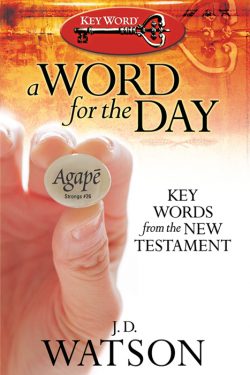
Word for the Day: Key Words from the New Testament
DESCRIPTION
Unearth the wealth of treasures “buried” in the original language of Scripture! Watson’s devotional helps those who don’t know Greek achieve greater understanding of the New Testament. Each entry focuses on one word through a brief study, an application for daily living, related verses for further exploration, and suggested prayer topics. 384 pages, softcover from AMG.
Publisher’s Description
Learn a Biblical Greek WORD Everyday.
The purpose of a Word of the Day is to share the richness of the Greek language used in the New Testament and help make these words practical in the reader’s Christian living. Because words do matter, the words of the New Testament matter most. And in a day when words don’t seem to mean much, the need for precision in Christian doctrine and practice has never been more critical.
For each day of the year, Watson presents a brief word study and then offers an application to make that particular Greek word become real for practical living. To aid reinforcement, related verses are listed for the reader’s personal study.
Doc Watson fulfills his desire of many years to provide daily devotionals that not only contain deep spiritual truth, but also are easy to read and understand. In this day of relativism, the absolutes of God’s Word (and words) are desperately needed. These brief devotionals will enrich the mind, stir the soul, and empower the life of God’s people.
theWord Features:
- Devotional 366 daily sync
- Verse popups
- Fully searchable text
- Footnotes
- Easy navigation of topics via topics tree display.
- Scripture Index
- English Word Index
- Greek & Hebrew Word Index
- Strong’s Number Index
- Special Text Colors
- Normal: Text
- Hyperlink: G3845| Gen. 9:8
- Greek Transliteration: archon
- Hebrew Transliteration: YHWH
- Greek: εὐδόκησα
- Hebrew: יְהוָה
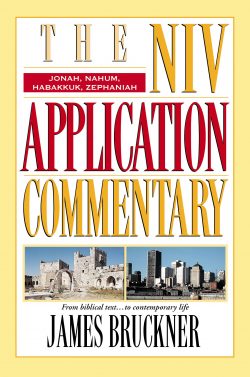
NIV Application Commentary: Jonah, Nahum, Habakkuk & Zephaniah
DESCRIPTION
The prophets Jonah, Nahum, Habakkuk, and Zephaniah all spoke to a nation that had to deal with violent enemies. While Jonah took his message to the city of Nineveh, the others faced the crisis of a new power: Babylon. Eventually, the Babylonian Empire destroyed Nineveh as prophesied by Nahum, and later destroyed Jerusalem as prophesied by Habakkuk and Zephaniah. Although these four prophets come from the distant past, they still call God’s people to consider what it means to be faithful when violent enemies press upon them. They offer God’s hope and resources in the midst of personal and societal crises.
In Jonah, Nahum, Habakkuk, and Zephaniah [NIVAC] James Bruckner draws these lessons out of the ancient context and then masterfully applies them to our own modern context wherein it seems that crisis is the state of normality. Rejecting the belief that God does not teach us through difficult times, Bruckner shows how God works in our lives at precisely the moment we think all is lost.
Book Summary
The NIV Application Commentary helps readers with the vital task of bringing the ancient message of the Bible into a contemporary context. It gives preachers and teachers the tools, ideas, and insights they need to communicate God’s Word with the same powerful impact it had when it was first written.
About the Book
The NIV Application Commentary helps you communicate and apply biblical text effectively in today’s context.
To bring the ancient messages of the Bible into today’s context, each passage is treated in three sections:
- Original Meaning. Concise exegesis to help readers understand the original meaning of the biblical text in its historical, literary, and cultural context.
- Bridging Contexts. A bridge between the world of the Bible and the world of today, built by discerning what is timeless in the timely pages of the Bible.
- Contemporary Significance. This section identifies comparable situations to those faced in the Bible and explores relevant application of the biblical messages. The author alerts the readers of problems they may encounter when seeking to apply the passage and helps them think through the issues involved.
This unique, award-winning commentary is the ideal resource for today’s preachers, teachers, and serious students of the Bible, giving them the tools, ideas, and insights they need to communicate God’s Word with the same powerful impact it had when it was first written.
theWord Features:
- Verse popups
- Verse (span) synchronization
- Fully searchable text
- Footnotes
- Pages links
- Easy navigation of topics via topics tree display.
- Scripture Index
- Subject Index
- Special Text Colors
- Normal: Text
- Hyperlink: Glossary | Gen. 9:8
- Page Number: [pg 21>
- Greek Transliteration: hiliasterion
- Hebrew Transliteration: hišekem
Note: Does not display commentary under Bible text.
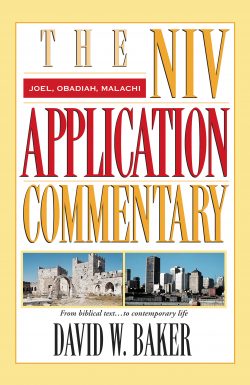
NIV Application Commentary: Joel, Obadiah & Malachi
DESCRIPTION
These three short prophetic books of the Old Testament each contain a dual message. On one hand are messages of impending judgmentfor all peoples on the Day of the Lord, for an enemy of Israel, and for Israel herself. On the other hand are messages of great hopeof the pouring out of God’s Placing judgment and hope together in such a manner may seem paradoxical to a contemporary mindset. But the complete message of these prophets gives a fuller picture of Godwho despises and rightly judges sin and rebellion, but who also lovingly invites people to return to him so that he might bestow his wonderful grace and blessings. It is a message no less timely today than when these books were first written, and David W. Baker skillfully bridges the centuries in helping believers today understand and apply it.
Book Summary
The NIV Application Commentary helps readers with the vital task of bringing the ancient message of the Bible into a contemporary context. It gives preachers and teachers the tools, ideas, and insights they need to communicate God’s Word with the same powerful impact it had when it was first written.
About the Book
The NIV Application Commentary helps you communicate and apply biblical text effectively in today’s context.
To bring the ancient messages of the Bible into today’s context, each passage is treated in three sections:
- Original Meaning. Concise exegesis to help readers understand the original meaning of the biblical text in its historical, literary, and cultural context.
- Bridging Contexts. A bridge between the world of the Bible and the world of today, built by discerning what is timeless in the timely pages of the Bible.
- Contemporary Significance. This section identifies comparable situations to those faced in the Bible and explores relevant application of the biblical messages. The author alerts the readers of problems they may encounter when seeking to apply the passage and helps them think through the issues involved.
This unique, award-winning commentary is the ideal resource for today’s preachers, teachers, and serious students of the Bible, giving them the tools, ideas, and insights they need to communicate God’s Word with the same powerful impact it had when it was first written.
theWord Features:
- Verse popups
- Verse (span) synchronization
- Fully searchable text
- Footnotes
- Pages links
- Easy navigation of topics via topics tree display.
- Scripture Index
- Subject Index
- Special Text Colors
- Normal: Text
- Hyperlink: Glossary | Gen. 9:8
- Page Number: [pg 21>
- Greek Transliteration: archon
- Greek: εὐδόκησα
- Hebrew Transliteration: ʾādām
- Hebrew: יָרֵךְ
Note: Does not display commentary under Bible text.
NIV Application Commentary: Hosea, Amos & Micah
DESCRIPTION
What would Hosea, Amos, Micah say if they came to today’s church or saw what was happening in modern culture? Hosea would find prostitution, Amos would find the poor being oppressed and Micah would still find corruption in high places.
In Hosea/Amos/Micah [NIVAC], Gary Smith examines original meanings and historical contexts to reveal the contemporary significance of these three powerful and unbending prophetic books and show that society still falls short of god’s standards and requires both his judgment and his love.
Book Summary
The NIV Application Commentary helps readers with the vital task of bringing the ancient message of the Bible into a contemporary context. It gives preachers and teachers the tools, ideas, and insights they need to communicate God’s Word with the same powerful impact it had when it was first written.
About the Book
The NIV Application Commentary helps you communicate and apply biblical text effectively in today’s context.
To bring the ancient messages of the Bible into today’s context, each passage is treated in three sections:
- Original Meaning. Concise exegesis to help readers understand the original meaning of the biblical text in its historical, literary, and cultural context.
- Bridging Contexts. A bridge between the world of the Bible and the world of today, built by discerning what is timeless in the timely pages of the Bible.
- Contemporary Significance. This section identifies comparable situations to those faced in the Bible and explores relevant application of the biblical messages. The author alerts the readers of problems they may encounter when seeking to apply the passage and helps them think through the issues involved.
This unique, award-winning commentary is the ideal resource for today’s preachers, teachers, and serious students of the Bible, giving them the tools, ideas, and insights they need to communicate God’s Word with the same powerful impact it had when it was first written.
theWord Features:
- Verse popups
- Verse (span) synchronization
- Fully searchable text
- Footnotes
- Pages links
- Easy navigation of topics via topics tree display.
- Scripture Index
- Subject Index
- Special Text Colors
- Normal: Text
- Hyperlink: Glossary | Gen. 9:8
- Page Number: [pg 21>
- Greek Transliteration: archon
- Greek: εὐδόκησα
- Hebrew Transliteration: wehayah
- Hebrew: יָרֵךְ
Note: Does not display commentary under Bible text.
NIV Application Commentary: 1 & 2 Chronicles
DESCRIPTION
The Chronicles are more than a history of ancient Israel under the ascent and rule of the Davidic dynasty. They are a story whose grand theme is hope. Great battles are fought, heroes and tyrants vie for power, Israel splits into rival kingdoms, and the soul of God’s holy nation oscillates between faithlessness and revival. Yet above this tossing sea of human events, God’s covenant promises reign untroubled and supreme.
In 1&2 Chronicles [NIVAC] demonstrates how the revelation of Yahweh moves the purposes of teh divine plan forward in the midst of fallible people. Andrew Hill shows that God has a plan to which he is committed, in the ancient world and therefore also today. God redirects our vision from our circumstances in this turbulent world to the surety of his kingdom and to himself as our source of confidence and peace.
Book Summary
The NIV Application Commentary helps readers with the vital task of bringing the ancient message of the Bible into a contemporary context. It gives preachers and teachers the tools, ideas, and insights they need to communicate God’s Word with the same powerful impact it had when it was first written.
About the Book
The NIV Application Commentary helps you communicate and apply biblical text effectively in today’s context.
To bring the ancient messages of the Bible into today’s context, each passage is treated in three sections:
- Original Meaning. Concise exegesis to help readers understand the original meaning of the biblical text in its historical, literary, and cultural context.
- Bridging Contexts. A bridge between the world of the Bible and the world of today, built by discerning what is timeless in the timely pages of the Bible.
- Contemporary Significance. This section identifies comparable situations to those faced in the Bible and explores relevant application of the biblical messages. The author alerts the readers of problems they may encounter when seeking to apply the passage and helps them think through the issues involved.
This unique, award-winning commentary is the ideal resource for today’s preachers, teachers, and serious students of the Bible, giving them the tools, ideas, and insights they need to communicate God’s Word with the same powerful impact it had when it was first written.
theWord Features:
- Verse popups
- Verse (span) synchronization
- Fully searchable text
- Footnotes
- Pages links
- Easy navigation of topics via topics tree display.
- Scripture Index
- Subject Index
- Author Index
- Special Text Colors
- Normal: Text
- Hyperlink: Glossary | Gen. 9:8
- Page Number: [pg 21>
- Hebrew Transliteration: ʾaḥuzzah
Hebrew: יָרֵךְ
Note: Does not display commentary under Bible text.

NIV Application Commentary: 1 & 2 Samuel
DESCRIPTION
Why do the books of Samuel pack such broad appeal? Taken together as a single narrative, they certainly offer something for everyone: kings and prophets, great battles and greater heroes, action and romance, loyalty and betrayal, the mundane and the miraculous. In Samuel, we meet Saul, David, Goliath, Jonathan, Bathsheba, the witch of Endor, and other unforgettable characters. And we encounter ourselves. For while the culture and conditions of Israel under its first kings is vastly different from our own, the basic issues of humans in relation to God, the Great King, have not changed. Sin, repentance, forgiveness, adversity, prayer, faith, and the promises of God—these continue to play out in our lives today.
Exploring the links between the Bible and our own times, Bill T. Arnold shares perspectives on 1 and 2 Samuel that reveal ageless truths for our twenty-first-century lives.
Book Summary
The NIV Application Commentary helps readers with the vital task of bringing the ancient message of the Bible into a contemporary context. It gives preachers and teachers the tools, ideas, and insights they need to communicate God’s Word with the same powerful impact it had when it was first written.
About the Book
The NIV Application Commentary helps you communicate and apply biblical text effectively in today’s context.
To bring the ancient messages of the Bible into today’s context, each passage is treated in three sections:
- Original Meaning. Concise exegesis to help readers understand the original meaning of the biblical text in its historical, literary, and cultural context.
- Bridging Contexts. A bridge between the world of the Bible and the world of today, built by discerning what is timeless in the timely pages of the Bible.
- Contemporary Significance. This section identifies comparable situations to those faced in the Bible and explores relevant application of the biblical messages. The author alerts the readers of problems they may encounter when seeking to apply the passage and helps them think through the issues involved.
This unique, award-winning commentary is the ideal resource for today’s preachers, teachers, and serious students of the Bible, giving them the tools, ideas, and insights they need to communicate God’s Word with the same powerful impact it had when it was first written.
theWord Features:
- Verse popups
- Verse (span) synchronization
- Fully searchable text
- Footnotes
- Pages links
- Easy navigation of topics via topics tree display.
- Scripture Index
- Subject Index
- Author Index
- Special Text Colors
- Normal: Text
- Hyperlink: Glossary | Gen. 9:8
- Page Number: [pg 21>
- Greek/Hebrew/Latin Transliteration: metanoia / ʿaṣar / carmen Christi
- Greek: εὐδόκησα
- Hebrew: יָרֵךְ
Note: Does not display commentary under Bible text.

NIV Application Commentary: 1 & 2 Kings
DESCRIPTION
Readers of 1 and 2 Kings commonly approach these books as a straightforward chronology of post-Davidic Israel: the inauguration of Solomon’s reign, the division of the kingdom following his death, and Israel’s and Judah’s ensuing kings, conflicts, captivities, and overarching spiritual decline. In reality, however, the books of the Kings fall into the collection known as the Former Prophets, and their true story and underlying theme center on such striking personalities as Nathan, Elijah, Elisha, and other divinely appointed spokesmen. It is God’s interaction with his people by way of his prophets and their kings his pleadings, his warnings, and the fulfillment of his words that comes across again and again with forcefulness and clarity. God speaks; now will his people hear, believe, and respond?
In 1&2 Kings August Konkel shows us that these questions and issues remain pertinent for us today. Bridging the centuries Konkel connects past context to contemporary circumstances, helping us grasp the meaning and significance of 1 and 2 Kings and understand how its myriad lessons and circumstances can inform our knowledge of God and decisions to act in today’s world.
Book Summary
The NIV Application Commentary helps readers with the vital task of bringing the ancient message of the Bible into a contemporary context. It gives preachers and teachers the tools, ideas, and insights they need to communicate God’s Word with the same powerful impact it had when it was first written.
About the Book
The NIV Application Commentary helps you communicate and apply biblical text effectively in today’s context.
To bring the ancient messages of the Bible into today’s context, each passage is treated in three sections:
- Original Meaning. Concise exegesis to help readers understand the original meaning of the biblical text in its historical, literary, and cultural context.
- Bridging Contexts. A bridge between the world of the Bible and the world of today, built by discerning what is timeless in the timely pages of the Bible.
- Contemporary Significance. This section identifies comparable situations to those faced in the Bible and explores relevant application of the biblical messages. The author alerts the readers of problems they may encounter when seeking to apply the passage and helps them think through the issues involved.
This unique, award-winning commentary is the ideal resource for today’s preachers, teachers, and serious students of the Bible, giving them the tools, ideas, and insights they need to communicate God’s Word with the same powerful impact it had when it was first written.
theWord Features:
- Verse popups
- Verse (span) synchronization
- Fully searchable text
- Footnotes
- Pages links
- Easy navigation of topics via topics tree display.
- Scripture Index
- Subject Index
- Author Index
- Special Text Colors
- Normal: Text
- Hyperlink: Glossary | Gen. 9:8
- Page Number: [pg 21>
- Hebrew Transliteration: sanwērîm
- Hebrew: יָרֵךְ
Note: Does not display commentary under Bible text.
NIV Application Commentary: Psalm Vol2
DESCRIPTION
Perhaps more clearly than any other part of the biblical canon, the book of Psalms includes human words directed to God. Yet, through the Holy Spirit, these honest, sometimes brutal words return to us as the Word of God. Their agonies and exaltations reflect more than the human condition in which they were created. Within the context of the canonical Psalter, they become the source of divine guidance, challenge, confrontation, and comfort. It is possible, however, to misapply them. How can we use the book of Psalms in a way that faithfully connects God’s meaning in them and his intentions for them with our circumstances today?
In continuity with Gerald Wilson’s work in Psalms, Volume 1, Dennis Tucker and Jamie Grant reveal the links between the Bible and our present times. While they consider each psalm independently, they go much further, examining whole groups of psalms and, ultimately, the entire Psalter, seeking its purpose and use for the days of Hebrew temple worship through church history. In so doing, the authors open our eyes to ageless truths for our twenty-first-century lives.
Book Summary
The NIV Application Commentary helps readers with the vital task of bringing the ancient message of the Bible into a contemporary context. It gives preachers and teachers the tools, ideas, and insights they need to communicate God’s Word with the same powerful impact it had when it was first written.
About the Book
The NIV Application Commentary helps you communicate and apply biblical text effectively in today’s context.
To bring the ancient messages of the Bible into today’s context, each passage is treated in three sections:
- Original Meaning. Concise exegesis to help readers understand the original meaning of the biblical text in its historical, literary, and cultural context.
- Bridging Contexts. A bridge between the world of the Bible and the world of today, built by discerning what is timeless in the timely pages of the Bible.
- Contemporary Significance. This section identifies comparable situations to those faced in the Bible and explores relevant application of the biblical messages. The author alerts the readers of problems they may encounter when seeking to apply the passage and helps them think through the issues involved.
This unique, award-winning commentary is the ideal resource for today’s preachers, teachers, and serious students of the Bible, giving them the tools, ideas, and insights they need to communicate God’s Word with the same powerful impact it had when it was first written.
theWord Features:
- Verse popups
- Verse (span) synchronization
- Fully searchable text
- Footnotes
- Pages links
- Easy navigation of topics via topics tree display.
- Scripture Index
- Subject Index
- Author Index
- Special Text Colors
- Normal: Text
- Hyperlink: Glossary | Gen. 9:8
- Page Number: [pg 21>
- Hebrew: יָרֵךְ
Note: Does not display commentary under Bible text.
NIV Application Commentary: Psalm Vol1
DESCRIPTION
Perhaps more clearly than any other part of the biblical canon, the Psalms are human words directed toward God. Yet, through the Holy Spirit, these honest, sometimes brutal words return to us as the Word of God. Their agonies and exaltations reflect more than the human condition in which they were created. Within the context of the canonical Psalter, they become the source of divine guidance, challenge, confrontation, and comfort. It is possible, however, to miss apply them. How can we use the Psalms in a way that faithfully connects God’s meaning in them and his intentions for them with our circumstances today.
Drawing on over twenty years of study Gerald H. Wilson in Psalms, Vol. 1 [NIVAC] provides critical links between the Bible and the modern world. While he considers each psalm in itself, Wilson goes much further, examining whole groups of Psalms and, ultimately, the entire Psalter (though this volume is limited to Psalms 1-72 in terms of Psalms under specific discussion), its purpose, and its use from the days of the Hebrew temple worship onward through church history. In so doing, Wilson opens our eyes to ageless truths for our lives here and now.
Book Summary
The NIV Application Commentary helps readers with the vital task of bringing the ancient message of the Bible into a contemporary context. It gives preachers and teachers the tools, ideas, and insights they need to communicate God’s Word with the same powerful impact it had when it was first written.
About the Book
The NIV Application Commentary helps you communicate and apply biblical text effectively in today’s context.
To bring the ancient messages of the Bible into today’s context, each passage is treated in three sections:
- Original Meaning. Concise exegesis to help readers understand the original meaning of the biblical text in its historical, literary, and cultural context.
- Bridging Contexts. A bridge between the world of the Bible and the world of today, built by discerning what is timeless in the timely pages of the Bible.
- Contemporary Significance. This section identifies comparable situations to those faced in the Bible and explores relevant application of the biblical messages. The author alerts the readers of problems they may encounter when seeking to apply the passage and helps them think through the issues involved.
This unique, award-winning commentary is the ideal resource for today’s preachers, teachers, and serious students of the Bible, giving them the tools, ideas, and insights they need to communicate God’s Word with the same powerful impact it had when it was first written.
theWord Features:
- Verse popups
- Verse (span) synchronization
- Fully searchable text
- Footnotes
- Pages links
- Easy navigation of topics via topics tree display.
- Scripture Index
- Subject Index
- Special Text Colors
- Normal: Text
- Hyperlink: Glossary | Gen. 9:8
- Page Number: [pg 21>
- Greek Transliteration: archon
- Hebrew Transliteration: ʾšrynw
Hebrew: ישׁב
Note: Does not display commentary under Bible text.
Package: Wuest Word Studies & New Testament Expanded Translation
Kenneth Wuest was a long time Greek teacher at Moody Bible Institute back in 1920’s, ‘30’s, 40’s, and 50’s. (Yeah – he taught almost 30 years). At that time, Moody was one of the leaders in both dispensationalism and fundamentalism.
When he started writing, it was his intent to bring the nuance of the Greek language out for the non-Greek speaking English reader. This reviewer thinks that he hits that mark pretty well.
His first book was entitled Treasures from the Greek New Testament for the English Reader. This was a collection of twelve essays (which became twelve chapters – imagine that!) that are topical. His second book was a commentary on 1Peter entitled First Peter in the Greek New Testament for the English Reader (do you see a common theme?). It is pleasantly verse by verse.
Over the course of his writing career, he wrote commentaries on Mark, Romans, Galatians, Ephesians, Philippians, Colossians, 1Timothy, 2Timothy, Hebrews, 1Peter, 2Peter, 1John, 2John, 3John, & Jude. [If you’re keeping score at home, that means he missed Matthew, Luke, John, Acts, 1Corinthians, 2Corinthians, 1Thessalonians, 2Thessalonians, Titus, Philemon, James, and Revelation.]
In addition to his commentaries, he also wrote six topical books – all revolving around word studies in the Greek New Testament.
I’ve already noted that Wuest is both dispensational and evangelical in his doctrinal outlook. I also mentioned that in the era he wrote, Moody was considered a fundamentalist institution. That’s good.
I would like to point out that Wuest was not a KJV lover. He served on the translation team that produced the NASB. He actually published an entire expanded translation of the New Testament. But as you might think with his NASB background, his own translation is based on the Nestle Greek text, and not the Textus Receptus (which is the text behind the KJV). Personal kudos for rejecting the ASV; but he was one of the early proponents within the fundamentalist movement to depart from the KJV. He makes no apologies for correcting “error” in the KJV. For this reason alone, I don’t recommend this resource to anyone not grounded in bibliology.
Entry Length
Again, please note that his NT commentary covers only 15 books of the NT (of 27 total books); but because he left off four of the five longest books in the NT, his commentary actually covers far less than 50% of it. However, where he does have comments, they are more than sufficient. For me, they are right in the sweet spot between “sufficient” and “verbose” (I guess I like ‘em a little longer than sufficient…).
I like to provide an example from Rom 3:24 in these reviews. So here is Wuest on Rom 3:24 –
QUOTATION BEGINS – “Freely” is dōrean [δωρεαν], “freely, for naught, gratis, gratuitously, without just cause.” “Grace” is Charis [Χαρις] which signified in classical authors a favor done out of the spontaneous generosity of the heart without any expectation of return. Of course, this favor was always done to one’s friend, never to an enemy. But when Charis [Χαρις] comes into the New Testament, it takes an infinite leap forward, for the favor God did at Calvary was for those who hated Him. It was a favor clone out of the spontaneous generosity of God’s heart of love with no expectation of return. There are no strings attached to grace. It is given dōrean [δωρεαν], gratuitously. Of course, grace in the form of salvation is so adjusted that the one who receives it, turns from sin to serve the living God and live a holy life, for grace includes not only the bestowal of a righteousness, but the inward transformation consisting of the power of indwelling sin broken and the divine nature implanted, which liberates the believer from the compelling power of sin and makes him hate sin, love holiness, and gives him the power to obey the Word of God.
This grace shown the believing sinner is made possible, Paul says through the redemption which is in Christ Jesus. “Redemption” is apolutrōseōs [ἀπολυτρωσεως], the verbal form of which is apolutroō [ἀπολυτροω], “to redeem by paying the lutron [λυτρον] price.” There are three words translated “redeem,” agorazō [ἀγοραζω], “to buy in the slave market” (1 Cor. 6:20; 7:23, 2 Pet. 2:1), Christ bought us in this slave market of sin by His own blood; believers are His bondslaves; exagorazō [ἐξαγοραζω], “to buy out of the slave market” (Gal. 3:13; 4:5), the redeemed are never to be put up for sale in any slave market again; and litroō [λιτροω], “to set free by paying a price” (Tit. 2:14, 1 Pet. 1:18): the believer is set free from sin and free to live a life pleasing to God in the power of the Holy Spirit. The redemption price, the precious blood of Jesus, makes it possible for a righteous God to justify a believing sinner on the basis of justice satisfied. This Paul proceeds to explain in the next two verses. – QUOTATION ENDS
This might be a little longer than his typical comment, but you get the flavor here of how he writes.
Language Skills Needed
Did you remember the ending phrase in his titles? “…for the English Reader.” While a little bit of Greek is helpful (he does use words like “aorist,” “imperfect,” “middle voice,” and even “pluperfect,”), he actually does a pretty good job of explaining the importance of each of those words in his exposition. So Greek is helpful, yes, but not essential in profiting from this work. HOWEVER: keep reading for more info on the necessity of language skills.
Academic Target
Wuest and I are going to disagree on this. His work; my review. Wuest would tell you that his target was the Bible disciple who wanted to know more about his English Bible by expanding all of the nuances of the Greek into English. Fair enough. I would tell you that Wuest does not like the KJV, believes there to be translation errors in it, and those errors are due to the KJV coming from a corrupt Greek text. Hmmm. I have a problem with that.
Some of his comments are based on the Nestle text, which differs regularly from the TR. A knowledge of Greek will be very helpful – especially to those expositors who, like me, use the KJV/TR. When he makes an argument based on the Nestle text, it will be very helpful to know what the TR instead says. So due to his theological bias, I don’t recommend this resource to anyone who is not clear in his stance on bibliology. I have it tagged above as “Pastoral” for this reason.
And Then There’s All This Topical Content
Let’s not forget that he wrote six topical books, totaling almost another 100 chapters. From a personal perspective, this will be a harder tool to use (how are you going to find his interesting comments on “crowns” in a topical presentation?). But the writing is just as good, even though it may be hard to find.
Contents Conclusion
I like Wuest very much, as a matter of fact. It is too bad he did not finish all of the NT Books. I wish he had. And with the above mentioned foibles in mind, I recommend the use of his writing to you. This is a DDT approved Good Resource.
$121.00Original price was: $121.00.$90.75Current price is: $90.75. Add to cart