


See below for more information. . .

Nederlandse Concordante Vertaling
Description:
Het kostbaarste bezit van een gelovige is zijn Bijbel. Daarin is Gods woord geopenbaard. Het corrigeert ons, geeft richting, voedt ons op en maakt ons klaar om in Gods dienst te staan 2Tim 3:16,17. Er is tegenwoordig geen tekort aan uitspraken van mensen te vinden, maar vergeleken met Gods woord zijn ze zonder waarde.
Veel moderne vertalingen proberen de betekenis van de oude Griekse en Hebreeuwse teksten over te zetten in begrijpelijk Nederlands. Zij overbruggen de kloof in tijd en taalgebruik door niet altijd woorden letterlijk over te zetten, maar waar iets niet direct duidelijk zal zijn voor de gemiddelde Nederlander, te zoeken naar een andere manier om dezelfde betekenis of gedachte uit te drukken.
Dit maakt zulke vertalingen goed leesbaar, maar het heeft ook nadelen. De vertaler moet dan namelijk eerst de betekenis van de tekst achterhalen, om die vervolgens over te zetten naar eenzelfde Nederlandse manier van uitdrukken. Soms zijn er bijvoorbeeld meerdere uitleggingen mogelijk voor een vers, waarvan dan één gekozen moet worden. Ook zullen dan onherroepelijk de overtuigingen van de vertaler of heersende traditie in de tekst terecht komen. Dan is het voor de lezer niet meer mogelijk om in zijn Bijbelvertaling te ontdekken wat er eigenlijk staat of kritisch de keuzes van de vertalers of de heersende overtuiging te onderzoeken.
Waardering Bron:
theWord Features | Functies :
- Headings | Koppen
- Footnotes | Voetnoten
- Cross References | Kruisverwijzing
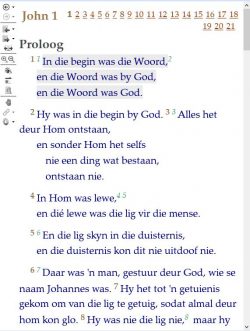
Die Bybel 2020-vertaling
DESCRIPTION
DIE BYBEL 2020-VERTALING: HOOFLETTERUITGAWE
Hierdie bronteksgeoriënteerde direkte vertaling streef daarna om só te vertaal asof die Bybelskrywers in hulle eie woorde van duisende jare gelede self aan die woord gestel word in vloeiende, idiomatiese Afrikaans. Geskik vir voorlesing en gebruik in eredienste, asook vir kategese, Bybelstudie en persoonlike gebruik.
Omdat die Bybelgenootskap van Suid-Afrika (BSA) die toepassing van die Ou Testamentiese tekste in die Nuwe Testament op Jesus as die Christus aanvaar, is daar besluit om in sodanige tekste met behulp van voetnote in die Ou en Nuwe Testament oor en weer deur middel van kruisverwysings hierna te verwys.
Na aanleiding van gesprekke tussen die BSA en ’n aantal kerke asook ’n besluit van die Kerklike Advieskomitee: Die Bybel in Afrikaans, het die BSA die betrokke kerke genooi om verteenwoordigers te benoem vir ’n werkkomitee om hom hieroor te adviseer. Die komitee se advies was dat hoofletters in Ou Testamentiese tekste wat in die 1933/1953-vertaling met hoofletters geskryf is, so behou word, asook Ou Testamentiese tekste wat deur skrywers in die Nuwe Testament op Jesus as die Christus van toepassing gemaak word. Die BSA het hierdie advies aanvaar, en die vertaling kom verder in alle opsigte ooreen met die ander uitgawes.
Die Werkkomitee het bestaan uit verteenwoordigers van die Afrikaanse Baptiste Kerk, die Afrikaanse Protestantse Kerk, die Apostoliese Geloofsending van Suid-Afrika, die Pinkster Protestantse Kerk, die Volle Evangelie Kerk van God in Suidelike Afrika, met as waarnemers die Vrye Gereformeerde Kerke in Suid-Afrika.
© Bybelgenootskap van Suid-Afrika 2020. Gebruik met toestemming. Alle regte voorbehou.
theWord Features:
- Headings
- Verse popups
- Cross References
- Fully searchable text
- Footnote(s)
- Easy navigation of topics via Bible tree or Verse Reference Entry
- Special Text Colors
- Normal: Text
- Links: Gen 1:1
A Short Guide to the Pronunciation of New Testament Greek
DESCRIPTION
What did the apostles’ Greek sound like?
How should New Testament Greek be pronounced in our classrooms? Often students are taught Erasmian pronunciation, which does not even reproduce Erasmus’s own pronunciation faithfully, let alone that of the New Testament authors. But if we want to process the language of the New Testament the same way its original authors and readers did, we should use their pronunciation. In his new book, Benjamin Kantor breaks a path toward an authentic pronunciation of Koine Greek at the time of the New Testament, seeking to improve students’ reading proficiency.
A Short Guide to the Pronunciation of New Testament Greek distills Kantor’s new monograph, The Pronunciation of New Testament Greek, with an eye toward practical instruction. The first comprehensive phonological and orthographic study of Judeo-Palestinian Koine Greek, The Pronunciation of New Testament Greek surveys thousands of inscriptions and papyri to determine historical pronunciation. A Short Guide gives students an overview of the basics of phonology before explaining the pronunciation of each Greek letter and phoneme individually. Perfect for classroom use, this guide explains Kantor’s cutting-edge research accessibly and includes sample texts for reading practice.
theWord Features:
- Chapter and named-section topic navigation
- Searchable chapter text
- Greek, transliteration, IPA, and pronunciation tables
- Greek and Hebrew language examples
- Exact single-footnote popups
- Internal cross-references
- Native tables and images
- Special Text Colors
- Normal: Text
- Internal link: The International Phonetic Alphabet
- Greek: λόγχη
- Transliteration: lonχi(-yoθ)
- IPA: [x] / [χ]
- Hebrew comparison: לוֹנְכִֿייוֹתֿ
Good News Translation in Today’s English Version with Apocrypha (GNT)
The GNT (also known as Today’s English Version or Good News Bible) was one of the first meaning-based (or functional equivalent) translations of the Bible into English. It was originally published in 1976, then it was revised in 1992. The GNT presents the message of the Bible in a level of English that is common to most of the English-speaking world. The GNT is still used widely in youth Bible study groups and in less formal worship services.
A very contemporary translation that is designed to be easy to read for those who are not familiar with the Bible. Also known as the Good News Bible, this translation of the Bible follows a dynamic equivalence theory of translation. Published in 1966, revised in 1992.
Pocket Guide to World Religions
DESCRIPTION
Have you ever wondered . . .
- what the red dot on an Indian woman’s forehead means?
- whether all Buddhist monks practice martial arts?
- if the Emperor of Japan is still considered a god?
Here is a concise, informative guide for anyone looking for answers to basic questions about the world’s varied religions. In short, incisive chapters, Winfried Corduan introduces readers to twelve of the world’s major religions, including Baha’i, Buddhism, Christianity, Confucianism, Daoism, Hinduism, Islam, Jainism, Judaism, Parsi, Shinto and Sikhism. For each, he offers brief descriptions of its name, numbers and distribution, key symbols, history, Scriptures, major beliefs, subgroups, worship practices, home practices, clothing, diet and calendar. Also included are even briefer descriptions of sixteen new religious movements and traditional or tribal religions.
This book is for students, pastors and other busy people who want the quick, bare-facts scoop on current religions.
theWord Features
- Fully searchable text
- Easy navigation of topics via topics tree display.
- Special Text Colors
- Normal: Text
- Hyperlink: Link
- Page Number: [pg1>
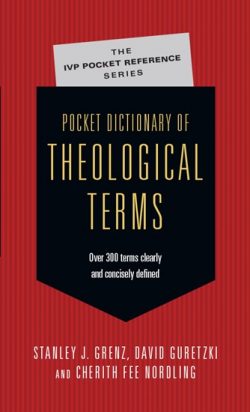
Pocket Dictionary of Theological Terms
DESCRIPTION
Beginning to study theology is like stepping into a conversation that has been going on for two thousand years.
How do you take part in this conversation–or even make sense of it–if you don’t understand the vocabulary or know the contributions made by other participants?
The Pocket Dictionary of Theological Terms is the perfect companion to your theological studies. Among its three hundred-plus definitions are
- English terms, from accomodation to wrath of God
- foreign terms, from a posteriori to via media
- theological movements and traditions, from the Alexandrian School to Wesleyanism
- theologians, from Anselm of Canterbury to Ulrich Zwingli
Here is an affordable and easily accessible resource for your theological readings, lectures and writing assignments. It’s a must-have for every beginning theological student!
theWord Features
- Verse popups
- Fully searchable text
- Easy navigation of topics via topics tree display.
- Special Text Colors
- Normal: Text
- Hyperlink: Link | Jn 3:36
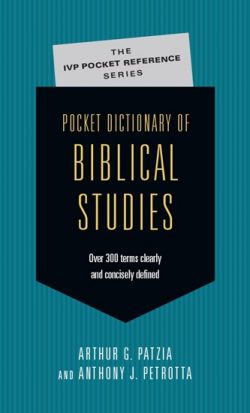
Pocket Dictionary of Biblical Studies
DESCRIPTION
So many words about the Word. The study of anything seems to generate its own special vocabulary, and biblical studies is no different. What’s more, it’s got nearly a two-thousand-year lead on you! How can you catch up? Here is the answer!
If you are puzzled by parataxis or rankled by recensions, the Pocket Dictionary of Biblical Studies is the companion you need. Whether you are studying Old Testament or New Testament or both at once, this little book is your private tutor, your ever-ready guide to over three hundred biblical-studies terms. Here’s your glossary for reading course textbooks, your decoder for listening to lectures, your review sheet for cramming for finals and your “help” key for writing research papers.
Among the more than 300 terms defined you’ll discover
- types of biblical criticism, from genre criticism to tradition criticism
- Greek and Latin terms, from agrapha to vaticinium ex eventu
- German terms, from Frühkatholizismus to Wissenschaft
- ancient texts, from Aleppo Codex to Zadokite Document
- literary features, from acrostic to woe oracle
- theories, from the Augustinian hypothesis to the Yahwist source
- textual criticism terms, from codex to Western text
Written by Arthur G. Patzia and Anthony J. Petrotta, two biblical studies professors who know what you need to know, Pocket Dictionary of Biblical Studies will be your essential guide into a fascinating world of understanding.
theWord Features
- Verse popups
- Fully searchable text
- Easy navigation of topics via topics tree display.
- Special Text Colors
- Normal: Text
- Hyperlink: Link | Jn 3:36
- Greek: λογος
- Hebrew: א
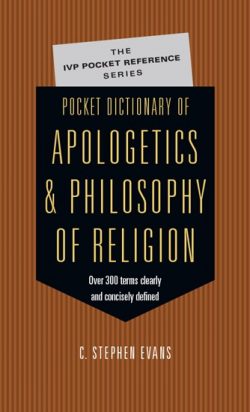
Pocket Dictionary of Apologetics and Philosophy of Religion
DESCRIPTION
For philosophers, the pursuit of truth travels on precise definitions. For Christian apologists, the defense of the faith is founded on the defining Word. And for beginning students of either discipline, the difference between success and frustration begins with understanding the terms and ideas and identifying the thinkers and movements.
The Pocket Dictionary of Apologetics Philosophy of Religion is designed to be a companion to your study of these two related disciplines. Among its 300 entries are
- terms, from a posteriori to worldview
- apologists, from Abelard to Van Til
- philosophers of religion, from Alston to Wolterstorff
- movements, from analytic philosophy to voluntarism
- apologetic arguments, from the cosmological to the wager
- theologies, from Arminianism to Zoroastrianism
Here is an affordable and easily accessible “help key” for your readings, lectures, writing assignments and exam preparation. It’s a must-have study aid for any student who expects to cogitate on coherentism or ruminate on Ricouer.
theWord Features
- Verse popups
- Fully searchable text
- Easy navigation of topics via topics tree display.
- Special Text Colors
- Normal: Text |
- Hyperlink: Link | Jn 3:36
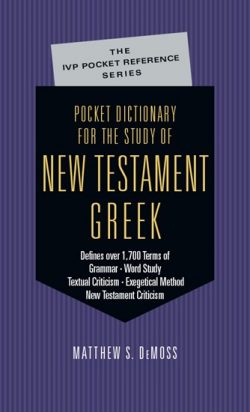
Pocket Dictionary for the Study of New Testament Greek
DESCRIPTION
If you are beginning your study of New Testament Greek or Greek exegesis, this book is for you!
From ablative to zeugma, it defines the tangled terms that infest Greek textbooks, grammars and lexicons.
Here is the book to deliver you from late-night ponderings of the predicate and frantic fumings over the fricative. It is the indispensable lexicon to that third language that is neither Greek nor recognizable English: the technical vocabulary of grammarians, lexicographers, linguists and Greek instructors. What’s more, this pocket dictionary gives you the inside edge on the terminology of exegesis, textual criticism and biblical criticism.
Careful definitions, helpful examples and copious cross-references make this economically priced, brief dictionary easy to use. And its convenient size will make it a constant companion in your study of the Greek New Testament.
theWord Features
- Verse popups
- Fully searchable text
- FootNote(s)
- Easy navigation of topics via topics tree display.
- Special Text Colors
- Normal: Text
- Hyperlink: Link
- Page Number: [pg1>
- Greek: λογος
- Hebrew: א
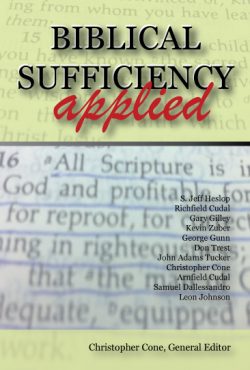
Biblical Sufficiency Applied
Description
God-breathed. Profitable. These two words Paul conveys in 2 Timothy 3:16 to describe the word of God. That the Text is God-breathed attests to its authority, and that it is profitable attests to its sufficiency. The authority of Scripture has no limit for the believer – in its pages God demands complete submission of His children. Likewise the sufficiency of Scripture reaches to the farthest corners of the believer’s position and practice.
Paul describes the purpose of Scripture’s inspiration: “that the man of God may be adequate, equipped for every good work” (2 Tim 3:17). God’s word is sufficient for the equipping of His people for the works He has planned for them (Eph 2:10). The divine prescriptions explain the believer’s course of action, oftentimes revealing the rationale for the action, and always pointing to the enablement needed and provided. In short, the true knowledge of Him provides everything pertaining to life and godliness (2 Pet 1:3).
As such, we can rely on Scripture in every area of life. We will find no topic out of bounds, and no subject so controversial as to be avoided or lacking illumination in the pages of the Bible. Biblical Sufficiency Applied is an effort on the part of its several contributors to consider certain areas of contemporary controversy in the light of Scripture. We hope and pray that God uses this work both to challenge and encourage the reader to seek the answers in Scripture, and to be confident in the Biblical record as sufficient for every aspect of the believer’s life.
theWord Features:
- Verse popups
- Fully searchable text
- Footnotes
- Easy navigation of topics via topics tree display.
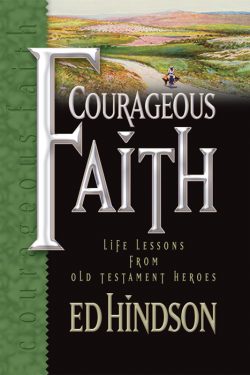
Courageous Faith: Life Lessons from Old Testament Heroes
DESCRIPTION
Obstacles* Battles* Weakness* Fears*
Learn to face life’s greatest challenges with courageous faith in the power of God.
Faith is the key that unlocks the power of God in our lives. It enables us to live by His promises and experience His blessings in our personal lives. In COURAGEOUS FAITH, Ed Hindson encourages us to live beyond the normal limits of life and experience the unlimited power of God on a regular basis. based on the lives of the Hebrews heroes of the Old testament, this exciting book challenges us to overcome our barriers, conquer our fears, realize our goals, and start over when we fail. Relive the greatest moments of faith and triumph in the lives of the men of God who dared to believe His promises in their lives.
This practical and powerful study is based on the lives of the Hebrew heroes who dared to believe that God keeps His promises
ABRAHAM The Journey of Faith SAMSON Making Them Your Strengths
JACOB Hanging Tough in the Tough Times BOAZ Especially those Who are Different
JOSEPH Starting Over When it All Falls Apart DAVID Confidence in the Face of Danger
MOSES Overcoming Your Past JONATHAN Value of True Loyalty
JOSHUA Conquering The Opposition DANIEL Developing Spiritual Determination
GIDEON Overcoming Your Fears NEHEMIAH Leaving a Legacy You Can Be proud Of
JEPHTHAH Even When it Costs You
theWord Features:
- Verse popups (Nehemiah 9:1)
- Fully searchable text
- Easy navigation of topics via topics tree display.
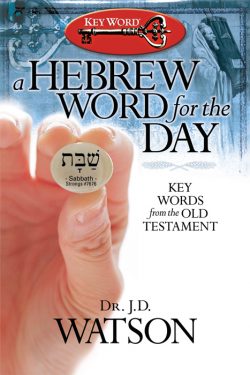
A Hebrew Word for the Day, Key Words from the Old Testament
DESCRIPTION
Unearth the wealth of treasures “buried” in the original language of Scripture! Watson’s 365-day devotional helps those who don’t know Hebrew achieve greater understanding of the Old Testament. Each entry includes a brief word study, a practical application for daily living, and related verses for further exploration. Includes Scripture, English, Hebrew, and Strong’s numbering indexes. The original volume is 384 pages, softcover from AMG, however this is a digital resource for theWord Bible Software.
Publisher’s Description
The purpose of A Hebrew Word for the Day is to share the richness of the Hebrew language words used in the Old Testament and help make them practical in the reader’s Christian living. Simply because words matter, the words of the Bible matter most. And in a day when words don’t seem to mean much, the need for precision in Christian doctrine and practice has never been more critical.
For each day of the year, Watson presents a brief word study and then offers an application to make that particular Hebrew word become real for practical living. To aid reinforcement, each day’s devotion ends with Scriptures for study to apply the truth learned that day.
Doc Watson fulfills his desire of many years to provide daily devotions that not only contain deep spiritual truth, but also are easy to read and understand. In our day of Relativism, the absolutes of God’s Word (and words) are desperately needed. These brief devotionals will enrich the mind, stir the soul, and empower the life of God’s people.
theWord Features:
- Devotional 366 daily sync
- Verse popups
- Fully searchable text
- Footnotes
- Easy navigation of topics via topics tree display.
- Scripture Index
- English Word Index
- Greek & Hebrew Word Index
- Strong’s Number Index
- Special Text Colors
- Normal: Text
- Hyperlink: H3845| Gen. 9:8
- Greek Transliteration: archon
- Hebrew Transliteration: YHWH
- Greek: εὐδόκησα
- Hebrew: יְהוָה
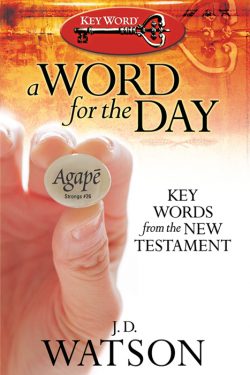
Word for the Day: Key Words from the New Testament
DESCRIPTION
Unearth the wealth of treasures “buried” in the original language of Scripture! Watson’s devotional helps those who don’t know Greek achieve greater understanding of the New Testament. Each entry focuses on one word through a brief study, an application for daily living, related verses for further exploration, and suggested prayer topics. 384 pages, softcover from AMG.
Publisher’s Description
Learn a Biblical Greek WORD Everyday.
The purpose of a Word of the Day is to share the richness of the Greek language used in the New Testament and help make these words practical in the reader’s Christian living. Because words do matter, the words of the New Testament matter most. And in a day when words don’t seem to mean much, the need for precision in Christian doctrine and practice has never been more critical.
For each day of the year, Watson presents a brief word study and then offers an application to make that particular Greek word become real for practical living. To aid reinforcement, related verses are listed for the reader’s personal study.
Doc Watson fulfills his desire of many years to provide daily devotionals that not only contain deep spiritual truth, but also are easy to read and understand. In this day of relativism, the absolutes of God’s Word (and words) are desperately needed. These brief devotionals will enrich the mind, stir the soul, and empower the life of God’s people.
theWord Features:
- Devotional 366 daily sync
- Verse popups
- Fully searchable text
- Footnotes
- Easy navigation of topics via topics tree display.
- Scripture Index
- English Word Index
- Greek & Hebrew Word Index
- Strong’s Number Index
- Special Text Colors
- Normal: Text
- Hyperlink: G3845| Gen. 9:8
- Greek Transliteration: archon
- Hebrew Transliteration: YHWH
- Greek: εὐδόκησα
- Hebrew: יְהוָה
English Standard Version 2016
DESCRIPTION
The Bible
This Book [is] the most valuable thing that this world affords. Here is Wisdom; this is the royal Law; these are the Iively Oracles of God. With these words the Moderator of the Church of Scotland hands a Bible to the new monarch in Britain’s coronation service. These words echo the King James Bible translators, who wrote in 1611, God’s sacred Word . . . is that inestimable treasure that excelleth all the riches of the earth. This assessment of the Bible is the motivating force behind the publication of the English Standard Version.
Translation Legacy
The English Standard Version (ESV) stands in the classic mainstream of English Bible translations over the past half-millennium. The fountainhead of that stream was William Tyndale’s New Testament of 1526; marking its course were the King James Version of 1611 (KJV), the English Revised Version of 1885 (RV), the American Standard Version of 1901 (ASV), and the Revised Standard Version of 1952 and 1971 (RSV). In that stream, faithfulness to the text and vigorous pursuit of precision were combined with simplicity, beauty, and dignity of expression. Our goal has been to carry forward this Iegacy for this generation and generations to come.
To this end each word and phrase in the ESV has been carefully weighed against the original Hebrew, Aramaic, and Greek, to ensure the fullest accuracy and clarity and to avoid under-translating or overlooking any nuance of the original text. The words and phrases themselves grow out of the Tyndale King James Iegacy, and most recently out of the RSV, with the 1971 RSV text providing the starting point for our work. Archaic Ianguage has been brought into Iine with current usage and significant corrections have been made in the translation of key texts. But throughout, our goal has been to retain the depth of meaning and enduring quality of Ianguage that have made their indelible mark on the English-speaking world and have defined the Iife and doctrine of its church over the Iast five centuries.
theWord Features
• Fully searchable text
• Footnotes (F key toggles)
• Cross-references (X key toggles)
• Passage Headings (H key toggles)
• Poetry formatting or Verse-per-line (P key toggles)
• Words of Jesus Christ in red text (J key toggles)
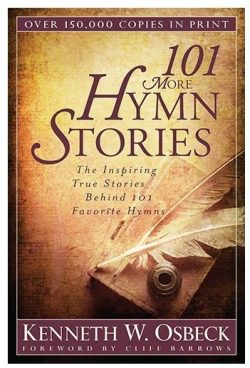
101 More Hymn Stories
This collection of uplifting, informative stories behind your favorite hymns will warm your heart and revitalize your worship. Each entry comes with the hymn’s full text and musical score.
Perfect for devotions, sermon illustrations, bulletin inserts, and introducing congregational hymns, each hymn story includes information about the author, composer, the tune’s name, meter, and scriptural basis.

101 Hymn Stories
This collection of uplifting, informative stories behind your favorite hymns will warm your heart and revitalize your worship. Each entry comes with the hymn’s full text and musical score.
Perfect for devotions, sermon illustrations, bulletin inserts, and introducing congregational hymns, each hymn story includes information about the author, composer, the tune’s name, meter, and scriptural basis.

New American Standard Bible 1977 (NASB)
Since its completion in 1971, the New American Standard Bible has been widely embraced as “the most literally accurate English translation” from the original languages. Millions of people, students, scholars, pastors, missionaries, and laypersons alike, trust the NASB, learning from it and applying it to the challenges of their daily lives. Discover what the original text says, word for word.This is the original 1977 edition of the NASB. It includes italics for words which are not in the original, poetry styling and small caps, chapter headings, numerous translator’s notes (more than 17,000) and cross-references (more than 93,000).
Exploring the Bible: 1 and 2 Thessalonians
Description
Do you enjoy reading other people’s correspondence, especially the letters of famous people? This book explores two of the great Apostle Paul’s earliest epistles, those to the Thessalonian church. In them he bares his heart to reveal his love for those he led to Christ, and his concern for their welfare, as he provides instructions to new Christians. We also learn something of his travelling companions, his hopes and fears, his personal concerns, his passionate concern for the truth, and much about the Return of the Lord Jesus Christ. Read this book to learn how to live the Christian life, how to avoid false doctrine, and how the Thessalonians’ zeal and the Apostle’s teaching can be applied to your own life.
Overview of the Book inside theWord
theWord Features:
Note: Does not display commentary under Bible text.