
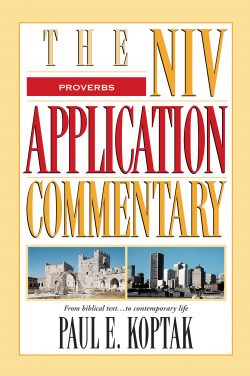
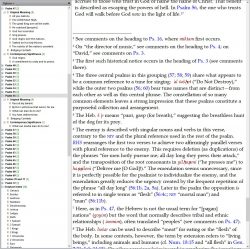
NIV Application Commentary: Proverbs
DESCRIPTION
From the Back Cover
What is wisdom? Does occupying the top of life’s heap mean you have it? Does being near the bottom mean you don’t? Wisdom can certainly help you acquire wealth, influence people, or succeed at your career, yet it involves more than knowledge alone. It’s also a matter of understanding God’s perspectives in applying what you know and having the character to act accordingly. That is why true wisdom—the kind that begins with fear of the Lord—frequently runs counter to what our culture values and applauds. This is the wisdom the book of Proverbs teaches. Proverbs deals with the relationship between heaven and earth on a practical level that covers the broad swath of human activity. We could all use more wisdom in our lives; the book of Proverbs was designed to guide us into it. Proverbs is far from monolithic. It has multiple authors and employs diverse styles. But its goal remains simple: to equip us for living in a way that succeeds first and foremost in God’s eyes. Exploring the links between the Bible and our own times, Paul Koptak shares perspectives on Proverbs that reveal ageless truths for our twenty-first-century lives. Most Bible commentaries take us on a one-way trip from our world to the world of the Bible. But they leave us there, assuming that we can somehow make the return journey on our own. They focus on the original meaning of the passage but don’t discuss its contemporary application. The information they offer is valuable—but the job is only half done! The NIV Application Commentary Series helps bring both halves of the interpretive task together. This unique, award-winning series shows readers how to bring an ancient message into our present-day context. It explains not only what the Bible meant but also how it speaks powerfully today. –This text refers to the hardcover edition.
Book Summary
The NIV Application Commentary helps readers with the vital task of bringing the ancient message of the Bible into a contemporary context. It gives preachers and teachers the tools, ideas, and insights they need to communicate God’s Word with the same powerful impact it had when it was first written.
About the Book
The NIV Application Commentary helps you communicate and apply biblical text effectively in today’s context.
To bring the ancient messages of the Bible into today’s world, each passage is treated in three sections:
- Original Meaning. Concise exegesis to help readers understand the original meaning of the biblical text in its historical, literary, and cultural context.
- Bridging Contexts. A bridge between the world of the Bible and the world of today, built by discerning what is timeless in the timely pages of the Bible.
- Contemporary Significance. This section identifies comparable situations to those faced in the Bible and explores relevant application of the biblical messages. The author alerts the readers of problems they may encounter when seeking to apply the passage and helps them think through the issues involved.
This unique, award-winning commentary is the ideal resource for today’s preachers, teachers, and serious students of the Bible, giving them the tools, ideas, and insights they need to communicate God’s Word with the same powerful impact it had when it was first written.
theWord Features:
- Verse popups
- Verse synchronization
- Fully searchable text
- Footnotes
- Pages Links
- Subject Index
- Scripture and Apocrypha Index
- Easy navigation of topics via topics tree display.
- Special Text Colors
Normal: Text
Hyperlink: Glossary | Gen. 9:8
Page Number: [p21>
Hebrew: בְּרֵאשִׁית
Note: Does not display commentary under Bible text.
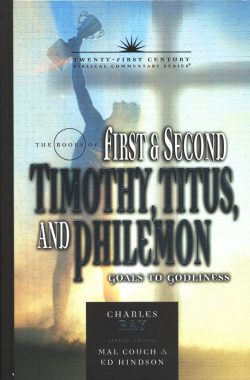
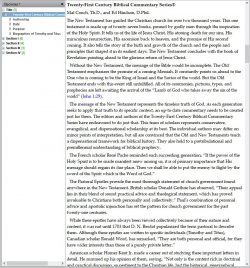
Twenty-first Century Biblical Commentary: The Books of 1 & 2 Timothy, Titus, and Philemon: Goals to Godliness
DESCRIPTION
WHAT ARE YOU DOING TODAY TO BE MORE LIKE CHRIST?
The key to achieving success in anything is to set reasonable goals and strive to meet them. The difficulty in striving to be like Christ is that we never ca be like Him-not perfectly, not until we are made new in His image in heaven. Yet, the fact that we cannot achieve perfection should never top us from anything good. So, the real question is, how is good is good enough? Any Christian who thinks he or she has nothing more to achieve in godliness and personal holiness is utterly deceived.
These books (especially 1 and 2 Timothy and Titus) are often referred to as the “Pastoral Epistles.” The name is certainly appropriate since these books provide the the most thorough statement of church government found anywhere in the New Testament . Paul’s combination of personal advice and apostolic injunction has set the pattern for church government for the past twenty-one centuries.
Yes these books are so much more than official letters on church policy. American scholar Homer Kent Jr. made a career out of studying these important letters in detail. He summed up his opinion of them, saying, “Not only is the content rich in doctrinal and practical discussion, so pertinent to the Christian life, but the historical, geographical, and personal notices make the letters colorful and intensely human.”
Charles Ray’s commentary is unique in that he emphasizes the personal, practical results Paul wanted to encourage every Christian to strive for in their daily walk. Here the reader will be challenged to see the goals Paul had in mind, and to incorporate them in his or her own life.
theWord Features:
- Verse popups
- Verse synchronization
- Fully searchable text
- Footnotes
- Easy navigation of topics via topics tree display.
- Text Colors
- Normal
- Links: 1 Timothy 1:2
- Transliteration: presbuteros
Note: This is a Hybrid module and does not display commentary under Bible text as a Commentary module would.
People in the Bible: Jonah
Description
We are often told that good things come in small packages, and this is the case when it comes to the book of Jonah. Through just four chapters we discover many layers to the life of this prophet and to the character of the God who does not give up—whether on this prophet, or on the barbaric city he called this prophet to reach.
We follow Jonah on the run, on the beach, in the city and eventually in the great dock of God. As we uncover this dramatic story, we see that God has not only the will to reach a violent city, but also the grace to reach the heart of a stubborn prophet
theWord Features:
⦁ Verse popups
⦁ Verse synchronization
⦁ Fully searchable text
⦁ Footnotes
⦁ Commentary link popup can be set in Bible view.
⦁ Easy navigation of topics via topics tree display.
Note: Does not display commentary under Bible text.

People in the Bible: Saul and sons
Description
Israel’s first king began with great promise and ended in tragedy. The author traces Saul’s head start into the monarchy and the accelerating spiral into possibly the most lamentable biography in the Bible. Along the way there is much to learn from a king whose story is told in Scripture so that we might learn the ways of a man who fell out with God and fell in with the powers of darkness. And there are surprises along the way, not least in the story of his son who, but for the purposes of God, would surely have made an excellent king.
However, on the blood-spattered walls of Beth Shan, the story does not quite end. There is another member of Saul’s line who shines with bright hope and reflects the character of his godly father in contrast to that of his tragic grandfather.
An accessible book for every reader which, as well as bringing the three characters of Saul, Jonathan and Mephibosheth to life and clarifying difficulties in the text, concludes every chapter with questions for thoughtful discussion suitable for group or personal study.
theWord Features:
- Verse popups
- Fully searchable text
- Footnotes
- Easy navigation of topics via topics tree display.

People in the Bible: Samson
Description
The story of Samson is one of the most exciting and intriguing in the whole of Scripture. As the sub-title suggests, it is a simultaneous insight into his incredible strength and persistent weakness. We marvel at the thrilling accounts of unorthodox battles and awe inspiring demonstrations of physical power. Sadly, we also wonder at his apparent inability to learn from his own mistakes as he follows his passions to their inevitable end.
This rollercoaster of a story sweeps us from the rich promises accompanying his birth, though the tragedies and triumphs of his life. The story almost ends with the pitiable sight of him as the blind captive of his life-long enemies the Philistines. Yet, there is still one surprising twist to this epic tale ‘victory through death. Throughout we trace the contrasts with the great Judge of Israel’ Christ.
theWord Features:
- Verse popups
- Fully searchable text
- Footnotes
- Easy navigation of topics via topics tree display.

Exploring the Bible: Ecclesiastes
Description
This volume is a fresh—and refreshing—exploration of the theme of joy from the Old Testament book of Ecclesiastes. Contrary to typical approaches which treat Ecclesiastes as a book of despair, this study brings out its message about robust joy that perseveres despite life’s vanities. Structured as a devotional commentary, this book will prove edifying for personal or small-group Bible study. It will also be valuable for youth-group leaders mentoring young people through the dilemmas of post modernity, and for pastors preparing to preach from Ecclesiastes.
Commendations
‘As a first-rate pastor theologian, Michael leads us through this hard–to-understand book with both scholarly heft and pastoral verve. This is devotional Commentary writing at its best! I highly recommend it to pastors and preachers, students and scholars alike!’
Dr Todd Wilson, Senior Pastor of Calvary Memorial Church, Oak Park, Illinois, and Chairman of the Board for the Center for Pastor Theologians
‘Highly recommended!’
Dr Joel R. Beeke, President, Puritan Reformed Theological Seminary, Grand Rapids, Michigan
theWord Features:
- Verse popups
- Verse synchronization
- Fully searchable text
- Commentary link popup can be set in Bible view.
- Footnotes
- Easy navigation of topics via topics tree display.
Note: Does not display commentary under Bible text.


Exploring the Bible: Deuteronomy
Description
Deuteronomy can seem rather formidable at first sight, but it is actually one of the most important books in the Old Testament. It consists almost entirely of words spoken by Moses to the people of Israel as they camp in the plains of Moab next to the river Jordan with the promised land awaiting them on the opposite bank. These are God’s people, whom he has taken into covenant with himself. Moses urges them to go forward by faith into the land that God has set before them. He tells them God’s laws and commandments for their new life in the land, weaving his instructions around the principles enshrined in the Ten Commandments.
In this commentary, Paul Brown demonstrates the sometimes surprising relevance of the regulations of Deuteronomy for the churches and the lives of Christian people today. But such relevance is only to be expected, for God is always the same and all his Word, rightly understood, is profitable to lead us to his grace and to guide us in our living.
theWord Features:
- Verse popups
- Verse synchronization
- Fully searchable text
- Footnotes
- Commentary link popup can be set in Bible view.
- Easy navigation of topics via topics tree display.
Note: Does not display commentary under Bible text.
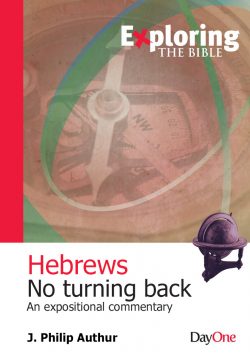

Exploring the Bible: Hebrews
The temporary disciple seems to be a common feature of today’s church. Someone who began well no longer attends church and no longer associates with Christian people. That is why the message of the epistle to the Hebrews is especially appropriate for today. Originally addressed to people who were considering going back on their profession of faith in Christ, it encourages them to persevere by holding up Jesus Christ before them. In this accessible commentary Philip Arthur unpacks Hebrews’ compelling message for today’s Christians.
Phil Arthur studied History at Cambridge. He has been pastor of Grace Baptist Church, Lancaster, since 1988. He and his wife, Barbara, have three grown-up sons.
theWord Features:
- Verse popups
- Verse synchronization
- Fully searchable text
- Commentary link popup can be set in Bible view.
- Footnotes
- Easy navigation of topics via topics tree display.
Note: Does not display commentary under Bible text.
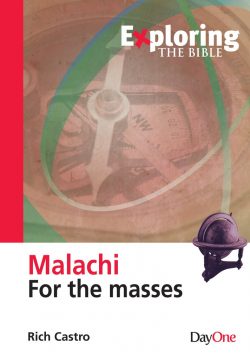
Exploring the Bible: Malachi
As the last book in the Old Testament, Malachi stands as a gateway in the city walls awaiting the arrival of the King.
This prophet provides us not with leather sofas and warm slippers, but with truth which drives us out of complacency and makes us dive deep into a life-changing faith in Almighty God.
Whatever our situation, growing in love for God is what benefits us most.
So why not read through Malachi with eyes and hearts open to the God who yearns to love us into life? Malachi for the Masses unfolds the message of Malachi and its enduring relevance to us today as we wait at the gateway for the return of the King.
theWord Features:
- Verse popups
- Verse synchronization
- Fully searchable text
- Commentary link popup can be set in Bible view.
- Footnotes
- Easy navigation of topics via topics tree display.
Note: Does not display commentary under Bible text.
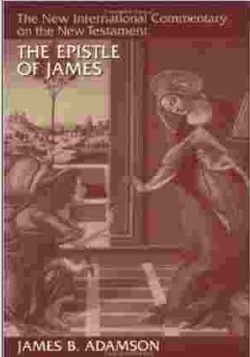
New International Commentary: The Epistle of James
PRODUCT HIGHLIGHTS:
- Verse-by-verse commentary
- In-depth discussion of textual and critical matters
- Introductions to each book’s authorship, date, purpose, structure, and theology
- Detailed bibliography
DESCRIPTION
The author of the Epistle of James, a letter distinguished for its passionate commitment to Jewish Christianity, has been dubbed “the Amos of the new covenant.” As a guide to Christian behavior, the letter deals with themes of universal importance, among which are the nature of God and man, the evils of lust and pride, the virtues of faith and hope, and the fruits of faith and love.
James B. Adamson, in contrast to many scholars, is convinced that James was a master writer whose knowledge and choice of Greek bestow on his epistle a sustained unity of style and content that bears a close affinity with the Synoptic Gospels and the sayings of Jesus. The substance and authoritative tone of this epistle follow in the tradition of Elijah and Moses, and the style and diction resemble some of the outstanding qualities of the Psalms the prophets.
In this thorough exegesis of his own working translation, Adamson combats some prevalent notions and corrects misunderstandings of the nature of this unique epistle, which, he says, cannot really be understood apart from the whole context of the New Testament.
….
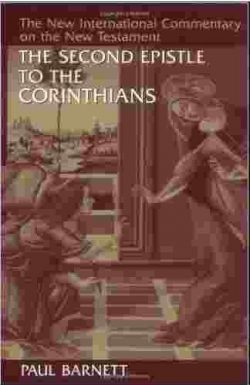
New International Commentary: The Second Epistle to the Corinthians
PRODUCT HIGHLIGHTS:
- Verse-by-verse commentary
- In-depth discussion of textual and critical matters
- Introductions to each book’s authorship, date, purpose, structure, and theology
- Detailed bibliography
DESCRIPTION
This excellent commentary on 2 Corinthians by Paul Barnett illumines the historical background of the church at Corinth and clarifies the meaning of Paul’s passionate letter both for those first-century Christians and for the church today.
Assuming the unity of the letter, for which extensive argument is offered, Barnett takes the view that Paul is, in particular, addressing the issue of triumphalism in Corinth. This triumphalism is expressed by the newly arrived missionaries who portray Paul as “inferior” to themselves; it is also endemic among the Corinthians. According to Barnett, the recurring theme of the letter is “power-in-weakness,” based on the motif of the Resurrection of the Crucified, which lies at the heart of the Gospel of Christ. Also fundamental to the letter is the theme of fulfillment of the “promises of God” by Christ and the Spirit under the New Covenant.
Written for scholars, pastors, and lay readers alike, this commentary on 2 Corinthians will be a lasting reference work for those interested in this important section of Scripture.
….
New International Commentary: The Gospel of Mark
PRODUCT HIGHLIGHTS:
- Verse-by-verse commentary
- In-depth discussion of textual and critical matters
- Introductions to each book’s authorship, date, purpose, structure, and theology
- Detailed bibliography
DESCRIPTION
The Gospel of Mark is significant in many ways. Not only was it the first Gospel to be written and an important literary source for Matthew and Luke, but it is also best characterized as a witness document, a proclamation of salvation through Jesus Christ, which received its creative impulse from the early apostolic preaching. Mark bears witness to the word of revelation that Jesus is the Messiah, the Son of God.
In this widely praised commentary by William L. Lane, Mark is revealed as a theologian whose primary intention was the strengthening of the people of God in a time of fiery persecution by Nero. Using redaction criticism as a hermeneutical approach for understanding the text and the intention of the evangelist, Lane considers the Gospel of Mark as a total literary work and describes Mark’s creative role in shaping the Gospel tradition and in exercising a conscious theological purpose. By taking care to indicate how the text was heard by Mark’s contemporaries while also placing the study of Mark within the frame of reference offered by modern Gospel research, Lane has constructed a thorough going work that is at once useful to scholars and highly intelligible to nonspecialists.
….
New International Commentary: The Books of Joel, Obadiah, Jonah, and Micah
PRODUCT HIGHLIGHTS:
- Verse-by-verse commentary
- In-depth discussion of textual and critical matters
- Introductions to each book’s authorship, date, purpose, structure, and theology
- Detailed bibliography
DESCRIPTION
The eloquent and uncompromising calls for social righteousness by some of the Minor Prophets are familiar to many, yet the writings themselves are probably the least studied and least known texts of the Old Testament. Those who are familiar with these books are also aware of the historical and literary problems that plague their study. Drawing on insights from various perspectives—theological, historical, and literary—Leslie Allen’s commentary on Joel, Obadiah, Jonah, and Micah carefully and imaginatively reconstructs the stage on which the message of these four books was conveyed to their Hebrew hearers and shows what relevance, in turn, they hold for contemporary Christians.
For each of the books there is a substantial introduction in which the full range of scholarly opinion is presented and assessed, a select bibliography, the author’s own translation of the text—a significant contribution to biblical studies in itself—and an extensive commentary. The commentary on Micah is foundational for these four books in that it treats at greater length some of the same forms and motifs that appear in Joel, Obadiah, and Jonah. The introductory material for Joel includes discussions of canonicity and textual criticism that apply to the entire volume.
….
New International Commentary: The Book of Jeremiah
PRODUCT HIGHLIGHTS:
- Verse-by-verse commentary
- In-depth discussion of textual and critical matters
- Introductions to each book’s authorship, date, purpose, structure, and theology
- Detailed bibliography
DESCRIPTION
The Old Testament prophets played a crucial role in the history of Israel. Although there were many prophets who brought the message of God to his people, we have records of only a few. Of these, our knowledge of Jeremiah is probably the most complete. In this commentary, J.A. Thompson examines the book of Jeremiah with its message urging the people of Israel to be true to their covenant Lord and to live in conformity with his covenant requirements.
Thompson begins his study by looking at the role of the prophets in Israel, and Jeremiah’s place among them. He then discusses the historical setting of Jeremiah’s message. From this background, Thompson moves to an examination of the book of Jeremiah itself, focusing on its structure and composition before considering some important issues for exegesis—the date of Jeremiah’s call, the significance of the symbolic actions he used, and the relationship between Jeremiah and Hosea. Lastly, Thompson examines the text and poetic forms of Jeremiah.
….
New International Commentary: The Book of Proverbs (2 vols.)
PRODUCT HIGHLIGHTS:
- Verse-by-verse commentary
- In-depth discussion of textual and critical matters
- Introductions to each book’s authorship, date, purpose, structure, and theology
- Detailed bibliography
DESCRIPTION
This collection includes the two volumes of Bruce Waltke’s study of Proverbs from The New International Commentary on the Old Testament
Volume 1
Over twenty-five years in the making, this much-anticipated commentary promises to be the standard study of Proverbs for years to come. Written by eminent Old Testament scholar Bruce Waltke, this two-volume commentary is unquestionably the most comprehensive work on Proverbs available.
Grounded in the literary criticism that has so strengthened biblical interpretation, Waltke’s commentary on Proverbs demonstrates the profound, ongoing relevance of this Old Testament book for Christian faith and life. A thorough introduction addresses such issues as text and versions, structure, authorship, and theology. The detailed commentary itself explains and elucidates Proverbs as “theological literature.” Waltke’s highly readable style—evident even in his original translation of the Hebrew text—makes his scholarly work accessible to teachers, pastors, Bible students, and general readers alike.
Volume 2
For the modern mind, the book’s cultural setting seems far removed from the twenty-first century. Proverbs puts a high priority on tradition and age, while the modern mind prizes change and youth. For Christians, Proverbs seems irrelevant. For the translator, Proverbs defies translations.
In the second part of his two-volume commentary, Waltke confronts these exegetical and interpretive challenges head on. This historico-grammatical commentary on Proverbs uncovers the profound philosophical and theological insights of this ancient book. Waltke helps readers understand the poetics used in its composition, and challenges modern prejudices toward the book.
….
New International Commentary: The Book of Joshua
PRODUCT HIGHLIGHTS:
- Verse-by-verse commentary
- In-depth discussion of textual and critical matters
- Introductions to each book’s authorship, date, purpose, structure, and theology
- Detailed bibliography
DESCRIPTION
Recognizing that Old Testament studies today are in a state of flux as never before and that the Book of Joshua seems to be at the crossroads of this animated discussion. Marten Woudstra here takes into careful account the various views represented by recent scholarship as well as Hebrew usage and text-critical concerns.
Woudstra demonstrates that the central theme in Joshua, to which everything in the book has been made subordinate, is the fulfillment of God’s promise to the patriarchs regarding the promised land. To support his understanding of this central theme, Woudstra emphasizes the nature of the Hebrew narrative as both proleptic, offering provisional summaries of events to be taken up later in considerable detail, and programmatic, indicating that the book was written close to actual events. The excellent introduction and section-by-section commentary are supplemented by an extensive bibliography and seven instructive maps.
….
New International Commentary: The Book of Deuteronomy
PRODUCT HIGHLIGHTS:
- Verse-by-verse commentary
- In-depth discussion of textual and critical matters
- Introductions to each book’s authorship, date, purpose, structure, and theology
- Detailed bibliography
DESCRIPTION
Deuteronomy is a book about Israel’s preparation for a new life. Hardship and the wilderness lie behind; the conquest of the promised land lies ahead. What remains at this crucial stage in Israel’s history—the end of the Mosaic Age—is a call for a new commitment to God and a fresh understanding of the nature of the community of God’s people.
Interpreting Deuteronomy from a conservative perspective, Peter C. Craigie highlights the centrality of the book’s theme of covenant commitment while also taking great care to demonstrate how Deuteronomy is a book with considerable contemporary relevance. He uses resources of recent research in Old Testament studies to effectively bridge the gap of more than three thousand years that separates the modern reader from the events described in Deuteronomy, thus clarifying the primary message of the text for the modern reader. In its simplest phrasing that message is “Commit yourself to God wholeheartedly.” Deuteronomy, according to Craigie, provides a paradigm for the kingdom of God in the modern world.
….
NIV Application Commentary: Galatians
DESCRIPTION
From the Back Cover
Book Summary
The NIV Application Commentary helps readers with the vital task of bringing the ancient message of the Bible into a contemporary context. It gives preachers and teachers the tools, ideas, and insights they need to communicate God’s Word with the same powerful impact it had when it was first written.
About the Book
The NIV Application Commentary helps you communicate and apply biblical text effectively in today’s context.
In Galatians, Paul reminds us of the total sufficiency of Jesus in securing our salvation, and of the leadership of the Holy Spirit for living it out. Calling us back to the simplicity of Christ, Galatians is as critically important for us today as it was when Paul first penned it. Exploring the links between the Bible and our own times, Scot McKnight shares perspectives on the letter to the Galatians that reveal its enduring relevance for our twenty-first-century lives.
To bring the ancient messages of the Bible into today’s context, each passage is treated in three sections:
This unique, award-winning commentary is the ideal resource for today’s preachers, teachers, and serious students of the Bible, giving them the tools, ideas, and insights they need to communicate God’s Word with the same powerful impact it had when it was first written.
theWord Features:
Note: Does not display commentary under Bible text.