
The Encyclopedia of Christianity, Volumes 1–5
DESCRIPTION
Volume 1 (A-D) contains 465 articles featuring (Retail $109.99)
- articles on all but the smallest countries of the world, including the former communist nations that have gained independence since 1989;
- the latest statistical information from David B. Barrett on the religious affiliation and ecclesiastical breakdown of each country and continent;
- articles on doctrines, denominations, and social and ethical issues in relation to the churches;
- biographical articles on prominent figures through church history.
Volume 2 of the award-winning reference work on Christianity. (Retail: $99.99)
The multiple award-winning Encyclopedia of Christianity (EC), copublished by Eerdmans and Brill, is a monumental five-volume work presenting the history and current state of the Christian faith in its rich spiritual and theological diversity around the world. The much-anticipated second volume of the EC contains more than 300 articles for alphabetical entries EûI. Written by leading scholars from around the world, the articles in Volume 2 range from discussions of early church history, ethics, and evil to entries on Holy Week, icons, and Christianity in Ireland.
Volume 3 of the EC (Retail: $109.99)
contains 342 articles constituting the alphabetical entries J–O — articles on significant topics ranging from Jesus, the kingdom of God, liberation theology, and Martin Luther to medical ethics, the Middle Ages, North American theology, and the Orthodox Church. Like each volume in the complete EC, this book incorporates many enhancements of and additions to the third revised edition of the German Evangelisches Kirchenlexikon: Internationale theologische EnzyklopSdie, on which the EC is based. Among the new features of this English work are the following:
- articles on all but the smallest countries of the world, including former communist states that have gained their independence since 1989;
- the latest, best statistical information, compiled by David B. Barrett, on the religious affiliation and ecclesiastical breakdown of each country and continent;
- the addition of over seventy biographical articles on prominent figures throughout church history;
- many expanded or entirely new articles that address topics of particular interest to English-speaking readers.
Unparalleled in scholarship and breadth of content, the Encyclopedia of Christianity will long serve as the standard reference work for the study of Christianity in the past and the present — and its trajectory into the twenty-first century.
Volume 4 of the EC (Retail: $109.99)
contains 299 articles constituting the alphabetical entries PûSh — articles on significant topics ranging from Paul, process theology, and the Qur’an to religious liberty, salvation history, and Scholasticism. Like each volume in the complete EC, this book incorporates many enhancements of and additions to the third revised edition of the German Evangelisches Kirchenlexikon: Internationale theologische Enzyklopädie, on which the EC is based. Among the features of this English work are the following:
- articles on all but the smallest countries of the world, including former communist states that have gained their independence since 1989;
- the latest, best statistical information, compiled by David B. Barrett, on the religious affiliation and ecclesiastical breakdown of each country and continent;
- the addition of over seventy biographical articles on prominent figures throughout church history;
- many expanded or entirely new articles that address topics of particular interest to English-speaking readers.
Unparalleled in scholarship and breadth of content, the Encyclopedia of Christianity will long serve as the standard reference work for the study of Christianity in the past and the present — and its trajectory into the twenty-first century.
Volume 5 of the EC (Retail: $99.99)
contains 295 articles constituting the alphabetical entries Si–Z — articles on significant topics ranging from sin, spiritual direction, Sufism, and terrorism to Vatican I and II, Vineyard Christian Fellowship, World Alliance of Reformed Churches, and Zionism. Like each volume in the complete EC, this book incorporates many enhancements of and additions to the third revised edition of the German Evangelisches Kirchenlexikon: Internationale theologische Enzyklopädie, on which the EC is based. Among the features of this English work are the following:
- articles on all but the smallest countries of the world, including former communist states that have gained their independence since 1989;
- the latest, best statistical information, compiled by David B. Barrett, on the religious affiliation and ecclesiastical breakdown of each country and continent;
- the addition of over seventy biographical articles on prominent figures throughout church history;
- many expanded or entirely new articles that address topics of particular interest to English-speaking readers.Unparalleled in scholarship and breadth of content, the Encyclopedia of Christianity will long serve as the standard reference work for the study of Christianity in the past and the present — and its trajectory into the future.
theWord Features:
-
Dictionary lookup and A-Z topic-tree navigation
-
Fully searchable five-volume text
-
Internal cross-references
-
Verse popups
-
Abbreviation and table-note popups
-
Tables and restored publisher illustrations
-
Volume-qualified print-page markers and bookmarks
-
Vol. 1 Pgs: 933
-
Vol. 2 Pgs: 819
-
Vol. 3 Pgs: 916
-
Vol. 4 Pgs: 984
-
Vol. 5 Pgs: 896
-
Total Pgs: 4548
- Special Text Colors
All the People in the Bible
DESCRIPTION
“More than any other book, the Bible offers an amazing collection of fascinating characters ranging from the holiest of the holy to some of the most depraved scoundrels imaginable. Many are mentioned only in passing, yet history and archaeology can often fill in the blanks and flesh them out as exciting human beings. For this reason we have in many cases been able to tell much more about them than the Bible alone reveals.”
— Richard R. Losch (from the preface)
A comprehensive gathering of persons found in the Bible, including the Apocrypha, All the People in the Bible really delivers on its title: literally all of the Bible’s characters appear in this fascinating reference work. From the first article on Aaron to the final entry on Zophar, Richard Losch details each person in a lively narrative style.
The bulk of the book consists of Losch’s A–Z articles covering the familiar and the not-so-familiar figures in Scripture. Names of people who are found only in genealogies or who had no significant effect on history are included solely in the alphabetical listing starting on page 452. That listing, “All the People in the Bible and Apocrypha,” includes pronunciations, brief identifications, and biblical references. Persons covered in greater detail in the main part of the book are identified in bold print.
Losch’s intriguing look at all the people in the Bible is anything but a dry reference work. This is a book to dip into and enjoy over and over.
theWord Features:
- Dictionary lookup and A-Z topic-tree navigation
- Fully searchable biographical entries
- Aliases and internal cross-references
- Bible-reference links and verse popups
- Footnotes with exact single-note popups
- Greek, Hebrew, and transliterated name forms
- Images and tables
- Print-page markers and bookmarks
- Pgs: 586
- Special Text Colors
- Normal: Text
-
Dictionary link: Peter
- Greek: Πέτρος
- Hebrew: שמעון
- Transliteration: Kephah
-
Page Number: [p1>
The Eerdmans Dictionary of Early Judaism
DESCRIPTION
The Dictionary of Early Judaism is the first reference work devoted exclusively to Second Temple Judaism (fourth century b.c.e. through second century c.e.).
The first section of this substantive and incredible work contains thirteen major essays that attempt to synthesize major aspects of Judaism in the period between Alexander and Hadrian. The second — and significantly longer — section offers 520 entries arranged alphabetically. Many of these entries have cross-references and all have select bibliographies. Equal attention is given to literary and nonliterary (i.e. archaeological and epigraphic) evidence and New Testament writings are included as evidence for Judaism in the first century c.e. Several entries also give pertinent information on the Hebrew Bible.
The Dictionary of Early Judaism is intended to not only meet the needs of scholars and students — at which it succeeds admirably — but also to provide accessible information for the general reader. It is ecumenical and international in character, bringing together nearly 270 authors from as many as twenty countries and including Jews, Christians, and scholars of no religious affiliation.
theWord Features:
- Dictionary lookup and A-Z topic-tree navigation
- Fully searchable articles, bibliographies, and author lines
- Scripture-reference popups and Bible links
- Internal cross-references
- Pgs: 1406
- Maps, illustrations, and tables
- Special Text Colors
- Normal: Text
-
Dictionary link: Apocalypticism
-
Scripture: Genesis 3
-
Page Number: [p1>
-
Hebrew transliteration: halakah
-
Greek transliteration: apokalypsis
The Eerdmans Companion to the Bible
DESCRIPTION
A quality guidebook that opens up new vistas and insights into the whole Bible
Marked by a broad evangelical perspective, up-to-date research, and contributions from respected biblical scholars, The Eerdmans Companion to the Bible offers a reliable and illuminating guide to the entire Bible. Whether readers find the Bible familiar or foreign, they will appreciate the Companion’s informative articles and its commentary by Connie Gundry Tappy on all of the Old and New Testament books. This comprehensive reference work promises to make the Word of God come alive as never before.
- Compiled by some of the foremost biblical scholars in the world today
- New articles by sixty expert authors on many pertinent biblical topics
- Well-written background information and commentary on every book of the Bible
- Illustrated with maps, photos, and charts throughout
theWord Features:
-
Fully searchable text
-
Chapter, section, and indexed-entry navigation via the topic tree
-
Internal cross-references
-
Pgs: 834
-
Maps, illustrations, and tables
- Special Text Colors
- Normal: Text
- Internal link: Lands of the Bible
- Hebrew: א
- Transliteration: aleph
- Latin: testamentum
- Page Number: [p210>
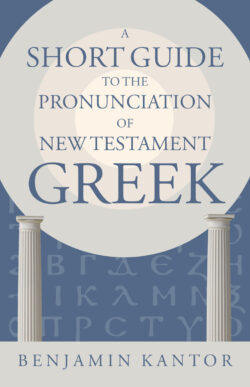
A Short Guide to the Pronunciation of New Testament Greek
DESCRIPTION
What did the apostles’ Greek sound like?
How should New Testament Greek be pronounced in our classrooms? Often students are taught Erasmian pronunciation, which does not even reproduce Erasmus’s own pronunciation faithfully, let alone that of the New Testament authors. But if we want to process the language of the New Testament the same way its original authors and readers did, we should use their pronunciation. In his new book, Benjamin Kantor breaks a path toward an authentic pronunciation of Koine Greek at the time of the New Testament, seeking to improve students’ reading proficiency.
A Short Guide to the Pronunciation of New Testament Greek distills Kantor’s new monograph, The Pronunciation of New Testament Greek, with an eye toward practical instruction. The first comprehensive phonological and orthographic study of Judeo-Palestinian Koine Greek, The Pronunciation of New Testament Greek surveys thousands of inscriptions and papyri to determine historical pronunciation. A Short Guide gives students an overview of the basics of phonology before explaining the pronunciation of each Greek letter and phoneme individually. Perfect for classroom use, this guide explains Kantor’s cutting-edge research accessibly and includes sample texts for reading practice.
theWord Features:
- Chapter and named-section topic navigation
- Searchable chapter text
- Greek, transliteration, IPA, and pronunciation tables
- Greek and Hebrew language examples
- Exact single-footnote popups
- Internal cross-references
- Native tables and images
- Special Text Colors
- Normal: Text
- Internal link: The International Phonetic Alphabet
- Greek: λόγχη
- Transliteration: lonχi(-yoθ)
- IPA: [x] / [χ]
- Hebrew comparison: לוֹנְכִֿייוֹתֿ

Reading Jesus’s Bible – How the New Testament Helps Us Understand the Old Testament
DESCRIPTION
For Jesus and his contemporaries, what we now know as the Old Testament was simply the Scriptures—and it was the fundamental basis of how people understood their relationship with God. In this book John Goldingay uncovers five major ways in which the New Testament uses the Old Testament. His discussion paves the way for contemporary readers to understand and appreciate the Old Testament more fully.
Along with an overview of how Jesus and the first Christian writers read the Old Testament, illustrated with passages from Matthew, Romans, 1 Corinthians, and Hebrews, Goldingay offers a straightforward introduction to the Old Testament in its own right. Reading Jesus’s Bible will shed fresh Old Testament light on Jesus, God, and the church for readers today.
theWord Features:
- Chapter and named-section topic navigation
- Direct subject topics and testament/book Scripture indexes
- Fully searchable text
- Verse popups and Bible links
- Internal cross-references
- Exact single-footnote popups
- Native tables and images
- Special Text Colors
- Normal: Text
- Scripture reference: Matthew 5:17
- Page Number: [p21>
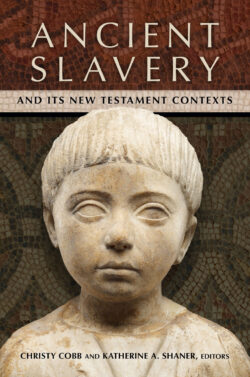
Ancient Slavery and Its New Testament Contexts
DESCRIPTION
An essential resource for understanding slavery in the New Testament and early Christianity
Slavery permeated society in the ancient world. The realities of slavery and its shadows pervade the New Testament and other early Christian texts. Yet enslavement remains an under-taught aspect of the context of the New Testament and early Christianity. Because of this, readers are left with numerous questions about ancient slavery. How did people become enslaved? What kinds of work did enslaved people do? Who enslaved people? How did ancient slavery compare with more contemporary enslavement eras? Did anyone in the ancient world criticize slavery? Was ancient slavery racialized? Did Christians have a different understanding of slavery than others? These are just some of the questions students ask in higher education and in Bible study classrooms alike.
This volume takes on these questions, introducing students to the textures, complexities, and material realities of slavery in the Greco-Roman world. Ancient Slavery and Its New Testament Contexts draws on the expertise of scholars around the world with a focus on introductory information, accessibility, and readability. It does not attempt to dismiss or downplay the role of New Testament texts in the perpetuation of either ancient slavery or slavery in the North American context. Rather, the volume helps students and teachers alike wrestle with the ongoing historical, theological, and ethical legacies of slavery in their own faith formation and engagement with the biblical text.
theWord Features:
- Fully searchable text
- Chapter and glossary-entry navigation via the topic tree
- Internal cross-references
- Bible-reference links and verse popups
- Footnotes with exact single-note popups
- Tables and illustrations
- Special Text Colors
- Normal: Text
- Internal link: Ethics of Interpretation
- Bible reference: Acts 16:16–40
- Greek: βασιλεία τοῦ θεοῦ
- Greek transliteration: paidiskē
- Latin: operae
Daily Scriptures – 365 Readings in Hebrew, Greek, and Latin
DESCRIPTION
Pastors, students, and scholars not in the midst of language coursework often find it difficult to maintain their knowledge of biblical languages like Hebrew, Greek, and Latin. For those looking to do so in a meaningful but manageable way, this devotional offers 365 short daily readings, pairing an Old Testament passage in Hebrew and Greek with a corresponding New Testament passage in Greek and Latin. Lexical notes in English are included as a way of facilitating a comfortable reading experience that will build one’s confidence and ability in reading the Hebrew Bible, the Septuagint, the Greek New Testament, and the Latin Vulgate.
“Our goal and our purpose for this volume is to keep you in the languages, keep you fed in the Word, and hopefully spark a desire to explore more deeply how the New Testament at its core relies upon the Old Testament Scriptures.”
— from the introduction
theWord Features:
-
Devotional 365-day synchronization
-
Date and topic-tree navigation
-
Verse popups and Bible links
-
Fully searchable reading and note text
-
Exact single-footnote popups
-
Hebrew, Greek, and Latin source text
-
Native tables and images
-
Special Text Colors
-
Normal: Text
-
Bible link: Psalm 110:1
-
Greek: Εἶπεν ὁ κύριος τῷ κυρίῳ μου
-
Hebrew: נְאֻם יְהוָה לַאדֹנִי
-
Latin: qui cum sit splendor gloriae
-
Introductory Study Package
DESCRIPTION

Intermediate-Advance Package
DESCRIPTION
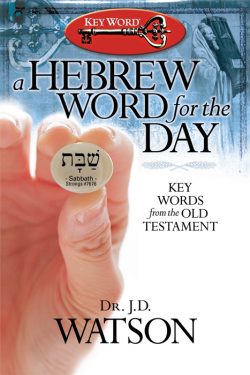
A Hebrew Word for the Day, Key Words from the Old Testament
DESCRIPTION
Unearth the wealth of treasures “buried” in the original language of Scripture! Watson’s 365-day devotional helps those who don’t know Hebrew achieve greater understanding of the Old Testament. Each entry includes a brief word study, a practical application for daily living, and related verses for further exploration. Includes Scripture, English, Hebrew, and Strong’s numbering indexes. The original volume is 384 pages, softcover from AMG, however this is a digital resource for theWord Bible Software.
Publisher’s Description
The purpose of A Hebrew Word for the Day is to share the richness of the Hebrew language words used in the Old Testament and help make them practical in the reader’s Christian living. Simply because words matter, the words of the Bible matter most. And in a day when words don’t seem to mean much, the need for precision in Christian doctrine and practice has never been more critical.
For each day of the year, Watson presents a brief word study and then offers an application to make that particular Hebrew word become real for practical living. To aid reinforcement, each day’s devotion ends with Scriptures for study to apply the truth learned that day.
Doc Watson fulfills his desire of many years to provide daily devotions that not only contain deep spiritual truth, but also are easy to read and understand. In our day of Relativism, the absolutes of God’s Word (and words) are desperately needed. These brief devotionals will enrich the mind, stir the soul, and empower the life of God’s people.
theWord Features:
- Devotional 366 daily sync
- Verse popups
- Fully searchable text
- Footnotes
- Easy navigation of topics via topics tree display.
- Scripture Index
- English Word Index
- Greek & Hebrew Word Index
- Strong’s Number Index
- Special Text Colors
- Normal: Text
- Hyperlink: H3845| Gen. 9:8
- Greek Transliteration: archon
- Hebrew Transliteration: YHWH
- Greek: εὐδόκησα
- Hebrew: יְהוָה
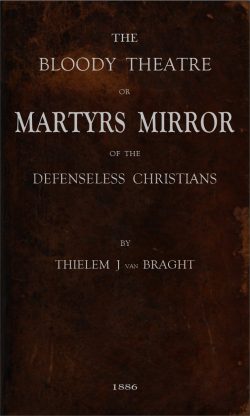
Martyr’s Mirror
Description:
THE
BLOODY THEATRE,
OR
MARTYRS MIRROR
OF THE
DEFENSELESS CHRISTIANS,
who baptized only upon Confession of Faith, and who suffered and died for the testimony of Jesus, their Savior, from the time of Christ to the year A. D. 1660.
COMPILED FROM VARIOUS AUTHENTIC CHRONICLES, MEMORIALS, AND TESTIMONIES, BY
THIELEM J. van BRAGHT.
Translated from the original Dutch or Holland language from the Edition of 1660,
BY JOSEPH F. SOHM.
As the English language, year by year, becomes more prevalent among our Mennonite people, the necessity of presenting to them in that language the doctrines, teachings and practices, as well as the story of the sufferings, the faithful endurance and the final triumphant deaths, of those of like faith with us who lived in the earlier ages of Christianity, becomes apparent to every reflecting mind.
These doctrines, teachings and practices together with the examples of faithful devotion to Christ and his word, and the unfaltering endurance under the severest persecution, are powerful incentives to Christians to-day, to inspire many sincere souls to live a more consecrated life, to practice greater self-denial, to live more separated from the world, and show a greater zeal in the work of the Lord and the salvation of souls; and they are especially precious to us, as Mennonites, because through these people it pleased God to hand down to us the living exemplification of the peculiar tenets and doctrines which we hold and practice at the present day.
The reading of books of this kind will also help us to appreciate more highly the privileges with which God has blessed us above our forefathers. While they oftentimes were not permitted to have permanent places of abode, and were driven about and hunted down like wild beasts, compelled to dwell in caves and mountains, and other secluded places, hold their meetings in secret, and suffer every imaginable form of injustice and persecution, because to be a true follower of Christ in those days was considered the very worst of crimes, we enjoy all the privileges of citizenship and are protected in the fullest enjoyment of our religion and forms of worship.
It is the duty of the Church to maintain and teach the pure gospel of Jesus Christ and to transmit the same to coming generations, and as we contemplate these facts, what a glorious treasure of pure Christian devotion shines forth in these pages of the Story of the Martyrs, and how much this grand record of their sufferings has done, and may yet do to perpetuate the pure doctrines of the gospel, eternity alone will reveal.
For these reasons and many others that might be referred to, the publishers of this edition, have, in the fear of God, for the promotion of his glory, undertaken the publication of “The Bloody Theatre or Martyrs Mirror” and herewith give it to the public, in the hope that it may be the means of promoting the glory of God and of doing much good among the children of men.
Note.—The translation of this work was made from the Dutch Edition of 1660, and where questions of doubt occurred, the edition of 1685 as well as the German editions were consulted.
theWord Features:
- Verse popups
- Fully searchable text
- Easy navigation of topics via topics tree display.
- Footnotes
- Pages links
- Special Text Colors
- Normal: Text
- Hyperlink: Gen. 9:8
- Page Number: [pg 21>
Message & Bible Study Preparation Guide (English & Strong’s Numbers, Hebrew or Greek)
- Do you feel like you need better structure when putting together a Bible study?
- Do you want to make sure you’re getting as much as possible from your message preparation?
- Or maybe you need a fresh perspective on your study of the Bible.
- Have you wanted to do a Word Study in Hebrew, Greek, English or Strong’s but didn’t know where to start?
Product Highlights:
- Usable with theWord, or Physical book resources.
- Practical and tailored to Biblical Hebrew Studies, Biblical Greek Studies or to English/Strong’s Studies.
- 104 pages in print.
“Koehn uses the word “Guide” in his title. Good choice! As I was preparing the review, I kept thinking “field manual,” like a bird watcher might use; perhaps lacking in some detail, but quickly pointing out “what it is” and “what it isn’t.” The text is less academic, and more practical, than a typical “hermeneutics” or “homiletics” book.” by Dr. Dave Thomason — See full Review by Dr. Dave Thomason below!
theWord Features:
- Verse popups
- Fully searchable text
- Easy navigation of topics via topics tree display.
- Special Text Colors
- Normal: Text
- Hyperlink: Gen. 9:8
- Strong’s Numbers: H3034
- Greek: πλάνος
- Hebrew: אֱלֹהִ֑ים
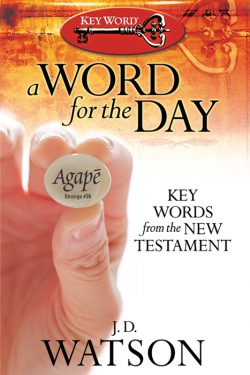
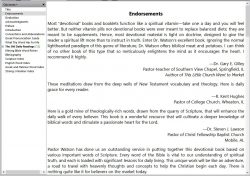
Word for the Day: Key Words from the New Testament
DESCRIPTION
Unearth the wealth of treasures “buried” in the original language of Scripture! Watson’s devotional helps those who don’t know Greek achieve greater understanding of the New Testament. Each entry focuses on one word through a brief study, an application for daily living, related verses for further exploration, and suggested prayer topics. 384 pages, softcover from AMG.
Publisher’s Description
Learn a Biblical Greek WORD Everyday.
The purpose of a Word of the Day is to share the richness of the Greek language used in the New Testament and help make these words practical in the reader’s Christian living. Because words do matter, the words of the New Testament matter most. And in a day when words don’t seem to mean much, the need for precision in Christian doctrine and practice has never been more critical.
For each day of the year, Watson presents a brief word study and then offers an application to make that particular Greek word become real for practical living. To aid reinforcement, related verses are listed for the reader’s personal study.
Doc Watson fulfills his desire of many years to provide daily devotionals that not only contain deep spiritual truth, but also are easy to read and understand. In this day of relativism, the absolutes of God’s Word (and words) are desperately needed. These brief devotionals will enrich the mind, stir the soul, and empower the life of God’s people.
theWord Features:
- Devotional 366 daily sync
- Verse popups
- Fully searchable text
- Footnotes
- Easy navigation of topics via topics tree display.
- Scripture Index
- English Word Index
- Greek & Hebrew Word Index
- Strong’s Number Index
- Special Text Colors
- Normal: Text
- Hyperlink: G3845| Gen. 9:8
- Greek Transliteration: archon
- Hebrew Transliteration: YHWH
- Greek: εὐδόκησα
- Hebrew: יְהוָה
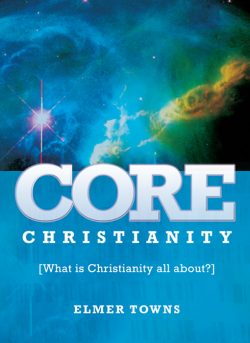
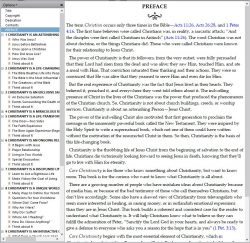
Core Christianity: What Is Christianity All About?
DESCRIPTION
There are a growing number of people who have mistaken ideas about Christianity. Why? Because the media’s politically correct agenda has redefined historical religious terms. Meanwhile, liberal Christianity denies the supernatural and explains away anything miraculous. Dr. Towns attempts to answer these problems. He takes the Bible at face value and explains Christianity’s basic concepts beginning with the premise that Christianity is a Person—Jesus Christ. Then chapter-by-chapter, he builds a coherent and consistent case so the reader will correctly understand what Christianity is all about.
- The book gives a rational overview of Christianity so the modern mind will interact with God’s claim upon its life.
- The book gives a comprehensive coverage of Christianity so the reader will intelligently understand what Christians believe and how they should live.
theWord Features:
- Verse popups (John 1:1)
- Fully searchable text
- Easy navigation of topics via topics tree display.
- Footnotes
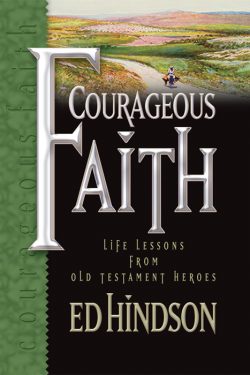
Courageous Faith: Life Lessons from Old Testament Heroes
DESCRIPTION
Obstacles* Battles* Weakness* Fears*
Learn to face life’s greatest challenges with courageous faith in the power of God.
Faith is the key that unlocks the power of God in our lives. It enables us to live by His promises and experience His blessings in our personal lives. In COURAGEOUS FAITH, Ed Hindson encourages us to live beyond the normal limits of life and experience the unlimited power of God on a regular basis. based on the lives of the Hebrews heroes of the Old testament, this exciting book challenges us to overcome our barriers, conquer our fears, realize our goals, and start over when we fail. Relive the greatest moments of faith and triumph in the lives of the men of God who dared to believe His promises in their lives.
This practical and powerful study is based on the lives of the Hebrew heroes who dared to believe that God keeps His promises
ABRAHAM The Journey of Faith SAMSON Making Them Your Strengths
JACOB Hanging Tough in the Tough Times BOAZ Especially those Who are Different
JOSEPH Starting Over When it All Falls Apart DAVID Confidence in the Face of Danger
MOSES Overcoming Your Past JONATHAN Value of True Loyalty
JOSHUA Conquering The Opposition DANIEL Developing Spiritual Determination
GIDEON Overcoming Your Fears NEHEMIAH Leaving a Legacy You Can Be proud Of
JEPHTHAH Even When it Costs You
theWord Features:
- Verse popups (Nehemiah 9:1)
- Fully searchable text
- Easy navigation of topics via topics tree display.
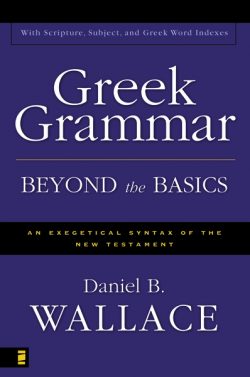

Greek Grammar Beyond the Basics
DESCRIPTION
The first textbook that systematically links syntax and exegesis of the New Testament—perfect for students of Greek who are “second-year” or at an intermediate level.
For seminary students, the goal of studying Greek grammar in the first place is to ultimately get beyond the grammar itself and understand it well enough to use it in the accurate exegesis of biblical texts.
Greek Grammar Beyond the Basics—the most up-to-date Greek grammar available—integrates the technical requirements for proper Greek interpretation with the actual interests and needs of Bible students. It explores numerous syntactical categories, some of which have not previously been dealt with in print, and has a number of distinguishing features, including:
Exegetically significant illustrations, discussed in depth.
Semantic situations—or contexts for simple semantics—are developed and analyzed.
Expanded definitions and numerous examples and syntactical categories.
Grammatical statistics listed at the beginning of major sections.
Scores of charts, tables, and graphs.
Sound exegesis requires that the exegete consider grammar within a larger framework that includes context, lexeme, and other linguistic features. This textbook faithfully equips intermediate Greek students with the skills they need to do exegesis of biblical texts in a way that is faithful to their intended meaning.
The expanded edition contains a subject index, a Greek word index, and page numbers in the Syntax Summary section.
About the Author
Daniel B. Wallace (PhD, Dallas Theological Seminary) is professor of New Testament at Dallas Theological Seminary. He is a noted textual critic, serving as head of the Center for the Study of New Testament Manuscripts, and is author of Greek Grammar beyond the Basics, Basics of New Testament Syntax, and (with Grant Edwards) of A Workbook for New Testament Syntax.
theWord Features:
- Verse popups
- Fully searchable text
- Footnotes
- Page Number: [pg21>
- Page links in index
- Easy navigation of topics via topics tree display.
- Greek words index
- Subject index
- Verse page index
- Syntax Summaries
- Cheat Sheet
- Special text colors
- Normal: Text
- Hyperlink: Luke 20:21
- Greek: χρησις
theWord Bible Software Upgrade
theWord is the result of a great, ongoing effort!
theWord 7 Features – Check them out here!
This is the upgrade package if you have version 3 or later.
If you don’t yet have theWord go here for the full installation.
theWord is used around the world in multiple languages. We pray it will bless your life.
Appreciative users through the years have given to support theWord development. You can do this with a gift as many appreciative users do via theWord Appreciation by doing so you are truly helping provide this high-quality Bible study software, free of charge to everyone.
Want to know what others think of theWord? Read theWord Bible software Guestbook.
Contains:
Note: Serial Number is not needed – “This product is Free to You”