
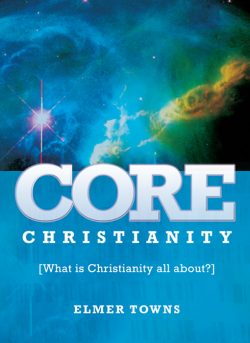
Core Christianity: What Is Christianity All About?
DESCRIPTION
There are a growing number of people who have mistaken ideas about Christianity. Why? Because the media’s politically correct agenda has redefined historical religious terms. Meanwhile, liberal Christianity denies the supernatural and explains away anything miraculous. Dr. Towns attempts to answer these problems. He takes the Bible at face value and explains Christianity’s basic concepts beginning with the premise that Christianity is a Person—Jesus Christ. Then chapter-by-chapter, he builds a coherent and consistent case so the reader will correctly understand what Christianity is all about.
- The book gives a rational overview of Christianity so the modern mind will interact with God’s claim upon its life.
- The book gives a comprehensive coverage of Christianity so the reader will intelligently understand what Christians believe and how they should live.
theWord Features:
- Verse popups (John 1:1)
- Fully searchable text
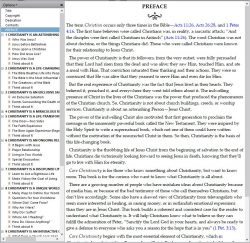
- Easy navigation of topics via topics tree display.
- Footnotes

Legacy Standard Bible and Dictionary
DESCRIPTION
Bundle contents:
- LSB
- LSBHGD
In the history of English Bible translations, the King James Version is the most well-known. The time-honored version of 1611, itself a revision of the Bishops’ Bible of 1568, became the basis for the English Revised Version, which appeared in 1881 (New Testament) and 1885 (Old Testament). Its American counterpart, a product of both British and American scholarship, was published in 1901. Recognizing the values of the American Standard Version, The Lockman Foundation felt an urgency to preserve the ASV while incorporating recent discoveries of Hebrew and Greek textual sources and rendering it into more current English. This resulted in the New American Standard Bible, a translation based upon the time-honored principles of translation of the ASV and KJV, along with other linguistic tools and biblical scholarship.
The Legacy Standard Bible reflects another iteration of such preservation and refinement. Worked on by a core translation team in conjunction with pastors and educators from different countries, it is designed to honor, maintain, and advance the tradition represented by the NASB.
theWord Features
LSB
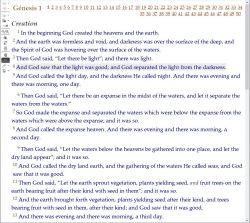
- Searchable text (via regular text and Strong’s Numbers)
- Strong’s Numbers
- Words of Jesus in Red
- Headings
- Paragraphs
- Cross references
- Footnotes
- Strong’s Numbers linked to LSBHGD Dictionary
LSBHGD Dictionary
(Dictionary is part of a bundle with the LSB, and cannot be purchased separately.)
- Fully searchable text
- Easy navigation via topics tree display.
- Strong’s Numbers
- Greek Lemmas
- Hebrew Lemmas
- Special Text Colors
- Normal: Text
- Usage: LSB Usage
- Hyperlink: G10
- Transliteration: Melek
- Hebrew: מֶלֶךְ
- Greek: κοδράντης
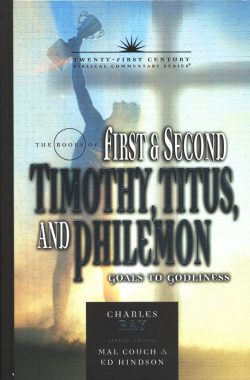
Twenty-first Century Biblical Commentary: The Books of 1 & 2 Timothy, Titus, and Philemon: Goals to Godliness
DESCRIPTION
WHAT ARE YOU DOING TODAY TO BE MORE LIKE CHRIST?
The key to achieving success in anything is to set reasonable goals and strive to meet them. The difficulty in striving to be like Christ is that we never ca be like Him-not perfectly, not until we are made new in His image in heaven. Yet, the fact that we cannot achieve perfection should never top us from anything good. So, the real question is, how is good is good enough? Any Christian who thinks he or she has nothing more to achieve in godliness and personal holiness is utterly deceived.
These books (especially 1 and 2 Timothy and Titus) are often referred to as the “Pastoral Epistles.” The name is certainly appropriate since these books provide the the most thorough statement of church government found anywhere in the New Testament . Paul’s combination of personal advice and apostolic injunction has set the pattern for church government for the past twenty-one centuries.
Yes these books are so much more than official letters on church policy. American scholar Homer Kent Jr. made a career out of studying these important letters in detail. He summed up his opinion of them, saying, “Not only is the content rich in doctrinal and practical discussion, so pertinent to the Christian life, but the historical, geographical, and personal notices make the letters colorful and intensely human.”
Charles Ray’s commentary is unique in that he emphasizes the personal, practical results Paul wanted to encourage every Christian to strive for in their daily walk. Here the reader will be challenged to see the goals Paul had in mind, and to incorporate them in his or her own life.
theWord Features:
- Verse popups
- Verse synchronization
- Fully searchable text
- Footnotes
- Easy navigation of topics via topics tree display.
- Text Colors
- Normal
- Links: 1 Timothy 1:2
- Transliteration: presbuteros
Note: This is a Hybrid module and does not display commentary under Bible text as a Commentary module would.
Twenty-first Century Biblical Commentary: The Gospel of John: Believe and Live
DESCRIPTION
This book will provide an in-depth and comprehensive look at where Bible prophecy, both fulfilled and yet-to-come, fits into God’s plan for believers and the nation of Israel. This book will take you through a detailed look at the difficult subject of prophecy using the incredible wealth of research and study provided by Dr. Edward Hindson, Dr. Mal Couch, Dr. Elmer Towns, and Dr. Robert Lightner. Their ultimate goal is to teach and encourage believers to know their Bibles in a more clear way. A series of study questions at the end of each chapter is designed to enable the reader to study the details of the book, which they can use on their own or in a group setting.
The message of the book of John is underlined by the use of two key words, believe, used ninety-eight times and life, used thirty-six times. In The Gospel of John, Elmer Towns places a particular emphasis on these words. The Apostle John wrote with a twofold purpose—as noted in 20:31—to communicate Christ through His miracles and teachings so men might, first, believe that Jesus was indeed who He said He was, the Son of God; and second, they might have eternal life because of their belief.
theWord Features:
- Verse popups
- Verse synchronization
- Fully searchable text
- Footnotes
- Pages links
- Easy navigation of topics via topics tree display.
Note: This is a Hybrid module and does not display commentary under Bible text as a Commentary module would.

Courageous Faith: Life Lessons from Old Testament Heroes
DESCRIPTION
Obstacles* Battles* Weakness* Fears*
Learn to face life’s greatest challenges with courageous faith in the power of God.
Faith is the key that unlocks the power of God in our lives. It enables us to live by His promises and experience His blessings in our personal lives. In COURAGEOUS FAITH, Ed Hindson encourages us to live beyond the normal limits of life and experience the unlimited power of God on a regular basis. based on the lives of the Hebrews heroes of the Old testament, this exciting book challenges us to overcome our barriers, conquer our fears, realize our goals, and start over when we fail. Relive the greatest moments of faith and triumph in the lives of the men of God who dared to believe His promises in their lives.
This practical and powerful study is based on the lives of the Hebrew heroes who dared to believe that God keeps His promises
ABRAHAM The Journey of Faith SAMSON Making Them Your Strengths
JACOB Hanging Tough in the Tough Times BOAZ Especially those Who are Different
JOSEPH Starting Over When it All Falls Apart DAVID Confidence in the Face of Danger
MOSES Overcoming Your Past JONATHAN Value of True Loyalty
JOSHUA Conquering The Opposition DANIEL Developing Spiritual Determination
GIDEON Overcoming Your Fears NEHEMIAH Leaving a Legacy You Can Be proud Of
JEPHTHAH Even When it Costs You
theWord Features:
- Verse popups (Nehemiah 9:1)
- Fully searchable text
- Easy navigation of topics via topics tree display.
The New International Greek Testament Commentary: The Gospel of Luke
“WORK IN PROGRESS!”
(These are resources that are being developed. There is no release date. Pricing is subject to change.)
(These are resources that are being developed. There is no release date. Pricing is subject to change.)
DESCRIPTION
The Gospel of Luke was written, says its author, as an historical account of the ministry of Jesus. Not only would it serve as the basis for a sound faith on the part of professing Christians, but it would also claim a place for Christianity in history. Christ’s ministry, as Luke shows, is realized prophecy; it is that time during which God’s promise of salvation was fulfilled. His teachings, healing, and acts of compassion are all part of the good news. In Luke’s Gospel, Christ’s message of salvation is directed to the weak, poor, and needy, with an emphasis on the importance of self-denial and of whole-hearted discipleship. Thus, while Luke is the most conscious historian of the Gospel writers, his history is a vehicle of theological interpretation in which the significance of Jesus is expressed.
In this commentary I. Howard Marshall calls attention to the theological message of Luke the Evangelist. His primary purpose is to exegete the text as it was written by Luke, so that the distinctiveness of Luke’s Gospel may be seen.
Basing his commentary on the third edition of The Greek New Testament, Dr. Marshall also refers to many variant readings which are significant in this study. He provides fairly full information on the meanings of the Greek words used by Luke and shows which words and constructions occur frequently and are therefore characteristic of his style. It is by this meticulous analysis of the Greek that Luke’s theological intentions can be objectively determined.
Author:
I. Howard Marshall (1934–2015) was professor emeritus of New Testament exegesis and honorary research professor at the University of Aberdeen, Scotland. His many books include New Testament Theology: Many Witnesses, One Gospel and Beyond the Bible: Moving from Scripture to Theology.
theWord Features:
- Verse popups
- Verse (span) synchronization
- Fully searchable text
- Footnotes
- Pages links
- Easy navigation of topics via topics tree display.
- Special Text Colors
- Normal: Text
- Hyperlink: Gen 3:15
- Page Number: [pg 21>
- Greek: σκανδάλων
- Hebrew: לבנות
The New International Greek Testament Commentary: The Gospel of Matthew
“WORK IN PROGRESS!”
(These are resources that are being developed. There is no release date. Pricing is subject to change.)
(These are resources that are being developed. There is no release date. Pricing is subject to change.)
DESCRIPTION
Having devoted the past ten years of his life to research for this major new work, John Nolland gives us a commentary on the Gospel of Matthew that engages with a notable range of Matthean scholarship and offers fresh interpretations of the dominant Gospel in the history of the church.
Without neglecting the Gospel’s sources or historical background, Nolland places his central focus on the content and method of Matthew’s story. His work explores Matthew’s narrative technique and the inner logic of the unfolding text, giving full weight to the Jewish character of the book and its differences from Mark’s presentation of parallel material. While finding it unlikely that the apostle Matthew himself composed the book, Nolland does argue that Matthew’s Gospel reflects the historical ministry of Jesus with considerable accuracy, and he brings to the table new evidence for an early date of composition.
Including accurate translations based on the latest Greek text, detailed verse-by-verse comments, thorough bibliographies for each section, and an array of insightful critical approaches, Nolland’s Gospel of Matthew will stimulate students, preachers, and scholars seeking to understand more fully Matthew’s presentation of the gospel narrative.
Author:
John Nolland is academic dean and lecturer in New Testament studies at Trinity College, Bristol, England. An ordained minister of the Church of England, he is also the author of the three-volume Word Biblical Commentary on the Gospel of Luke.
theWord Features:
- Verse popups
- Verse (span) synchronization
- Fully searchable text
- Footnotes
- Pages links
- Easy navigation of topics via topics tree display.
- Special Text Colors
- Normal: Text
- Hyperlink: Gen 3:15
- Page Number: [pg 21>
- Greek: σκανδάλων
- Hebrew: לבנות
The New International Greek Testament Commentary: The Epistle to the Hebrews
“WORK IN PROGRESS!”
(These are resources that are being developed. There is no release date. Pricing is subject to change.)
(These are resources that are being developed. There is no release date. Pricing is subject to change.)
DESCRIPTION
Series: The New International Greek Testament Commentary (NIGTC)
This superb work is sure to win a name for itself as one of the major commentaries on the Epistle to the Hebrews. The principal purpose of this substantial volume is to clarify the meaning of Hebrews, long considered a complicated and obscure book. Paul Ellingworth’s fine-tooth-comb coverage of Hebrews looks at the text up close and in a broad light, enabling the reader to see the forest as well as the trees.
In his determined quest to understand Hebrews, Ellingworth begins with a detailed study of the Greek text, working outward to consider the wider context, linguistic questions, and the relation of Hebrews to other early Christian writings and to the Old Testament. Nonbiblical writings such as Philo and the Dead Sea Scrolls, though less directly related to Hebrews, are considered where appropriate.
Unveiling the discourse structure of this carefully written letter, Ellingworth’s commentary helps make coherent sense of the complexities of Hebrews. As a result of his exhaustive study, Ellingworth finds Hebrews to be primarily a pastoral, not a polemical, writing. Showing how Hebrews beautifully emphasizes the supremacy of Christ, Ellingworth concludes that the essential purpose of the epistle – which maintains the continuity of God’s people before and after Christ – is to encourage readers to base their lives on nothing other and nothing less than Jesus.
A substantive bibliography and a comprehensive introduction precede Ellingworth’s commentary, and three indexes – of subjects, authors, and Greek words discussed – conclude the volume.
Author:
Paul Ellingworth (1931–2018) was a British biblical scholar who taught at the University of Aberdeen and served as a translation consultant for the United Bible Societies.
theWord Features:
- Verse popups
- Verse (span) synchronization
- Fully searchable text
- Footnotes
- Pages links
- Easy navigation of topics via topics tree display.
- Special Text Colors
- Normal: Text
- Hyperlink: Gen 3:15
- Page Number: [pg 21>
- Greek: σκανδάλων
- Hebrew: לבנות
The New International Greek Testament Commentary: The Epistles to the Thessalonians
“WORK IN PROGRESS!”
(These are resources that are being developed. There is no release date. Pricing is subject to change.)
(These are resources that are being developed. There is no release date. Pricing is subject to change.)
DESCRIPTION
The letters of Paul to the newly founded Christian community at Thessalonica hold a special place within the Christian tradition as possibly the earliest extant Christian writings. They are also of special interest not only for their theological value but for their sociological context. Among the communities established by Paul, the church at Thessalonica appears to have been the only one to have suffered serious external oppression. These two important epistles, then, speak uniquely to contemporary Christians living in a society often ideologically, if not politically, opposed to Christian faith.
In this innovative commentary Charles A. Wanamaker incorporates what may be called a social science approach to the study of 1 and 2 Thessalonians, taking into full account the social context that gave rise to Paul’s correspondence. While Wanamaker in no way ignores traditional historical-critical, linguistic, literary, and theological approaches to writing a commentary — in fact, at several points he makes a significant contribution to the questions raised by traditional exegesis — at the same time he goes beyond previous commentaries on the Thessalonian correspondence by taking seriously the social dimensions both of Christianity at Thessalonica and of the texts of 1 and 2 Thessalonians themselves. In blending traditional exegetical methods with this newer approach, Wanamaker seeks to understand Pauline Christianity at Thessalonica as a socio-religious movement in the first-century Greco-Roman world and attempts to grasp the social character and functions of Paul’s letters within this context.
Author:
Charles A. Wanamaker, Associate professor in the department of religious studies and director of postgraduate studies at the University of Cape Town in South Africa. He received his doctorate in New Testament studies at the University of Durham under C. K. Barrett.
theWord Features:
- Verse popups
- Verse (span) synchronization
- Fully searchable text
- Footnotes
- Pages links
- Easy navigation of topics via topics tree display.
- Special Text Colors
- Normal: Text
- Hyperlink: Gen 3:15
- Page Number: [pg 21>
- Greek: σκανδάλων
- Hebrew: לבנות
The New International Greek Testament Commentary: The Epistle to the Romans
DESCRIPTION
This highly anticipated commentary on the Greek text of Romans by veteran New Testament scholar Richard Longenecker provides solid scholarship and innovative solutions to long-standing interpretive problems. Critical, exegetical, and constructive, yet pastoral in its application, Longenecker’s monumental work on Romans sets a course for the future that will promote a better understanding of this most famous of Paul’s letters and a more relevant contextualization of its message.
Author:
Richard N. Longenecker (1930–2021) was a distinguished New Testament scholar who taught for many years at Wycliffe College, University of Toronto. He was the author of numerous books, including Paul, Apostle of Liberty; The Christology of Early Jewish Christianity; New Testament Social Ethics for Today; Introducing Romans: Critical Issues in Paul’s Most Famous Letter, and the New International Greek Testament Commentary volume on Romans.
theWord Features:
- Verse popups
- Verse (span) synchronization
- Fully searchable text
- Footnotes
- Pages links
- Index of Ancient Sources
- Easy navigation of topics via topics tree display.
- Special Text Colors
- Normal: Text
- Hyperlink: Gen 3:15
- Page Number: [pg 21>
- Greek: σκανδάλων
- Hebrew: לבנות
The New International Greek Testament Commentary: The Book of Revelation
DESCRIPTION
This volume on Revelation is accessible and comprehensive. It provides an in-depth look at the parallels between images in the Apocalypse and their Old Testament and Jewish antecedents G.K. Beale’s painstaking anaylsis will help you better understand the obscure metaphors in Revelation and the purpose of the book itself.
Author:
G. K. Beale is J. Gresham Machen Chair of New Testament and professor of New Testament and biblical theology at Westminster Theological Seminary.
G. K. Beale is J. Gresham Machen Chair of New Testament and professor of New Testament and biblical theology at Westminster Theological Seminary.
theWord Features:
- Verse popups
- Verse (span) synchronization
- Fully searchable text
- Footnotes
- Pages links
- Easy navigation of topics via topics tree display.
- Special Text Colors
- Normal: Text
- Hyperlink: Gen 3:15
- Page Number: [pg 21>
- Greek: σκανδάλων
- Hebrew: לבנות
The New International Greek Testament Commentary: The Epistle of James
“WORK IN PROGRESS!”
(These are resources that are being developed. There is no release date. Pricing is subject to change.)
(These are resources that are being developed. There is no release date. Pricing is subject to change.)
DESCRIPTION
Peter David’s study on the Epistle of James is a contribution to The New International Greek Testament Commentary, a series based on the UBS Greek New Testament, which attempts to provide thorough exegesis of the text that is sensitive to theological themes as well as to the details of the historical, linguistic, and textual context.
Author:
Peter H. Davids is professor of biblical theology at St.Stephen’s University, St. Stephen, New Brunswick. He is also the coeditor of Dictionary of the Later NewTestament and Its Developments.
theWord Features:
- Verse popups
- Verse (span) synchronization
- Fully searchable text
- Footnotes
- Pages links
- Easy navigation of topics via topics tree display.
- Special Text Colors
- Normal: Text
- Hyperlink: Gen 3:15
- Page Number: [pg 21>
- Greek: σκανδάλων
- Hebrew: לבנות
The New International Greek Testament Commentary: The Gospel of Mark
“WORK IN PROGRESS!”
(These are resources that are being developed. There is no release date. Pricing is subject to change.)
(These are resources that are being developed. There is no release date. Pricing is subject to change.)
DESCRIPTION
Drawing on many years of Marcan studies, world-class scholar R. T. France has produced an exegetical commentary on the Greek text of Mark that does what the best of recent Greek commentaries have done but in France’s own inimitable, reader-friendly way.
This work is a commentary on Mark itself, not a commentary on commentaries of Mark. It deals immediately and directly with matters that France himself regards as important. Working from his own translation of the Greek text and culling from helpful research into the world of first-century Palestine, France provides an extensive introduction to Mark’s Gospel, followed by insightful section and verse commentary.
France sees the structure of Mark’s Gospel as an effective “drama in three acts.” Act 1 takes up Jesus’ public ministry in Galilee. Act 2 covers Jesus’ journey to Jerusalem with his disciples. Act 3 focuses on Jesus’ public ministry in Jerusalem, including his confrontation with the Jewish leaders, his explanatory discourse on the future, and his passion, death, and resurrection. France carefully unpacks for modern readers the two central themes of this powerful narrative of Jesus’ life — the nature of Christ and the role of discipleship.
Supported by careful argumentation and impressive in its sensitivity to Mark’s structure, context, and use of the Old Testament, France’s study of the second Gospel is without peer.
Author:
R. T. France (1938-2012) was Hon. Research Fellow in the Department of Theology and Religious Studies, University of Wales, Bangor. His other books include Jesus and the Old Testament, The Evidence for Jesus, and Matthew: Evangelist and Teacher.
theWord Features:
- Verse popups
- Verse (span) synchronization
- Fully searchable text
- Footnotes
- Pages links
- Easy navigation of topics via topics tree display.
- Special Text Colors
- Normal: Text
- Hyperlink: Gen 3:15
- Page Number: [pg 21>
- Greek: σκανδάλων
- Hebrew: לבנות
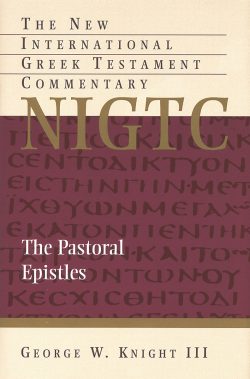
The New International Greek Testament Commentary: The Pastoral Epistles
“WORK IN PROGRESS!”
(These are resources that are being developed. There is no release date. Pricing is subject to change.)
(These are resources that are being developed. There is no release date. Pricing is subject to change.)
DESCRIPTION
This is a thorough, full- scale English commentary on the Greek text of 1 and 2 Timothy and Titus. While author George W. Knight gives careful attention to the comments of previous interpreters of the text, both ancient and modern, his emphasis is on exegesis of the Greek text itself and on the flow of the argument in each of these three epistles.
Besides providing a detailed look at the meanings and interrelationships of the Greek words as they appear in each context, Knight’s commentary includes an introduction that treats at length the question of authorship (he argues for Pauline authorship and proposes, on the basis of stylistic features, that Luke might have been the amanuensis for the Pastoral Epistles), the historical background of these letters, and the personalities and circumstances of the recipients.
Knight also provides two special excursuses: the first gathers together the information in the Pastorals and elsewhere in the New Testament on early church offices and leaders; the other excursus examines the motivations for conduct in Titus 2:1-10 with a view to their applicability to present-day situations.
Author:
George W. Knight III is a teacher at Matthews Orthodox Presbyterian Church in Matthews, North Carolina, and adjunct professor of New Testament at Greenville Presbyterian Theological Seminary’s Charlotte Extension.
theWord Features:
- Verse popups
- Verse (span) synchronization
- Fully searchable text
- Footnotes
- Pages links
- Easy navigation of topics via topics tree display.
- Special Text Colors
- Normal: Text
- Hyperlink: Gen 3:15
- Page Number: [pg 21>
- Greek: σκανδάλων
- Hebrew: לבנות
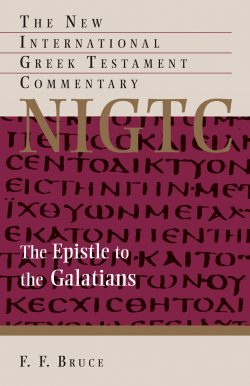
The New International Greek Testament Commentary: The Epistle to the Galatians
“WORK IN PROGRESS!”
(These are resources that are being developed. There is no release date. Pricing is subject to change.)
(These are resources that are being developed. There is no release date. Pricing is subject to change.)
DESCRIPTION
Series: The New International Greek Testament Commentary (NIGTC)
Paul’s letter to the churches of Galatia was for many years a document of special interest and study for renowned New Testament scholar F. F. Bruce. This excellent volume in the New International Greek Testament Commentary series contains Bruce’s mature work on that important early epistle.
Through phrase-by-phrase exegesis of the Greek text, consistent awareness of the historical and geographical context, and balanced dialogue with scores of other scholars, Bruce successfully bridges the hermeneutical gap and makes the text of Galatians come alive for both scholars and students. Based on careful historical-critical-linguistic exegesis yet primarily theological in character, this commentary places special emphasis throughout on Paul’s insistence on justification before God by faith apart from works of the law, and on Paul’s presentation of the Spirit as the principle of the new life in Christ.
Author:
F. F. Bruce (1910-1990) was Rylands Professor of Biblical Criticism and Exegesis at the University of Manchester, England. Author of numerous commentaries and other books, he served as general editor of the NICNT series from 1962 to 1990.
theWord Features:
- Verse popups
- Verse (span) synchronization
- Fully searchable text
- Footnotes
- Pages links
- Easy navigation of topics via topics tree display.
- Special Text Colors
- Normal: Text
- Hyperlink: Gen 3:15
- Page Number: [pg 21>
- Greek: σκανδάλων
- Hebrew: לבנות
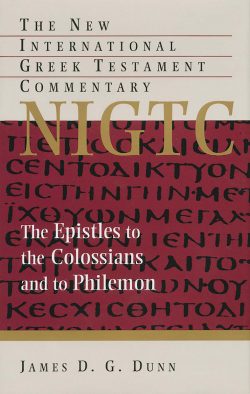
The New International Greek Testament Commentary: The Epistles to the Colossians and to Philemon
“WORK IN PROGRESS!”
(These are resources that are being developed. There is no release date. Pricing is subject to change.)
(These are resources that are being developed. There is no release date. Pricing is subject to change.)
DESCRIPTION
Series: The New International Greek Testament Commentary (NIGTC)
Paul’s Epistle to the Colossians merits detailed study for at least two reasons. First, it provides an unexpectedly interesting window into the character of Christianity in Asia Minor in the second half of the first century. With the information it gives about the religious tensions within which emergent Christianity was caught up, not least those between Christianity and diaspora Judaism, we begin to gain more insight into the influences and factors that shaped the transition from apostolic to subapostolic Christianity in the region. Second, Colossians represents a crucial stage in the development of Pauline theology itself. Whether it was written at the end of Paul’s life or soon after his death, it indicates how Pauline theology retained its own vital character and did not die with Paul.
In this volume in the celebrated New International Greek Testament Commentary, James D. G. Dunn, author of numerous well-received works on the historical origin and theological interpretation of the New Testament, provides detailed expositions of the text of Paul’s letters to the Colossians and to Philemon.
Dunn examines each of these letters within the context of the Jewish and Hellenistic cultures in the first century, and discusses the place of Colossians and Philemon in the relationship between the Pauline mission and the early churches that received these letters. Particular stress is also placed on the role of faith in Jesus Christ within and over against Judaism and on the counsel of these two important letters with regard to the shaping of human relationships in the community of faith.
Author:
James D. G. Dunn (1939–2020) was a renowned New Testament scholar and the longtime Lightfoot Professor of Divinity at Durham University. His numerous books include The Theology of Paul the Apostle, Jesus according to the New Testament, and the magisterial Christianity in the Making trilogy.
theWord Features:
- Verse popups
- Verse (span) synchronization
- Fully searchable text
- Footnotes
- Pages links
- Easy navigation of topics via topics tree display.
- Special Text Colors
- Normal: Text
- Hyperlink: Gen 3:15
- Page Number: [pg 21>
- Greek: σκανδάλων
- Hebrew: לבנות
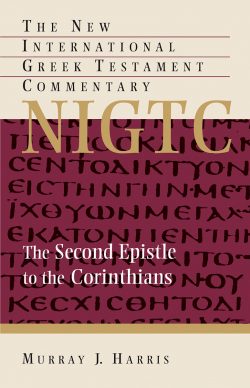
The New International Greek Testament Commentary: The Second Epistle to the Corinthians
“WORK IN PROGRESS!”
(These are resources that are being developed. There is no release date. Pricing is subject to change.)
(These are resources that are being developed. There is no release date. Pricing is subject to change.)
DESCRIPTION
Series: The New International Greek Testament Commentary (NIGTC)
The reputation of the NIGTC series is so outstanding that the appearance of each new volume is noteworthy. This book on 2 Corinthians is no exception. Master New Testament exegete Murray J. Harris has produced a superb commentary that analyzes the Greek text verse by verse against the backdrop of Paul’s tumultuous relations with his converts at Corinth.
Believing that Scripture cannot be understood theologically unless it has first been understood grammatically, Harris provides a careful, thoroughgoing reading of the text of 2 Corinthians. He gives special attention to matters of translation, making regular references not only to the standard modern English translations but also to influential older versions such as The Twentieth Century New Testament and those by Weymouth, Moffatt, and Goodspeed. His close attention to matters of textual criticism and grammar leads to discussions of the theology of 2 Corinthians that show the relevance of Paul’s teaching to Christian living and church ministry.
Other notable features of the book include a comprehensive introduction in which all the relevant literary and historical issues are discussed, an expanded paraphrase of the letter that conveniently shows Harris’s decisions on exegetical issues and indicates the flow of Paul’s argument, a chronology of the relations of Paul, Timothy, and Titus with the Corinthian church, and an excursus on Paul’s “affliction in Asia” (1:8-11) and its influence on his outlook and theology.
Author:
Murray J. Harris is professor emeritus of New Testament exegesis and theology at Trinity Evangelical Divinity School, Deerfield, Illinois. His numerous other books include Jesus as God: The New Testament Use of Theos in Reference to Jesus, Slave of Christ: A New Testament Metaphor for Total Devotion to Christ, and Prepositions and Theology in the Greek New Testament.
theWord Features:
- Verse popups
- Verse (span) synchronization
- Fully searchable text
- Footnotes
- Pages links
- Easy navigation of topics via topics tree display.
- Special Text Colors
- Normal: Text
- Hyperlink: Gen 3:15
- Page Number: [pg 21>
- Greek: σκανδάλων
- Hebrew: לבנות
Twenty-First Century Biblical Commentary Series: Book of Revelation: Unlocking the Future
WILL THE HUMAN RACE SURVIVE IN THE FUTURE?
EVERYONE IS CURIOUS ABOUT THE FUTURE. There is something in human nature that wants to know what is going to happen next. God speaks to the need in our lives by revealing the future before it happens. That process is called a prophecy of future events. This book is a study of the prophecies in the book of Revelation.
The book of Revelation is the grand and noble conclusion to the Bible. It captives our attention, stirs our imagination, and points us to our glorious future destiny. It shows the living relationship between the risen Christ and His Bride, the Church. It also records the final days of this world and reveals the glorious new world yet to come. The book of Revelation gives us hope for the future when God will make “all things new” (Rev.21:5.
Dr.Hindson simplifies the message of the Revelation so that you can easily understand it for yourself. He surveys the general content of this captivating book of prophecy with a view to keeping the big picture in mind, rather than getting lost in all the details. His approach is to keep the study focused on the key issues in each chapter.
The Book of Revelation has been called the epilogue of the unfolding drama of redemption. It’s God’s road map to help us understand where human history is going. In the biblical record, human history begins in a garden and ends in the eternal city. It begins with tragedy and ends with triumph. It begins with man’s failure and ends with his exaltation. In between, there stands a cross! and on that cross, Jesus Christ changed the course of human history forever.
The message of the Bible represents the timeless truth of God. As each generation seeks to apply that truth to its specific context it becomes necessary for an up-to-date commentary to be created just for them. The editors and authors of the Twenty-First Century Biblical Commentary” have endeavored to do just that. They represent conservative, evangelical, and dispensational scholarship at its best.
theWord Features: