

An Interpretive Lexicon of New Testament Greek
DESCRIPTION
Book Summary
This interpretive lexicon is a Greek language resource that is intended to help students and translators to easily and quickly determine the range of translation possibilities for a wide variety of the smallest and most difficult words in the Greek New Testament to translate
About the Book
Save considerable time in translating and exegesis of the Greek New Testament text.
This Lexicon has a very specific and important purpose: to make the process of New Testament interpretation easier and more accurate by providing a comprehensive yet concise interpretation of Greek words that determine logical relationships between statements or clauses.
These words (prepositions, adverbs, particles, relative pronouns, conjunctions and other connectors) are essential to revealing and supporting the main ideas in the text and are especially useful for interpreting logical arguments, such as those found in the epistles.
While not exhaustive, this Interpretive Lexicon lists the vast majority of Greek connecting words, especially those that are notorious for being some of the most difficult words to translate.
Features include:
- Concise definitions for quick analysis.
- Examples of where the word is found in Scripture.
- Page references to several major lexical resources for further translation options and nuances.
- Interpretation of the broader categories of each word (for example: locative (in, among, on), means-end (with, by), grounds (because, on account of), temporal (while, at), and so on.
The interpretive feature of the book–evaluating the word’s function in discourse–is tremendously helpful for the exegetical process, allowing the translator to closely follow the logical flow of the text with greater efficiency. This Interpretive Lexicon is a valuable handbook for student, pastor, and scholar alike.
theWord Features:
- Verse popups
- Abbreviation popups
- Many internal links
- Word lookup via right-click-menu
- Fully searchable text
- Footnotes
- Page numbers noted for BDAG (00 and 79)
- Easy navigation of topics via topics tree display.
- Special Text Colors
- Normal: Text
- Hyperlink: Luke 20:21
- Greek: χρησις
- Hebrew: א
- Page Number: [pg21>

Greek Grammar Beyond the Basics
DESCRIPTION
The first textbook that systematically links syntax and exegesis of the New Testament—perfect for students of Greek who are “second-year” or at an intermediate level.
For seminary students, the goal of studying Greek grammar in the first place is to ultimately get beyond the grammar itself and understand it well enough to use it in the accurate exegesis of biblical texts.
Greek Grammar Beyond the Basics—the most up-to-date Greek grammar available—integrates the technical requirements for proper Greek interpretation with the actual interests and needs of Bible students. It explores numerous syntactical categories, some of which have not previously been dealt with in print, and has a number of distinguishing features, including:
Exegetically significant illustrations, discussed in depth.
Semantic situations—or contexts for simple semantics—are developed and analyzed.
Expanded definitions and numerous examples and syntactical categories.
Grammatical statistics listed at the beginning of major sections.
Scores of charts, tables, and graphs.
Sound exegesis requires that the exegete consider grammar within a larger framework that includes context, lexeme, and other linguistic features. This textbook faithfully equips intermediate Greek students with the skills they need to do exegesis of biblical texts in a way that is faithful to their intended meaning.
The expanded edition contains a subject index, a Greek word index, and page numbers in the Syntax Summary section.
About the Author
Daniel B. Wallace (PhD, Dallas Theological Seminary) is professor of New Testament at Dallas Theological Seminary. He is a noted textual critic, serving as head of the Center for the Study of New Testament Manuscripts, and is author of Greek Grammar beyond the Basics, Basics of New Testament Syntax, and (with Grant Edwards) of A Workbook for New Testament Syntax.
theWord Features:
- Verse popups
- Fully searchable text
- Footnotes
- Page Number: [pg21>
- Page links in index
- Easy navigation of topics via topics tree display.
- Greek words index
- Subject index
- Verse page index
- Syntax Summaries
- Cheat Sheet
- Special text colors
- Normal: Text
- Hyperlink: Luke 20:21
- Greek: χρησις
World English Bible with Strong’s numbers. Apocrypha Book, Glossary Book
Description:
Why was the World English Bible translated?
There are already many good translations of the Holy Bible into contemporary English. Unfortunately, almost all of them are restricted by copyright and copyright holder policy. This restricts publication and republication of God’s Word in many ways, such as in downloadable files on the Internet, use of extensive quotations in books, etc. The World English Bible was commissioned by God in response to prayer about this subject.
Because the World English Bible is in the Public Domain (not copyrighted), it can be freely copied, distributed, and redistributed without any payment of royalties. You don’t even have to ask permission to do so. You may publish the whole World English Bible in book form, bind it in leather and sell it. You may incorporate it into your Bible study software. You may make and distribute audio recordings of it. You may broadcast it. All you have to do is maintain the integrity of God’s Word before God, and reserve the name “World English Bible” for faithful copies of this translation.
How was the World English Bible translated?
The World English Bible is an update of the American Standard Version (ASV) of the Holy Bible, published in 1901. A custom computer program updated the archaic words and word forms to contemporary equivalents, and then a team of volunteers proofread and updated the grammar. The New Testament was updated to conform to the Majority Text reconstruction of the original Greek manuscripts, thus taking advantage of the superior access to manuscripts that we have now compared to when the original ASV was translated.
What is different about the World English Bible?
The style of the World English Bible, while fairly literally translated, is in informal, spoken English. The World English Bible is designed to sound good and be accurate when read aloud. It is not formal in its language, just as the original Greek of the New Testament was not formal. The WEB uses contractions rather freely.
The World English Bible doesn’t capitalize pronouns pertaining to God. The original manuscripts made no such distinction. Hebrew has no such thing as upper and lower case, and the original Greek manuscripts were written in all upper case letters. Attempting to add in such a distinction raises some difficulties in translating dual-meaning Scriptures such as the coronation psalms.
The World English Bible main edition translates God’s Proper Name in the Old Testament as “Yahweh.” The Messianic Edition and the British Edition of the World English Bible translates the same name as “LORD” (all capital letters), or when used with “Lord” (mixed case, translated from “Adonai”,) GOD. There are solid translational arguments for both traditions.
Because World English Bible uses the Majority Text as the basis for the New Testament, you may notice the following differences in comparing the WEB to other translations:
The order of Matthew 23:13 and 14 is reversed in some translations.
Luke 17:36 and Acts 15:34, which are not found in the majority of the Greek Manuscripts (and are relegated to footnotes in the WEB) may be included in some other translations.
Romans 14:24-26 in the WEB may appear as Romans 16:25-27 in other translations.
1 John 5:7-8 contains an addition in some translations, including the KJV. Erasmus admitted adding this text to his published Greek New Testament, even though he could at first find no Greek manuscript support for it, because he was being pressured by men to do so, and because he didn’t see any doctrinal harm in it. Lots of things not written by John in this letter are true, but we decline to add them to what the Holy Spirit inspired through John.
With all of the above and some other places where lack of clarity in the original manuscripts has led to multiple possible readings, significant variants are listed in footnotes. The reading that in our prayerful judgment is best is in the main text. Overall, the World English Bible doesn’t differ very much from several other good contemporary English translations of the Holy Bible. The message of Salvation through Jesus Christ is still the same. The point of this translation was not to be very different (except for legal status), but to update the ASV for readability while retaining or improving the accuracy of that well-respected translation and retaining the public domain status of the ASV.
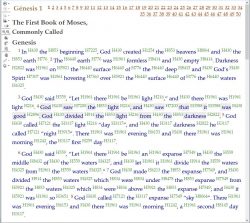
theWord Version includes Strong Numbers (Not on every word but many if not most.), Glossary Dictionary and Apocrypha
theWord Features
Bible
- Strong’s Numbers
- Headings
- Verse popups
- Cross References
- Fully searchable text
- Footnote(s)
- Easy navigation of topics via Bible tree or Verse Reference Entry
- Special Text Colors
- Normal: Text
- Greek: λογος
- Hebrew: א
Glossary
- Verse popups
- Fully searchable text
- Easy navigation of topics via topics tree display.
- Special Text Colors
- Normal: Text
- Hyperlink: Link | Jn 3:36
Apocrypha
Books included: Tobit, Judith, Esther (Greek*), Wisdom of Solomon, Sirach, Baruch, 1 Maccabees, 2 Maccabees, 1 Esdras, Prayer of Manasses, Psalms 151, 3 Maccabees, 2 Esdras, 4 Maccabees, Daniel (Greek*)
*Greek means they included portions translated from the Greek in addition to the Hebrew.
- Verse popups
- Fully searchable text
- Footnote(s)
- Easy navigation of topics via topics tree display.
- Special Text Colors
- Normal: Text
- Hyperlink: Link | Jn 3:36
- Hebrew: א
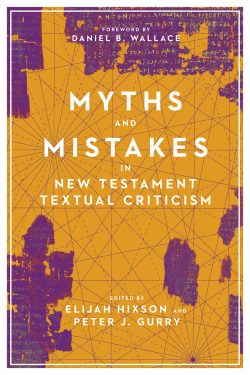
Myths and Mistakes in New Testament Textual Criticism
DESCRIPTION
Since the unexpected popularity of Bart Ehrman’s bestselling Misquoting Jesus, textual criticism has become a staple of Christian apologetics.
Ehrman’s skepticism about recovering the original text of the New Testament does deserve a response. However, this renewed apologetic interest in textual criticism has created fresh problems for evangelicals. An unfortunate proliferation of myths, mistakes, and misinformation has arisen about this technical area of biblical studies.
In this volume Elijah Hixson and Peter Gurry, along with a team of New Testament textual critics, offer up-to-date, accurate information on the history and current state of the New Testament text that will serve apologists and Christian students even as it offers a self-corrective to evangelical excesses.
Around 367 pages.
theWord Features
- Verse popups
- Fully searchable text
- Footnote(s)
- Easy navigation of topics via topics tree display.
- Special Text Colors
- Normal: Text
- Pages: [p1>
- Hyperlink: Link | Jn 3:36
- Greek: λογος
- Hebrew: א
- Sahidic: аϥϯпЄЧОУОЄІ ЄРОЧ
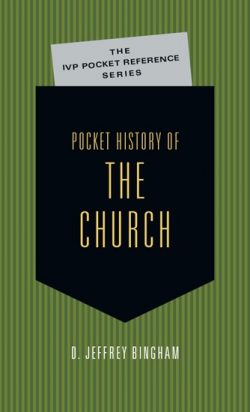
Pocket History of the Church
DESCRIPTION
The story of Christianity is a fascinating tale. Here we find drama, vision and expansion along with failure, setbacks and tragedy. Yet during the past two thousand years the power of Jesus is felt throughout the interplay of human actors and the forces of world events.
How can you grasp the story played out on such a gigantic stage? This book is an ideal place to start. D. Jeffrey Bingham has skillfully selected the key people and episodes to tell a grand and humbling story. From Roman persecution to the early creeds, from the monastic movement to the Reformation, from the rise of liberalism to missionary expansion, he chronicles the ups and downs of a people and a faith.
This pocket history has been crafted for students, pastors and other busy people who want an informed, clear and concise presentation that feeds the mind and moves the heart. It is an account that nurtures the Christian virtues of faith, hope and love. For Bingham aims not only to uncover the treasures of the church’s past but also to show how history aids your own spiritual journey today.
theWord Features
- Verse popups
- Fully searchable text
- FootNote(s)
- Easy navigation of topics via topics tree display.
- Special Text Colors
- Normal: Text
- Hyperlink: Link
- Page Number: [pg1>
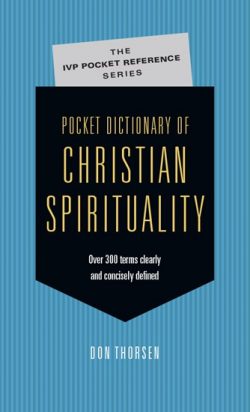
Pocket Dictionary of Christian Spirituality
DESCRIPTION
The Pocket Dictionary of Christian Spirituality is an A to Z introduction and resource for curious newcomers and novice students of spirituality. From our first call to Abba until we arrive at Zion, the heavenly Jerusalem, Don Thorsen charts the Christian spiritual pilgrimage through its many traditions, schools of thought, and tested practices.
Among the over 300 definitions you’ll find
- terms and ideas
- traditions and movements
- practices and rituals
- texts and theology
A reliable guide and launching pad for learning, the Pocket Dictionary of Christian Spirituality is a basic resource for the pilgrimage travel bag.
theWord Features
- Verse popups
- Fully searchable text
- Easy navigation of topics via topics tree display.
- Special Text Colors
- Normal: Text
- Hyperlink: Link | Jn 3:36
- Page Number: [pg1>
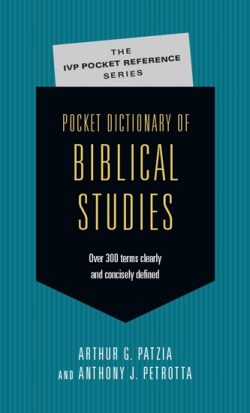
Pocket Dictionary of Biblical Studies
DESCRIPTION
So many words about the Word. The study of anything seems to generate its own special vocabulary, and biblical studies is no different. What’s more, it’s got nearly a two-thousand-year lead on you! How can you catch up? Here is the answer!
If you are puzzled by parataxis or rankled by recensions, the Pocket Dictionary of Biblical Studies is the companion you need. Whether you are studying Old Testament or New Testament or both at once, this little book is your private tutor, your ever-ready guide to over three hundred biblical-studies terms. Here’s your glossary for reading course textbooks, your decoder for listening to lectures, your review sheet for cramming for finals and your “help” key for writing research papers.
Among the more than 300 terms defined you’ll discover
- types of biblical criticism, from genre criticism to tradition criticism
- Greek and Latin terms, from agrapha to vaticinium ex eventu
- German terms, from Frühkatholizismus to Wissenschaft
- ancient texts, from Aleppo Codex to Zadokite Document
- literary features, from acrostic to woe oracle
- theories, from the Augustinian hypothesis to the Yahwist source
- textual criticism terms, from codex to Western text
Written by Arthur G. Patzia and Anthony J. Petrotta, two biblical studies professors who know what you need to know, Pocket Dictionary of Biblical Studies will be your essential guide into a fascinating world of understanding.
theWord Features
- Verse popups
- Fully searchable text
- Easy navigation of topics via topics tree display.
- Special Text Colors
- Normal: Text
- Hyperlink: Link | Jn 3:36
- Greek: λογος
- Hebrew: א
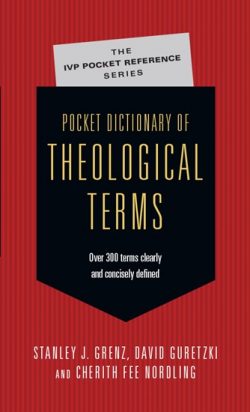
Pocket Dictionary of Theological Terms
DESCRIPTION
Beginning to study theology is like stepping into a conversation that has been going on for two thousand years.
How do you take part in this conversation–or even make sense of it–if you don’t understand the vocabulary or know the contributions made by other participants?
The Pocket Dictionary of Theological Terms is the perfect companion to your theological studies. Among its three hundred-plus definitions are
- English terms, from accomodation to wrath of God
- foreign terms, from a posteriori to via media
- theological movements and traditions, from the Alexandrian School to Wesleyanism
- theologians, from Anselm of Canterbury to Ulrich Zwingli
Here is an affordable and easily accessible resource for your theological readings, lectures and writing assignments. It’s a must-have for every beginning theological student!
theWord Features
- Verse popups
- Fully searchable text
- Easy navigation of topics via topics tree display.
- Special Text Colors
- Normal: Text
- Hyperlink: Link | Jn 3:36
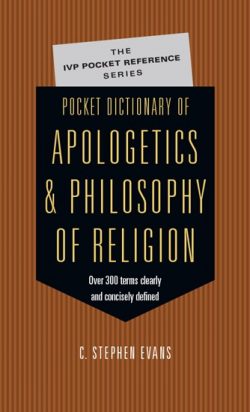
Pocket Dictionary of Apologetics and Philosophy of Religion
DESCRIPTION
For philosophers, the pursuit of truth travels on precise definitions. For Christian apologists, the defense of the faith is founded on the defining Word. And for beginning students of either discipline, the difference between success and frustration begins with understanding the terms and ideas and identifying the thinkers and movements.
The Pocket Dictionary of Apologetics Philosophy of Religion is designed to be a companion to your study of these two related disciplines. Among its 300 entries are
- terms, from a posteriori to worldview
- apologists, from Abelard to Van Til
- philosophers of religion, from Alston to Wolterstorff
- movements, from analytic philosophy to voluntarism
- apologetic arguments, from the cosmological to the wager
- theologies, from Arminianism to Zoroastrianism
Here is an affordable and easily accessible “help key” for your readings, lectures, writing assignments and exam preparation. It’s a must-have study aid for any student who expects to cogitate on coherentism or ruminate on Ricouer.
theWord Features
- Verse popups
- Fully searchable text
- Easy navigation of topics via topics tree display.
- Special Text Colors
- Normal: Text |
- Hyperlink: Link | Jn 3:36
The Epistle to the Romans (Verse by Verse Study)
Description:
These studies in Romans were originally used with College Students at Wesleyan University in Middletown, CT and Trinity College in Hartford, CT. They were used for evangelistic purposes (to bring students to a saving knowledge of the Lord Jesus Christ) and they were also used for discipleship purposes (to expose students to the great doctrinal truths presented so clearly in Romans).

theWord Features:
- Verse popups
- Verse Syncs with Bible View
- Fully searchable text
- Footnotes
- Easy navigation of topics via topics tree display.
- Special Text Colors
- Normal: Text
- Hyperlink: Luke 20:21
- Greek: εαυτους
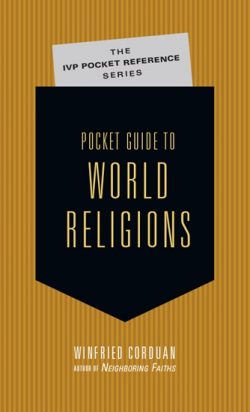
Pocket Guide to World Religions
DESCRIPTION
Have you ever wondered . . .
- what the red dot on an Indian woman’s forehead means?
- whether all Buddhist monks practice martial arts?
- if the Emperor of Japan is still considered a god?
Here is a concise, informative guide for anyone looking for answers to basic questions about the world’s varied religions. In short, incisive chapters, Winfried Corduan introduces readers to twelve of the world’s major religions, including Baha’i, Buddhism, Christianity, Confucianism, Daoism, Hinduism, Islam, Jainism, Judaism, Parsi, Shinto and Sikhism. For each, he offers brief descriptions of its name, numbers and distribution, key symbols, history, Scriptures, major beliefs, subgroups, worship practices, home practices, clothing, diet and calendar. Also included are even briefer descriptions of sixteen new religious movements and traditional or tribal religions.
This book is for students, pastors and other busy people who want the quick, bare-facts scoop on current religions.
theWord Features
- Fully searchable text
- Easy navigation of topics via topics tree display.
- Special Text Colors
- Normal: Text
- Hyperlink: Link
- Page Number: [pg1>
Advance Hebrew Package
DESCRIPTION
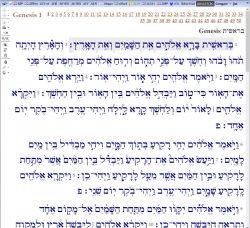
Biblia Hebraica Stuttgartensia 5th Revision + Text, Lemma, Morphology, Clause
DESCRIPTION
BHS5 Description
Biblia Hebraica Stuttgartensia (BHS) is known to be the definitive edition of the Hebrew Bible. It is widely regarded as a reliable edition of the Hebrew and Aramaic scriptures and is the most widely used original-language edition among scholars.
ETCBC (WIVU) Description
The ETCBC data is comprised of the text of the BHS5. It provides Lemmas which work in sync with our Hebrew dictionaries. Morphology is provided and explained via the morphology dictionary. An English gloss is provided for a quick overview of a word with pronouns in color. A transliteration is provided for those new to learning Hebrew.
Sentence markers indicate where a sentence begins. Clause markers indicate a start to a clause while also explaining the clause for example: “Type: NominalDomain: NarrativeKind: Nominal”. Likewise with Phrase markers indication of start and explanation is given for example: “Type: NominalDetermination: determinedFunction: Subject” all of these markers are toggled via the F key.
The text contains both Ketiv and Qere variants. Ketiv variants are displayed in brown color, Qere in blue. Qere variants can be toggled on/off with the R key.
Lastly the pointings can be toggled on and off using the V key for those who are interested in reading the consonants with out the distraction of the points.
theWord Features:
- BHS5 Text
- Lemma
- Morphology
- English gloss (on hover over word)
- Transliteration (on hover over word)
- Sentences markers.
- Clauses markers with explanation
- Phrases markers with explanation
- Sentence/Clauses/Phrases. To toggle on/off these use the F key.
- The text is pointed Hebrew. To toggle on/off pointings use the V key.
- The text contains both Ketiv and Qere variants. Ketiv variants are displayed in brown color, Qere in blue. Qere variants can be toggled on/off with the R key.
- Morphology Dictionary (in book view)
⦁ Morphology for the BHS5/ETCBC
⦁ Fully searchable text
⦁ Easy navigation of topics via topics tree display.
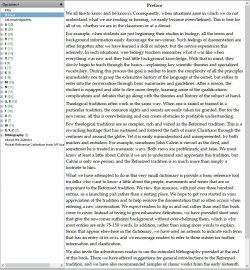
Pocket Dictionary of the Reformed Tradition
DESCRIPTION
Beginning to study Reformed theology is like stepping into a family conversation that has been going on for five hundred years. How do you find your bearings and figure out how to take part in this conversation without embarrassing yourself?
The Pocket Dictionary of the Reformed Tradition takes on this rich, boisterous and varied tradition in its broad contours, filling you in on its common affirmations as well as its family tensions. Here you will find succinct and reliable entries on
- Latin terms, such as ad fontes and sola fide
- Theologians, from Calvin to Torrance
- Confessions, such as the Belgic and Westminster
- Doctrines, such as atonement and sanctification
- Apologists, such as Francis Schaeffer and Cornelius Van Til
And much more.
The Pocket Dictionary of the Reformed Tradition is ready to assist you over the rough parts of readings, lectures, conversations and blogs. It will also be a companionable and concise introduction to one of the great Christian traditions.
theWord Features
- Verse popups
- Fully searchable text
- Easy navigation of topics via topics tree display.
- Special Text Colors
- Normal: Text
- Hyperlink: Link
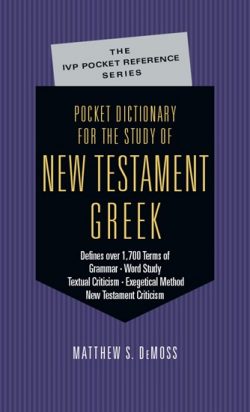
Pocket Dictionary for the Study of New Testament Greek
DESCRIPTION
If you are beginning your study of New Testament Greek or Greek exegesis, this book is for you!
From ablative to zeugma, it defines the tangled terms that infest Greek textbooks, grammars and lexicons.
Here is the book to deliver you from late-night ponderings of the predicate and frantic fumings over the fricative. It is the indispensable lexicon to that third language that is neither Greek nor recognizable English: the technical vocabulary of grammarians, lexicographers, linguists and Greek instructors. What’s more, this pocket dictionary gives you the inside edge on the terminology of exegesis, textual criticism and biblical criticism.
Careful definitions, helpful examples and copious cross-references make this economically priced, brief dictionary easy to use. And its convenient size will make it a constant companion in your study of the Greek New Testament.
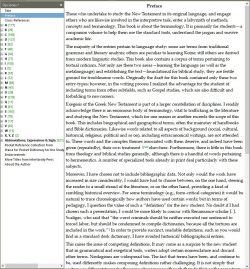
theWord Features
- Verse popups
- Fully searchable text
- FootNote(s)
- Easy navigation of topics via topics tree display.
- Special Text Colors
- Normal: Text
- Hyperlink: Link
- Page Number: [pg1>
- Greek: λογος
- Hebrew: א
The New International Greek Testament Commentary: The First Epistle to the Corinthians
(These are resources that are being developed. There is no release date. Pricing is subject to change.)
Series: The New International Greek Testament Commentary (NIGTC)
This superb volume in the New International Greek Testament Commentary series provides the most detailed, definitive, and distinctive commentary on 1 Corinthians available in English to date.
One of the world’s most respected Christian theologians, Anthony Thiselton here provides in- depth discussion of the language of 1 Corinthians, presents his own careful translation of the Greek, traces the main issues of interpretation from the church fathers to the present, and highlights topics of theological, ethical, and sociohistorical interest today, including ethics and “rights,” marriage, divorce and remarriage, “headship,” gender, prophecy, and many others.
No other commentary on 1 Corinthians embodies the wealth and depth of detail presented in Thiselton’s work, which takes account of nearly all scholarly research on 1 Corinthians and incorporates substantial bibliographies throughout. In his commentary Thiselton indeed addresses virtually every question that thoughtful, serious readers — scholars, students, pastors, teachers — may wish to ask of or about the text of 1 Corinthians. His work truly offers a fresh, comprehensive, and original contribution to our understanding of this major epistle and its contemporary relevance.
Author:
Anthony C. Thiselton is professor emeritus of Christian theology at the University of Nottingham, England. His many other books include A Shorter Guide to the Holy Spirit, Systematic Theology, and Life after Death: A New Approach to the Last Things.
theWord Features: