
Package: Wuest Word Studies & New Testament Expanded Translation
Kenneth Wuest was a long time Greek teacher at Moody Bible Institute back in 1920’s, ‘30’s, 40’s, and 50’s. (Yeah – he taught almost 30 years). At that time, Moody was one of the leaders in both dispensationalism and fundamentalism.
When he started writing, it was his intent to bring the nuance of the Greek language out for the non-Greek speaking English reader. This reviewer thinks that he hits that mark pretty well.
His first book was entitled Treasures from the Greek New Testament for the English Reader. This was a collection of twelve essays (which became twelve chapters – imagine that!) that are topical. His second book was a commentary on 1Peter entitled First Peter in the Greek New Testament for the English Reader (do you see a common theme?). It is pleasantly verse by verse.
Over the course of his writing career, he wrote commentaries on Mark, Romans, Galatians, Ephesians, Philippians, Colossians, 1Timothy, 2Timothy, Hebrews, 1Peter, 2Peter, 1John, 2John, 3John, & Jude. [If you’re keeping score at home, that means he missed Matthew, Luke, John, Acts, 1Corinthians, 2Corinthians, 1Thessalonians, 2Thessalonians, Titus, Philemon, James, and Revelation.]
In addition to his commentaries, he also wrote six topical books – all revolving around word studies in the Greek New Testament.
 Theological Bias
I’ve already noted that Wuest is both dispensational and evangelical in his doctrinal outlook. I also mentioned that in the era he wrote, Moody was considered a fundamentalist institution. That’s good.
I would like to point out that Wuest was not a KJV lover. He served on the translation team that produced the NASB. He actually published an entire expanded translation of the New Testament. But as you might think with his NASB background, his own translation is based on the Nestle Greek text, and not the Textus Receptus (which is the text behind the KJV). Personal kudos for rejecting the ASV; but he was one of the early proponents within the fundamentalist movement to depart from the KJV. He makes no apologies for correcting “error” in the KJV. For this reason alone, I don’t recommend this resource to anyone not grounded in bibliology.
Entry Length
Again, please note that his NT commentary covers only 15 books of the NT (of 27 total books); but because he left off four of the five longest books in the NT, his commentary actually covers far less than 50% of it. However, where he does have comments, they are more than sufficient. For me, they are right in the sweet spot between “sufficient” and “verbose” (I guess I like ‘em a little longer than sufficient…).
I like to provide an example from Rom 3:24 in these reviews. So here is Wuest on Rom 3:24 –
QUOTATION BEGINS – “Freely” is dōrean [δωρεαν], “freely, for naught, gratis, gratuitously, without just cause.” “Grace” is Charis [Χαρις] which signified in classical authors a favor done out of the spontaneous generosity of the heart without any expectation of return. Of course, this favor was always done to one’s friend, never to an enemy. But when Charis [Χαρις] comes into the New Testament, it takes an infinite leap forward, for the favor God did at Calvary was for those who hated Him. It was a favor clone out of the spontaneous generosity of God’s heart of love with no expectation of return. There are no strings attached to grace. It is given dōrean [δωρεαν], gratuitously. Of course, grace in the form of salvation is so adjusted that the one who receives it, turns from sin to serve the living God and live a holy life, for grace includes not only the bestowal of a righteousness, but the inward transformation consisting of the power of indwelling sin broken and the divine nature implanted, which liberates the believer from the compelling power of sin and makes him hate sin, love holiness, and gives him the power to obey the Word of God.
This grace shown the believing sinner is made possible, Paul says through the redemption which is in Christ Jesus. “Redemption” is apolutrōseōs [ἀπολυτρωσεως], the verbal form of which is apolutroō [ἀπολυτροω], “to redeem by paying the lutron [λυτρον] price.” There are three words translated “redeem,” agorazō [ἀγοραζω], “to buy in the slave market” (1 Cor. 6:20; 7:23, 2 Pet. 2:1), Christ bought us in this slave market of sin by His own blood; believers are His bondslaves; exagorazō [ἐξαγοραζω], “to buy out of the slave market” (Gal. 3:13; 4:5), the redeemed are never to be put up for sale in any slave market again; and litroō [λιτροω], “to set free by paying a price” (Tit. 2:14, 1 Pet. 1:18): the believer is set free from sin and free to live a life pleasing to God in the power of the Holy Spirit. The redemption price, the precious blood of Jesus, makes it possible for a righteous God to justify a believing sinner on the basis of justice satisfied. This Paul proceeds to explain in the next two verses. – QUOTATION ENDS
This might be a little longer than his typical comment, but you get the flavor here of how he writes.
Language Skills Needed
Did you remember the ending phrase in his titles? “…for the English Reader.” While a little bit of Greek is helpful (he does use words like “aorist,” “imperfect,” “middle voice,” and even “pluperfect,”), he actually does a pretty good job of explaining the importance of each of those words in his exposition. So Greek is helpful, yes, but not essential in profiting from this work. HOWEVER: keep reading for more info on the necessity of language skills.
Academic Target
Wuest and I are going to disagree on this. His work; my review. Wuest would tell you that his target was the Bible disciple who wanted to know more about his English Bible by expanding all of the nuances of the Greek into English. Fair enough. I would tell you that Wuest does not like the KJV, believes there to be translation errors in it, and those errors are due to the KJV coming from a corrupt Greek text. Hmmm. I have a problem with that.
Some of his comments are based on the Nestle text, which differs regularly from the TR. A knowledge of Greek will be very helpful – especially to those expositors who, like me, use the KJV/TR. When he makes an argument based on the Nestle text, it will be very helpful to know what the TR instead says. So due to his theological bias, I don’t recommend this resource to anyone who is not clear in his stance on bibliology. I have it tagged above as “Pastoral” for this reason.
And Then There’s All This Topical Content
Let’s not forget that he wrote six topical books, totaling almost another 100 chapters. From a personal perspective, this will be a harder tool to use (how are you going to find his interesting comments on “crowns” in a topical presentation?). But the writing is just as good, even though it may be hard to find.
Contents Conclusion
I like Wuest very much, as a matter of fact. It is too bad he did not finish all of the NT Books. I wish he had. And with the above mentioned foibles in mind, I recommend the use of his writing to you. This is a DDT approved Good Resource.
NIV Application Commentary: Mark
DESCRIPTION
From the Back Cover
When it comes to living the Christian life, beginnings are better than endings. That may be one of the most important lessons that the Gospel of Mark, by its very structure, teaches us.
Looking at life in terms of endings often leads to discontent, neuroses, and despair. We always want to win more, make more, succeed more. More is an insatiable taskmaster.
But the Gospel of Mark says the better way is to focus on beginnings. It gives answers; it gives meaning to suffering; it restores hope as the queen of virtues.
Mark displays Jesus Christ as the New Beginning, giving us all the chance to start over again at any time. The Gospel of mark, itself, starts abruptly and really has no ending, showing that Jesus makes it possible for the story of God, working in human history and in the church, to go on and on.
–This text refers to the hardcover edition.
Book Summary
The NIV Application Commentary helps readers with the vital task of bringing the ancient message of the Bible into a contemporary context. It gives preachers and teachers the tools, ideas, and insights they need to communicate God’s Word with the same powerful impact it had when it was first written.
About the Book
The NIV Application Commentary helps you communicate and apply biblical text effectively in today’s context.
To bring the ancient messages of the Bible into today’s context, each passage is treated in three sections:
- Original Meaning. Concise exegesis to help readers understand the original meaning of the biblical text in its historical, literary, and cultural context.
- Bridging Contexts. A bridge between the world of the Bible and the world of today, built by discerning what is timeless in the timely pages of the Bible.
- Contemporary Significance. This section identifies comparable situations to those faced in the Bible and explores relevant application of the biblical messages. The author alerts the readers of problems they may encounter when seeking to apply the passage and helps them think through the issues involved.
This unique, award-winning commentary is the ideal resource for today’s preachers, teachers, and serious students of the Bible, giving them the tools, ideas, and insights they need to communicate God’s Word with the same powerful impact it had when it was first written.
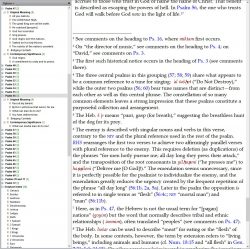
theWord Features:
- Verse popups
- Verse (span) synchronization
- Fully searchable text
- Footnotes
- Pages links
- Easy navigation of topics via topics tree display.
- Scripture Index
- Subject Index
- Special Text Colors
- Normal: Text
- Hyperlink: Glossary | Gen. 9:8
- Page Number: [pg 21>
- Greek Transliteration: archon
- Greek: εὐδόκησα
Note: Does not display commentary under Bible text.
Intermediate Hebrew Package
DESCRIPTION
Equipping the Saints – Discipleship Manual
Description
Russell (“Rusty”) L. Penney B.A., M.A„ Th.D. serves as Senior Pastor at Prairie Valley Baptist Church in Whitney, Texas, He is husband of Joann Squires Penney and father of Joseph, Hannah and Micah. Rusty and Joann have served the Lord as missionaries in Sophia, Bulgaria and Santa Cruz. Bolivia. In Santa Cruz, Rusty served as professor of theology, head of postgraduate studies, and later as President for 7 years at Hebron Theological Seminary. Rusty is the general editor of Overcoming the World Missions Crisis (Kregel, 2001), and contributor to six other books including the silver medallion award winner Dictionary of Premillennial Theology (Kregel, 1996).
“There is no greater need in the church in the United States today than the maturing of believers or, what the Bible calls, ‘making disciples’ (Matt. 28:18-20). Like a newborn babe, true spiritual growth is accompanied by a longing for spiritual food. This volume was written with that great need in mind. Equipping the Saints is ‘food for the soul’. If we lead someone to Christ, it is imperative to help them grow. The Christian life is properly seen as the process of God conforming us to the moral image of Christ (Rom. 8:28-30), and bringing us to ‘share in His holiness’ (Heb. 12:10). This volume gives the believer a foundational understanding of the Christian life. It is time for the church to abandon its unbiblical and debilitating church growth, strategies and return to what God called the church to do; making disciples by equipping the saints (Eph. 4:11-12).”
theWord Features:
- Verse popups
- Fully searchable text
- Footnotes
- Questions and Answers as .pdf files
- Easy navigation of topics via topics tree display.

Exploring the Bible: Nahum and Obadiah
Description
Nahum
Approximately one hundred years after Jonah preached to the citizens of Nineveh to turn ‘from their evil ways’ and escape imminent judgement, God commissioned Nahum to prophesy the city’s complete destruction. At the time of his ‘burden’, the Assyrian Empire was both strong and wealthy, yet Nahum prophesied that soon the entire kingdom would be crushed forever under the power of God’s wrath.
From the opening sentence: ‘The LORD is a jealous and avenging God filled with wrath’ to the poignant conclusion: ‘Nothing can heal your wound; your injury is fatal’, the fury, the omnipotence, the righteousness, the faithfulness of God are strikingly portrayed. Nineveh will fall, not because of the might of other nations, but because the Holy One of Israel ‘takes vengeance on his foes’.
Obadiah
Obadiah’s prophecy unveils God’s sovereignty over all nations and events, and gives an example of his direct intervention in the political and military affairs of human history. The Sovereign LORD does as he pleases with the powers of heaven and the peoples of the earth. No one can hold back his hand or say to him: ‘What have you done?’
It is the God of history who summons and equips the nations to destroy the Edomites for their arrogance and violence against their brother Jacob. It is the Judge and Ruler of mankind who gives the Edomites no hope of salvation. It is ‘the great King over all the earth’ who, in accordance with his everlasting covenant, delivers the house of Jacob from their enemies and reunites them with their northern brothers.
Both prophecies are a revelation of God’s character and his moral government of the world – a revelation that contains a message of hope, comfort and encouragement for every Christian: ‘THE LORD REIGNS FOR EVER’! It matters not how many nations oppose his rule or oppress his people; it makes no difference how many spiritual forces of evil ally themselves for his dethronement, for the Lord’s purposes will prevail. All that he has promised will be fulfilled. He is in control. His dominion is an eternal dominion
An excellent verse by verse (almost word by word) commentary, based on NIV. Helpfully trustworthy. – Clifford Pond (Evangelicals Now)
A useful guide. This volume is certainly recommended for those preparing messages and for Bible students. The format of the book and the easy style of Mr Shenton’s writing make it readable and accessible to anyone wanting to understand this less-well known Old Testament book. – Martin Leech (Grace Magazine)
theWord Features:
- Verse popups
- Verse synchronization
- Fully searchable text
- Commentary link popup can be set in Bible view.
- Easy navigation of topics via topics tree display.
Note: Does not display commentary under Bible text.

Exploring the Bible: Obadiah
Description
It is said that ‘the best things come in small packages’ and certainly the book of Obadiah bears that out. Weighing in at just twenty-one verses, it is packed full with good things: rich theology, powerful imagery, unsettling challenges to our thinking and living, and huge promise for the triumph of God’s purposes. Obadiah uses key biblical themes such as mountains and brothers, the kingdom of God and the day of the Lord; he challenges his hearers and readers by what he says about malice, pride and complacency; he encourages God’s people with the promise of their sure inheritance; and he raises wider matters of justice, spiritual warfare and the international spread of the kingdom of God. Furthermore, like all the prophets, Obadiah over and over points us to the kindness and justice of the Lord Jesus Christ and to the greatness of what he has done for us.
theWord Features:
- Verse popups
- Fully searchable text
- Footnotes
- Easy navigation of topics via topics tree display.
Note: No verse synchronization.
Exploring the Bible: Habakkuk
Description
Why does a righteous and sovereign God tolerate wrongdoing? How are the divine attributes reconciled with the triumph of the godless? Why do the wicked prosper and rule over the righteous? Why does God raise up ‘ruthless and impetuous’ nations to execute judgement on his own people? These are some of the questions that perplexed Habakkuk, challenged his faith and caused him to question God’s government of the world. And these are some of the questions that still perplex Christians today. Tim Shenton helpfully addresses these points in a clear and substantial exposition of the text of Habakkuk.
I’m very glad this concise gem is on my shelf – it aims to explain each verse of the much-neglected book of Habakkuk and succeeds with superb clarity. This book would prove useful to most readers, since it lends itself to being used as a succinct, non-technical reference to the meaning of this unusual dialogue between God and his puzzled prophet. The author makes many salient links with the rest of Scripture, and excels in opening our eyes to the pictures being painted by the rich word-imagery. Look here for a commentary that combines great brevity with attention to each verse. The message of a just and sovereign God who will ‘in wrath remember mercy’ rings loud and clear, and will bring comfort and strength to many. – Ben Epps (Evangelical Times)
It is an interesting, informative and well written commentary. – Peter Murcott
theWord Features:
- Verse popups
- Verse synchronization
- Fully searchable text
- Commentary link popup can be set in Bible view.
- Easy navigation of topics via topics tree display.
Note: Does not display commentary under Bible text.
Exploring the Bible: Ruth
Description
The Book of Ruth is not the longest of the books of the Bible—it contains only four chapters of text. Yet its significance is immense. Ruth was a young woman from Moab, who came to be part of the covenant community of God’s people. Consequently, she is one of only a handful of women mentioned in the genealogy of Christ: she begins as a stranger to God’s people, and ends up as a mother of God’s Messiah.
This remarkable story is both an example and an illustration of how sinners like us can become partakers of God’s covenant salvation. In Ruth’s story, God’s grace worked in her life, bringing her from a place where she was far away from God, into an inheritance of covenant blessing. And just as she found her rest and satisfaction in her marriage to her redeemer, Boaz, so we find ours through union with the great Redeemer, the Lord Jesus Christ. Read the story of Ruth—and let the power of God’s amazing grace grip your soul!
theWord Features:
- Verse popups
- Verse synchronization
- Fully searchable text
- Commentary link popup can be set in Bible view.
- Easy navigation of topics via topics tree display.
Note: Does not display commentary under Bible text.

Exploring the Bible: 1 and 2 Thessalonians
Description
Do you enjoy reading other people’s correspondence, especially the letters of famous people? This book explores two of the great Apostle Paul’s earliest epistles, those to the Thessalonian church. In them he bares his heart to reveal his love for those he led to Christ, and his concern for their welfare, as he provides instructions to new Christians. We also learn something of his travelling companions, his hopes and fears, his personal concerns, his passionate concern for the truth, and much about the Return of the Lord Jesus Christ. Read this book to learn how to live the Christian life, how to avoid false doctrine, and how the Thessalonians’ zeal and the Apostle’s teaching can be applied to your own life.
Overview of the Book inside theWord
theWord Features:
- Verse popups
- Verse synchronization
- Fully searchable text
- Commentary link popup can be set in Bible view.
- Footnotes
- Easy navigation of topics via topics tree display.
Note: Does not display commentary under Bible text.
New International Commentary: The Books of Nahum, Habakkuk and Zephaniah
PRODUCT HIGHLIGHTS:
- Verse-by-verse commentary
- In-depth discussion of textual and critical matters
- Introductions to each book’s authorship, date, purpose, structure, and theology
- Detailed bibliography
DESCRIPTION
The close-knit bond between prophecy and history, according to O. Palmer Robertson, becomes particularly clear through the study of Nahum, Habakkuk, and Zephaniah. As the historical context of their messages is explored, it becomes ever more apparent that biblical history—in addition to providing the context for prophecy—actually embodies and functions as prophecy. The events that occurred to Judah and its neighbors spoke in anticipation of world-shaking circumstances that were yet to come.
In this commentary Robertson combines the insights of biblical theology with a keen awareness of the age in which we live. After first dealing with the relevant background issues of Nahum, Habakkuk, and Zephaniah—redemptive-historical setting, theological perspective, date and authorship, and so on—Robertson applies the care and precision of an exegete and the concern of a pastor to his verse-by-verse exposition of each book. The result is a relevant confrontation with the ancient call to repentance and faith—a confrontation greatly needed in today’s world.
….
New International Commentary: Song of Songs
PRODUCT HIGHLIGHTS:
- Verse-by-verse commentary
- In-depth discussion of textual and critical matters
- Introductions to each book’s authorship, date, purpose, structure, and theology
- Detailed bibliography
DESCRIPTION
Relationships are a wonderful, mysterious, often elusive, sometimes painful part of the human experience. The most intimate of all human relationships, according to the Bible, is that between a husband and a wife. It is no surprise, therefore, that there is a book of the Bible, the Song of Songs, that focuses on this relationship. What is surprising is how little attention is given to the Song of Songs by scholars, by the church, and by readers of the Bible. With this volume Tremper Longman III unpacks for modern people what this ancient love poem says about the male-female relationship—and, by analogy, about God’s love for his people.
Longman’s superb study begins with a thorough introduction to the Song of Songs and its background. Longman discusses the book’s title, authorship, date, literary style, language, structure, cultural milieu, and theological content. He also canvasses the long history of interpretation of the Song of Songs, a history too often characterized by repression of the text. In the commentary itself, Longman structures the Song of Songs according to its twenty-three poetic units and explains its message verse by verse. The exposition is made clearer by Longman’s adoption of an anthropological approach to the text and by his frequent comparisons of the Song of Songs with other ancient Near Eastern literature.
Learned yet highly accessible, innovative yet fully informed by past scholarship, this commentary shows the beautiful Song of Songs to be a timeless celebration of human love and sexuality.
….
New International Commentary: The Book of Job
PRODUCT HIGHLIGHTS:
- Verse-by-verse commentary
- In-depth discussion of textual and critical matters
- Introductions to each book’s authorship, date, purpose, structure, and theology
- Detailed bibliography
DESCRIPTION
This commentary on Job follows in the tradition of the NICOT series by providing an up-to-date evangelical commentary based on thorough scholarship. John E. Hartley deals carefully with this book whose language, text, and theology are not only among the most intriguing in the Old Testament but also among the most difficult to grasp.
Hartley begins with a thorough introduction that treats matters of title and place in the canon, text, language, parallel literature in the ancient Near East and Old Testament, author, date, literary features, poetry, structure and genres, and message. In the commentary proper, Hartley uses his knowledge of the cognate ancient Near Eastern languages and displays extensive research in offering a detailed, verse-by-verse exposition that relates each section of the text to the overall message of the book.
….
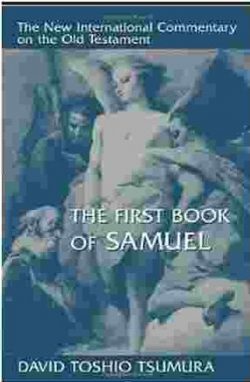
New International Commentary: The First Book of Samuel
PRODUCT HIGHLIGHTS:
- Verse-by-verse commentary
- In-depth discussion of textual and critical matters
- Introductions to each book’s authorship, date, purpose, structure, and theology
- Detailed bibliography
DESCRIPTION
David and Goliath, the call of Samuel, the witch of Endor, David and Bathsheba—such biblical stories are well known. But the books of 1 and 2 Samuel, where they are recorded, are among the most difficult books in the Bible. The Hebrew text is widely considered corrupt and sometimes even unintelligible. The social and religious customs are strange and seem to diverge from the tradition of Moses. In this first part of an ambitious two-volume commentary on the books of Samuel, David Toshio Tsumura sheds considerable light on the background of 1 Samuel, looking carefully at the Philistine and Canaanite cultures, as he untangles the difficult Hebrew text.
….
Advance Hebrew Package
DESCRIPTION
Basic Hebrew Package
DESCRIPTION
Package: Jon Courson’s Application NT & OT Commentaries
In a unique blend of pertinent information and inspiration, Jon Courson sheds light in a fresh way on the timeless truths of God’s Word. He has amassed a wealth of interesting topics in a very readable and comfortable expositional style. He combines thorough and comprehensive teaching of every paragraph of Scripture in the New Testament along with practical in-depth topical studies.
He has a unique ability to articulate the Bible’s truths with insight, focusing on valid life applications. This commentary is very useful for laymen as well as ministers of the gospel.
About the Author:
Jon Courson is one of the most exhilarating ministers today. In his unique style, Pastor Jon has written an Old Testament commentary that is a scholarly work, but is easy to read and makes practical applications for us in our daily walk with Jesus. This volume begins Jon Courson’s verse-by-verse commentary on the Old Testament. It is your opportunity to study the Bible with one of the great Bible teachers of our time.
See the excellent review below by DoctorDaveT
$149.97Original price was: $149.97.$104.98Current price is: $104.98. Add to cart