
Give Thanks to God

Praise the Lord for His wonderous blessings.
We praise the Lord for you. Thank you for giving to theWord.
This sale is during the month of November!
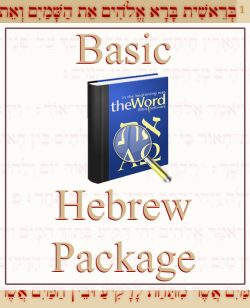
Basic Hebrew Package
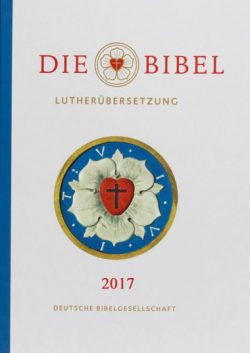
Lutherbibel 2017 mit Apokryphen
Die Lutherbibel 2017 ist der zum Gebrauch empfohlene Bibeltext der Evangelischen Kirche in Deutschland (EKD). Die klassische deutsche Bibelübersetzung ist nach wie vor die in Deutschland am weitesten verbreitete.
theWord Besonderheiten in der Bibel enthalten:
- Popup-Fußnoten (Umschalttaste F)
- Vers pro Zeile und Gedicht- / Absatzformat (Umschalttaste P)
- Überschriften (Umschalttaste H)
- In den Bibeltext eingebaute Querverweise. (Umschalttaste X)
- Verbunden mit dem zugehörigen Hybrid-Apokryphen-Modul über Vers-Synchronisation.
theWord special features included in Bible:
- Popup footnotes (toggle key F)
- Verse per line and Poetry/Paragraph format (toggle key P)
- Headings (toggle key H)
- Cross-references built into Bible text. (toggle key X)
- Linked to accompanying Hybrid Apocrypha Module via verse synchronization.


Vine’s Complete Expository Dictionary of Old and New Testament Words with Topical Index
Special Note there really are two books in one here, Vine’s Complete Expository Dictionary and the Topical Index.
(In another place this is sold as two separate volumns.)
DESCRIPTION
This classic word study resource allows you to study the meaning of biblical words in the original languages without spending years learning Greek or Hebrew.
A great resource for students, seasoned pastors, and anyone who enjoys biblical word studies–even if they have little to no formal training in Hebrew or Greek. Vine’s Complete Expository Dictionary:
- Contains over 6,000 key biblical words, describing word frequency, usage, and meaning as fully as possible.
- Serves as a dictionary, commentary, and comprehensive topical concordance all in one volume.
- Includes the widely used numbering system found in The New Strong’s Exhaustive Concordance of the Bible.
- Contains an introduction describing the history of the languages in which the Bible was written and other orientating data on how the modern Bible came about.
This classic reference tool has helped thousands dig deeper into the meaning of the biblical text and will enlighten Bible students to the riches of God’s truth in Scripture, opening up God’s word as it has never been opened before.
theWord Features:
- Verse popups
- Link words. (hover+control key to show popup/click word) See SORROW, TRAVAIL.¶ Cf. odino, “to travail in birth.”
- Fully searchable text
- Easy navigation of topics via topics tree display.
- Page Number: [pg 21>
- Special Text Colors
- Normal: Text
- Hyperlink: Glossary | Gen. 9:8
- Strong’s Numbers: G12
- Greek Transliteration: archon
- Greek: εὐδόκησα
- Hebrew Transliteration: ger
- Hebrew: א
Biblia Hebraica Stuttgartensia 5th Revision (text only)
Biblia Hebraica Stuttgartensia (BHS) is known to be the definitive edition of the Hebrew Bible. It is widely regarded as a reliable edition of the Hebrew and Aramaic scriptures and is the most widely used original-language edition among scholars.
theWord Features:
- Note (Lemma and Morphology not available in this version, text only)
- The text is pointed Hebrew. To toggle on/off pointings use the V key.
- The text contains both Ketiv and Qere variants. Ketiv variants are displayed in brown color, Qere in blue. Qere variants can be toggled on/off with the R key.
Package: Wuest Word Studies & New Testament Expanded Translation
Kenneth Wuest was a long time Greek teacher at Moody Bible Institute back in 1920’s, ‘30’s, 40’s, and 50’s. (Yeah – he taught almost 30 years). At that time, Moody was one of the leaders in both dispensationalism and fundamentalism.
When he started writing, it was his intent to bring the nuance of the Greek language out for the non-Greek speaking English reader. This reviewer thinks that he hits that mark pretty well.
His first book was entitled Treasures from the Greek New Testament for the English Reader. This was a collection of twelve essays (which became twelve chapters – imagine that!) that are topical. His second book was a commentary on 1Peter entitled First Peter in the Greek New Testament for the English Reader (do you see a common theme?). It is pleasantly verse by verse.
Over the course of his writing career, he wrote commentaries on Mark, Romans, Galatians, Ephesians, Philippians, Colossians, 1Timothy, 2Timothy, Hebrews, 1Peter, 2Peter, 1John, 2John, 3John, & Jude. [If you’re keeping score at home, that means he missed Matthew, Luke, John, Acts, 1Corinthians, 2Corinthians, 1Thessalonians, 2Thessalonians, Titus, Philemon, James, and Revelation.]
In addition to his commentaries, he also wrote six topical books – all revolving around word studies in the Greek New Testament.
 Theological Bias
I’ve already noted that Wuest is both dispensational and evangelical in his doctrinal outlook. I also mentioned that in the era he wrote, Moody was considered a fundamentalist institution. That’s good.
I would like to point out that Wuest was not a KJV lover. He served on the translation team that produced the NASB. He actually published an entire expanded translation of the New Testament. But as you might think with his NASB background, his own translation is based on the Nestle Greek text, and not the Textus Receptus (which is the text behind the KJV). Personal kudos for rejecting the ASV; but he was one of the early proponents within the fundamentalist movement to depart from the KJV. He makes no apologies for correcting “error” in the KJV. For this reason alone, I don’t recommend this resource to anyone not grounded in bibliology.
Entry Length
Again, please note that his NT commentary covers only 15 books of the NT (of 27 total books); but because he left off four of the five longest books in the NT, his commentary actually covers far less than 50% of it. However, where he does have comments, they are more than sufficient. For me, they are right in the sweet spot between “sufficient” and “verbose” (I guess I like ‘em a little longer than sufficient…).
I like to provide an example from Rom 3:24 in these reviews. So here is Wuest on Rom 3:24 –
QUOTATION BEGINS – “Freely” is dōrean [δωρεαν], “freely, for naught, gratis, gratuitously, without just cause.” “Grace” is Charis [Χαρις] which signified in classical authors a favor done out of the spontaneous generosity of the heart without any expectation of return. Of course, this favor was always done to one’s friend, never to an enemy. But when Charis [Χαρις] comes into the New Testament, it takes an infinite leap forward, for the favor God did at Calvary was for those who hated Him. It was a favor clone out of the spontaneous generosity of God’s heart of love with no expectation of return. There are no strings attached to grace. It is given dōrean [δωρεαν], gratuitously. Of course, grace in the form of salvation is so adjusted that the one who receives it, turns from sin to serve the living God and live a holy life, for grace includes not only the bestowal of a righteousness, but the inward transformation consisting of the power of indwelling sin broken and the divine nature implanted, which liberates the believer from the compelling power of sin and makes him hate sin, love holiness, and gives him the power to obey the Word of God.
This grace shown the believing sinner is made possible, Paul says through the redemption which is in Christ Jesus. “Redemption” is apolutrōseōs [ἀπολυτρωσεως], the verbal form of which is apolutroō [ἀπολυτροω], “to redeem by paying the lutron [λυτρον] price.” There are three words translated “redeem,” agorazō [ἀγοραζω], “to buy in the slave market” (1 Cor. 6:20; 7:23, 2 Pet. 2:1), Christ bought us in this slave market of sin by His own blood; believers are His bondslaves; exagorazō [ἐξαγοραζω], “to buy out of the slave market” (Gal. 3:13; 4:5), the redeemed are never to be put up for sale in any slave market again; and litroō [λιτροω], “to set free by paying a price” (Tit. 2:14, 1 Pet. 1:18): the believer is set free from sin and free to live a life pleasing to God in the power of the Holy Spirit. The redemption price, the precious blood of Jesus, makes it possible for a righteous God to justify a believing sinner on the basis of justice satisfied. This Paul proceeds to explain in the next two verses. – QUOTATION ENDS
This might be a little longer than his typical comment, but you get the flavor here of how he writes.
Language Skills Needed
Did you remember the ending phrase in his titles? “…for the English Reader.” While a little bit of Greek is helpful (he does use words like “aorist,” “imperfect,” “middle voice,” and even “pluperfect,”), he actually does a pretty good job of explaining the importance of each of those words in his exposition. So Greek is helpful, yes, but not essential in profiting from this work. HOWEVER: keep reading for more info on the necessity of language skills.
Academic Target
Wuest and I are going to disagree on this. His work; my review. Wuest would tell you that his target was the Bible disciple who wanted to know more about his English Bible by expanding all of the nuances of the Greek into English. Fair enough. I would tell you that Wuest does not like the KJV, believes there to be translation errors in it, and those errors are due to the KJV coming from a corrupt Greek text. Hmmm. I have a problem with that.
Some of his comments are based on the Nestle text, which differs regularly from the TR. A knowledge of Greek will be very helpful – especially to those expositors who, like me, use the KJV/TR. When he makes an argument based on the Nestle text, it will be very helpful to know what the TR instead says. So due to his theological bias, I don’t recommend this resource to anyone who is not clear in his stance on bibliology. I have it tagged above as “Pastoral” for this reason.
And Then There’s All This Topical Content
Let’s not forget that he wrote six topical books, totaling almost another 100 chapters. From a personal perspective, this will be a harder tool to use (how are you going to find his interesting comments on “crowns” in a topical presentation?). But the writing is just as good, even though it may be hard to find.
Contents Conclusion
I like Wuest very much, as a matter of fact. It is too bad he did not finish all of the NT Books. I wish he had. And with the above mentioned foibles in mind, I recommend the use of his writing to you. This is a DDT approved Good Resource.
Advanced Greek Package
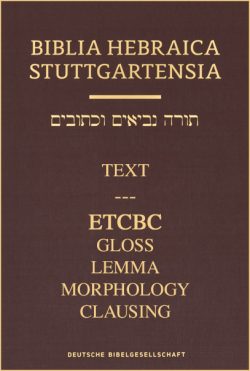
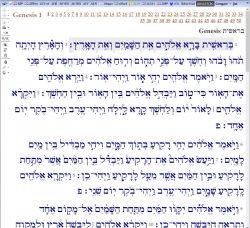
Biblia Hebraica Stuttgartensia 5th Revision + Text, Lemma, Morphology, Clause
BHS5 Description
Biblia Hebraica Stuttgartensia (BHS) is known to be the definitive edition of the Hebrew Bible. It is widely regarded as a reliable edition of the Hebrew and Aramaic scriptures and is the most widely used original-language edition among scholars.
ETCBC (WIVU) Description
The ETCBC data is comprised of the text of the BHS5. It provides Lemmas which work in sync with our Hebrew dictionaries. Morphology is provided and explained via the morphology dictionary. An English gloss is provided for a quick overview of a word with pronouns in color. A transliteration is provided for those new to learning Hebrew.
Sentence markers indicate where a sentence begins. Clause markers indicate a start to a clause while also explaining the clause for example: “Type: NominalDomain: NarrativeKind: Nominal”. Likewise with Phrase markers indication of start and explanation is given for example: “Type: NominalDetermination: determinedFunction: Subject” all of these markers are toggled via the F key.
The text contains both Ketiv and Qere variants. Ketiv variants are displayed in brown color, Qere in blue. Qere variants can be toggled on/off with the R key.
Lastly the pointings can be toggled on and off using the V key for those who are interested in reading the consonants with out the distraction of the points.
theWord Features:
- BHS5 Text
- Lemma
- Morphology
- English gloss (on hover over word)
- Transliteration (on hover over word)
- Sentences markers.
- Clauses markers with explanation
- Phrases markers with explanation
- Sentence/Clauses/Phrases. To toggle on/off these use the F key.
- The text is pointed Hebrew. To toggle on/off pointings use the V key.
- The text contains both Ketiv and Qere variants. Ketiv variants are displayed in brown color, Qere in blue. Qere variants can be toggled on/off with the R key.
- Morphology Dictionary (in book view)
⦁ Morphology for the BHS5/ETCBC
⦁ Fully searchable text
⦁ Easy navigation of topics via topics tree display.
Package: Jon Courson’s Application NT & OT Commentaries
In a unique blend of pertinent information and inspiration, Jon Courson sheds light in a fresh way on the timeless truths of God’s Word. He has amassed a wealth of interesting topics in a very readable and comfortable expositional style. He combines thorough and comprehensive teaching of every paragraph of Scripture in the New Testament along with practical in-depth topical studies.
He has a unique ability to articulate the Bible’s truths with insight, focusing on valid life applications. This commentary is very useful for laymen as well as ministers of the gospel.
About the Author:
Jon Courson is one of the most exhilarating ministers today. In his unique style, Pastor Jon has written an Old Testament commentary that is a scholarly work, but is easy to read and makes practical applications for us in our daily walk with Jesus. This volume begins Jon Courson’s verse-by-verse commentary on the Old Testament. It is your opportunity to study the Bible with one of the great Bible teachers of our time.
See the excellent review below by DoctorDaveT
$149.97Original price was: $149.97.$104.98Current price is: $104.98. Add to cart