
New International Commentary: The Book of Isaiah, Chapters 1–39
PRODUCT HIGHLIGHTS:
- Verse-by-verse commentary
- In-depth discussion of textual and critical matters
- Introductions to each book’s authorship, date, purpose, structure, and theology
- Detailed bibliography
DESCRIPTION
The first of John N. Oswalt’s two-part study of the book of Isaiah for the NICOT series, this commentary on chapters 1–39 combines theological acumen, literary sensitivity, philological expertise, and historical knowledge to present a faithful and accurate reading of one of the Old Testament’s most important books.
In the introduction to this work, Oswalt considers Isaiah’s background, unity of composition, date and authorship, canonicity, Hebrew text, theology, and problems of interpretation, and he offers a select bibliography for further research. Oswalt also provides substantial discussions of several issues crucial to the book of Isaiah. He notes, for example, that scholars often divide Isaiah into three divisions, with chapters 1–39 addressing Isaiah’s contemporaries in the eighth century b.c., chapters 40–55 presupposing the exile of the sixth century, and chapters 56–66 presupposing the eventual return from exile. While taking this scholarship into account Oswalt defends the unity of the prophetic book and argues convincingly that the whole book can be attributed to the Isaiah of the eighth century.
The commentary proper, based on Oswalt’s own translation of the Hebrew text, provides pastors, scholars, and students with a lucid interpretation of the book of Isaiah in its ancient context as well as an exposition of its message for today.
….
New International Commentary: The Book of Proverbs, Chapters 15–31
PRODUCT HIGHLIGHTS:
- Verse-by-verse commentary
- In-depth discussion of textual and critical matters
- Introductions to each book’s authorship, date, purpose, structure, and theology
- Detailed bibliography
DESCRIPTION
For the modern mind, the book’s cultural setting seems far removed from the twenty-first century. Proverbs puts a high priority on tradition and age, while the modern mind prizes change and youth. For Christians, Proverbs seems irrelevant. For the translator, Proverbs defies translations.
In the second part of his two-volume commentary, Waltke confronts these exegetical and interpretive challenges head on. This historico-grammatical commentary on Proverbs uncovers the profound philosophical and theological insights of this ancient book. Waltke helps readers understand the poetics used in its composition, and challenges modern prejudices toward the book.
….
New International Commentary: The Book of Proverbs, Chapters 1–15
PRODUCT HIGHLIGHTS:
- Verse-by-verse commentary
- In-depth discussion of textual and critical matters
- Introductions to each book’s authorship, date, purpose, structure, and theology
- Detailed bibliography
DESCRIPTION
Over twenty-five years in the making, this much-anticipated commentary promises to be the standard study of Proverbs for years to come. Written by eminent Old Testament scholar Bruce Waltke, this two-volume commentary is unquestionably the most comprehensive work on Proverbs available.
Grounded in the literary criticism that has so strengthened biblical interpretation, Waltke’s commentary on Proverbs demonstrates the profound, ongoing relevance of this Old Testament book for Christian faith and life. A thorough introduction addresses such issues as text and versions, structure, authorship, and theology. The detailed commentary itself explains and elucidates Proverbs as “theological literature.” Waltke’s highly readable style—evident even in his original translation of the Hebrew text—makes his scholarly work accessible to teachers, pastors, Bible students, and general readers alike.
All the People in the Bible
DESCRIPTION
“More than any other book, the Bible offers an amazing collection of fascinating characters ranging from the holiest of the holy to some of the most depraved scoundrels imaginable. Many are mentioned only in passing, yet history and archaeology can often fill in the blanks and flesh them out as exciting human beings. For this reason we have in many cases been able to tell much more about them than the Bible alone reveals.”
— Richard R. Losch (from the preface)
A comprehensive gathering of persons found in the Bible, including the Apocrypha, All the People in the Bible really delivers on its title: literally all of the Bible’s characters appear in this fascinating reference work. From the first article on Aaron to the final entry on Zophar, Richard Losch details each person in a lively narrative style.
The bulk of the book consists of Losch’s A–Z articles covering the familiar and the not-so-familiar figures in Scripture. Names of people who are found only in genealogies or who had no significant effect on history are included solely in the alphabetical listing starting on page 452. That listing, “All the People in the Bible and Apocrypha,” includes pronunciations, brief identifications, and biblical references. Persons covered in greater detail in the main part of the book are identified in bold print.
Losch’s intriguing look at all the people in the Bible is anything but a dry reference work. This is a book to dip into and enjoy over and over.
theWord Features:
- Dictionary lookup and A-Z topic-tree navigation
- Fully searchable biographical entries
- Aliases and internal cross-references
- Bible-reference links and verse popups
- Footnotes with exact single-note popups
- Greek, Hebrew, and transliterated name forms
- Images and tables
- Print-page markers and bookmarks
- Pgs: 586
- Special Text Colors
- Normal: Text
-
Dictionary link: Peter
- Greek: Πέτρος
- Hebrew: שמעון
- Transliteration: Kephah
-
Page Number: [p1>
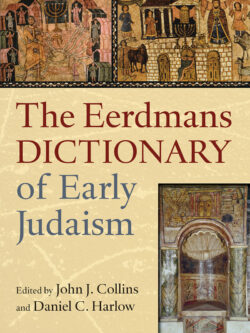
The Eerdmans Dictionary of Early Judaism
DESCRIPTION
The Dictionary of Early Judaism is the first reference work devoted exclusively to Second Temple Judaism (fourth century b.c.e. through second century c.e.).
The first section of this substantive and incredible work contains thirteen major essays that attempt to synthesize major aspects of Judaism in the period between Alexander and Hadrian. The second — and significantly longer — section offers 520 entries arranged alphabetically. Many of these entries have cross-references and all have select bibliographies. Equal attention is given to literary and nonliterary (i.e. archaeological and epigraphic) evidence and New Testament writings are included as evidence for Judaism in the first century c.e. Several entries also give pertinent information on the Hebrew Bible.
The Dictionary of Early Judaism is intended to not only meet the needs of scholars and students — at which it succeeds admirably — but also to provide accessible information for the general reader. It is ecumenical and international in character, bringing together nearly 270 authors from as many as twenty countries and including Jews, Christians, and scholars of no religious affiliation.
theWord Features:
- Dictionary lookup and A-Z topic-tree navigation
- Fully searchable articles, bibliographies, and author lines
- Scripture-reference popups and Bible links
- Internal cross-references
- Pgs: 1406
- Maps, illustrations, and tables
- Special Text Colors
- Normal: Text
-
Dictionary link: Apocalypticism
-
Scripture: Genesis 3
-
Page Number: [p1>
-
Hebrew transliteration: halakah
-
Greek transliteration: apokalypsis
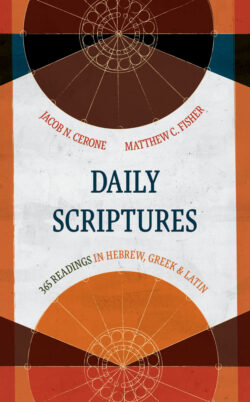
Daily Scriptures – 365 Readings in Hebrew, Greek, and Latin
DESCRIPTION
Pastors, students, and scholars not in the midst of language coursework often find it difficult to maintain their knowledge of biblical languages like Hebrew, Greek, and Latin. For those looking to do so in a meaningful but manageable way, this devotional offers 365 short daily readings, pairing an Old Testament passage in Hebrew and Greek with a corresponding New Testament passage in Greek and Latin. Lexical notes in English are included as a way of facilitating a comfortable reading experience that will build one’s confidence and ability in reading the Hebrew Bible, the Septuagint, the Greek New Testament, and the Latin Vulgate.
“Our goal and our purpose for this volume is to keep you in the languages, keep you fed in the Word, and hopefully spark a desire to explore more deeply how the New Testament at its core relies upon the Old Testament Scriptures.”
— from the introduction
theWord Features:
-
Devotional 365-day synchronization
-
Date and topic-tree navigation
-
Verse popups and Bible links
-
Fully searchable reading and note text
-
Exact single-footnote popups
-
Hebrew, Greek, and Latin source text
-
Native tables and images
-
Special Text Colors
-
Normal: Text
-
Bible link: Psalm 110:1
-
Greek: Εἶπεν ὁ κύριος τῷ κυρίῳ μου
-
Hebrew: נְאֻם יְהוָה לַאדֹנִי
-
Latin: qui cum sit splendor gloriae
-
Introductory Study Package
DESCRIPTION
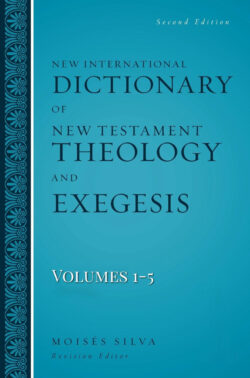
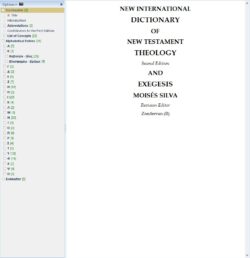
New International Dictionary of New Testament Theology and Exegesis Set
DESCRIPTION
A standard and widely-used reference work for nearly 40 years, the New International Dictionary of New Testament Theology and Exegesis has been thoroughly revised and updated to aid today’s pastors, students, scholars, and teachers in their study of the New Testament.
Offering a wealth of background and information on the meaning of Greek words in the New Testament—as well as related usage in classical Greek sources, the Septuagint, Jewish literature, and more—this important tool offers the following features:
• Alphabetical arrangement according to Greek words instead of previous order according to English topics; this ensures that individual Greek words are not discussed in isolation from one another and are easy to access
• Expanded to include additional Greek words and concepts not covered in the original work, NIDNTTE includes nearly 800 entries covering over 3,000 Greek words
• Discussions have been revised to be in line with modern scholarship and bibliographies are updated
• Corrections have been made to inconsistencies and omissions in earlier versions
• Updated and added consistency to include—for every entry—all necessary background information from classical Greek, the LXX, and Jewish literature.
• A helpful semantic domain index now directs the reader to all of the Greek words that have something to do with a particular English word. For example, under the English word “Anger, Wrath,” there is a list of thirteen Greek words that are related to that topic.
• Significant changes have been made in the presentation and discussion of linguistic details
• and much more!
theWord Features:
- Verse popups
- Fully searchable text
- Footnotes
- Easy navigation of topics via topics tree display.
- Cross-links to NIDOTTE, TDOT and TDNT.
- Special Text Colors
- Normal: Text
- Hyperlink: Glossary | Gen. 9:8
- G/K Numbering G325
Note: The codes H## and G## used in this module refer to the Goodrick–Kohlenberger (G/K) numbering system, not to Strong’s Concordance numbers. This follows the publisher’s data. Strong to Goodrick-Kohlenberger Number Conversion Chart at the end of the resource. - Greek: πατήρ
- Greek Transliteration: pater
- Hebrew: אֱלֹהִים
- Hebrew Transliteration: ʾelōhîm
Package: NIV Application Commentary: New Testament
Description
The NIV Application Commentary helps you communicate and apply biblical text effectively in today’s context.
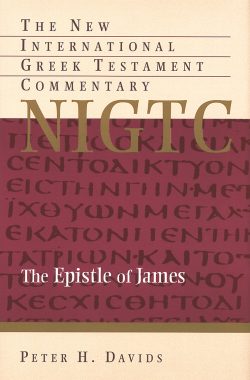
NIGTC: James
DESCRIPTION
Series: The New International Greek Testament Commentary (NIGTC)
Peter H. Davids’s study on the Epistle of James is a contribution to The New International Greek Testament Commentary, a series based on the UBS Greek New Testament, which attempts to provide thorough exegesis of the text that is sensitive to theological themes as well as to the details of the historical, linguistic, and textual context.
Author:
Peter H. Davids is professor of biblical theology at St.Stephen’s University, St. Stephen, New Brunswick. He is also the coeditor of Dictionary of the Later NewTestament and Its Developments.
theWord Features:
-
Fully searchable text
-
Always-available topic tree (table of contents)
-
Bible-reference links and verse popups
-
Internal cross-references
-
Native tables
-
Resource images
-
Print-page markers
- Special Text Colors
- Normal: Text
-
Internal link: Abbreviations and Bibliography
-
Bible reference: James 1:1
- Greek: πίστις
-
Page Number: [p1>
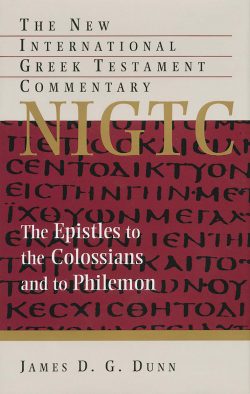
NIGTC: Colossians & Philemon
DESCRIPTION
Series: The New International Greek Testament Commentary (NIGTC)
Paul’s Epistle to the Colossians merits detailed study for at least two reasons. First, it provides an unexpectedly interesting window into the character of Christianity in Asia Minor in the second half of the first century. With the information it gives about the religious tensions within which emergent Christianity was caught up, not least those between Christianity and diaspora Judaism, we begin to gain more insight into the influences and factors that shaped the transition from apostolic to subapostolic Christianity in the region. Second, Colossians represents a crucial stage in the development of Pauline theology itself. Whether it was written at the end of Paul’s life or soon after his death, it indicates how Pauline theology retained its own vital character and did not die with Paul.
In this volume in the celebrated New International Greek Testament Commentary, James D. G. Dunn, author of numerous well-received works on the historical origin and theological interpretation of the New Testament, provides detailed expositions of the text of Paul’s letters to the Colossians and to Philemon.
Dunn examines each of these letters within the context of the Jewish and Hellenistic cultures in the first century, and discusses the place of Colossians and Philemon in the relationship between the Pauline mission and the early churches that received these letters. Particular stress is also placed on the role of faith in Jesus Christ within and over against Judaism and on the counsel of these two important letters with regard to the shaping of human relationships in the community of faith.
Author:
James D. G. Dunn (1939–2020) was a renowned New Testament scholar and the longtime Lightfoot Professor of Divinity at Durham University. His numerous books include The Theology of Paul the Apostle, Jesus according to the New Testament, and the magisterial Christianity in the Making trilogy.
theWord Features:
- Fully searchable text
- Easy navigation through the topic tree
- Bible-verse synchronization
- Bible-reference links and verse popups
- Internal cross-references
- Footnote popups with topic-end notes and backlinks
- Native tables
- Resource images
- Print-page markers and bookmarks
- Apocrypha reference passages
- Added passage text: World English Bible British Edition (public domain)
- Reference passage: Jdt. 4:9
- Pgs: 406
- Special Text Colors
- Normal: Text
- Internal link: Abbreviations
- Bible reference: Col. 1:1
- Greek: πίστις
- Transliteration: qibbel
- Latin: primatum habere
- Page Number: [p1>

Premium Feature: Semantics Helper
Description:
- theWord Version: 7.7.1.1613 or newer
- Bible View – Semantic Rule Highlights: Bibles with Morphology
- Bible View Options: Use Pre-built rules and add your own.
- Pre-built rules
- Build your own: Verbs, Nouns, using the Simple Builder Or more complex using morph-code directly like *-NSM for Articles and Nouns that match.
- Rules can Hover On as you move the mouse around or be Always On.
- Rules can be tied to the selected verse or the chapter (Example: Verbs throughout).
- .morphx files
- Used for Building custom rules in the Semantics Helper
- Available through Add Titles in the MorphX section required for this feature.
- BSB-MorphX for BSBHebInt, BSBGrkInt, BSBRevInt
- BHS5-ETCBC-MorphX for BHS5/ETCBC
- LXX-PMAC-MorphX for lxx
- RMAC-MorphX for NA28, BYZa, SBLGNT, etc.
- WHMC-MorphX for WHM 4.22
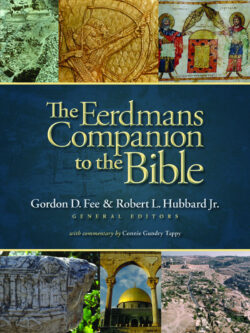
The Eerdmans Companion to the Bible
DESCRIPTION
A quality guidebook that opens up new vistas and insights into the whole Bible
Marked by a broad evangelical perspective, up-to-date research, and contributions from respected biblical scholars, The Eerdmans Companion to the Bible offers a reliable and illuminating guide to the entire Bible. Whether readers find the Bible familiar or foreign, they will appreciate the Companion’s informative articles and its commentary by Connie Gundry Tappy on all of the Old and New Testament books. This comprehensive reference work promises to make the Word of God come alive as never before.
- Compiled by some of the foremost biblical scholars in the world today
- New articles by sixty expert authors on many pertinent biblical topics
- Well-written background information and commentary on every book of the Bible
- Illustrated with maps, photos, and charts throughout
theWord Features:
-
Fully searchable text
-
Chapter, section, and indexed-entry navigation via the topic tree
-
Internal cross-references
-
Pgs: 834
-
Maps, illustrations, and tables
- Special Text Colors
- Normal: Text
- Internal link: Lands of the Bible
- Hebrew: א
- Transliteration: aleph
- Latin: testamentum
- Page Number: [p210>



theWord-App Premium Subscription (Beta)
theWord-App Premium Features
Includes every feature available in theWord-App Basic and Advanced, plus:
- Book Search
- Create, edit, order, import, and export Book View module sets
- Bible View Interlinear mode
- Original-word and gloss sections
- Ancient Biblical language databases
- Bible and Book Word Study
- Power Word Study
- Word-popup statistics with original-word, transliteration, and gloss information
- Bible View background images with placement controls
- Custom Bible tab flags and icons
- Go directly to a topic by ID and export topics
- Change abbreviations or original-module identity for non-user modules
- Bible Search indexing preferences
- Book Search indexing and maintenance preferences
- Clipboard Monitor and Clipboard Viewer
- Proofing and spell-checking tools
Please note: Full Bible Search Helper and Inline Bible
Search Helper are optional add-ons. Premium access is required, but these
add-ons must be purchased and unlocked separately.
30 Day Trial below so you can try before you buy https://app.theword.net (or download it first from a link below).
Android, iPhone, iPad, macOS, Linux, Windows
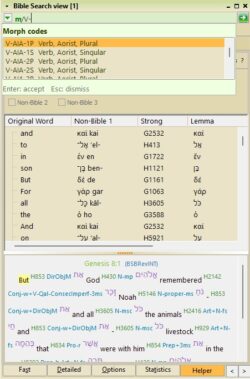
Premium Feature: Full Bible Search Helper
Description:
This is still a work in progress feature and subject to change.
(Note: Premium Features are not needed to use theWord it still maintains existing functionality this just adds special extended features.)
- theWord Version: 7.7.1.1612 or newer
- Bible Background Indexer
- Indexes the Bibles to provide much internal data (Original Word, Strong, Lemma, Morphology). This is required for the use of the Inline Helper, Bible Search Helper.
- .morph files (May be included with their Bibles or this Premium feature (to decide)
- Used for Definitions of the Morphology code and Morphology Builder
- Available through Add Titles in the MorphX section required for full functionality of this feature.
- BSB-MorphX for BSBHebInt, BSBGrkInt, BSBRevInt
- BHS5-ETCBC-MorphX for BHS5/ETCBC
- LXX-PMAC-MorphX for lxx
- RMAC-MorphX for NA28, BYZa, SBLGNT, etc.
- WHMC-MorphX for WHM 4.22
- Bible View – Top translation words: for Bibles with Strong’s #/Lemma
- Bible Search – inline helper (as you type it gives you a list of available terms.)
- Auto complete for Original Words (English, Hebrew, Greek, Main Text of the Bible)
- Auto complete for Strongs (H#, G#)
- Auto complete for Lemma (Hebrew/Greek)
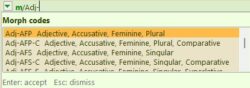
- Auto complete for Morphology with expanded definition:
- BSB-MorphX for BSBHebInt, BSBGrkInt, BSBRevInt
- BHS5-ETCBC-MorphX for BHS5/ETCBC
- LXX-PMAC-MorphX for lxx
- RMAC-MorphX for NA28, BYZa, SBLGNT, etc.
- WHMC-MorphX for WHM 4.22
- Bible Search Helper (accessible via Helper tab in Bible Search)
- Tabs: (Dependent on what is supported in a Bible)
- Combined
- Filter for sorting with advanced sorting
- Column Toggles: Original Word, Strong, Lemma, Morphology, Switch Text 1..3, Non-Bible 1..3, Count
- Column Sorting
- Verse Preview
- highlight of hovered word
- Right Click to go to Verse
- Original Word
- Filter for sorting
- Columns: Key, Original Forms (OT, NT), Count
- Column Sorting
- Dictionary shown on Hover if activated.
- Word preview pane
- Double click to send to Bible search
- Strong’s #
- Filter for sorting
- Columns: Key, Top Words, Count
- Column Sorting
- Dictionary shown on Hover if activated.
- Word preview pane
- Double click to send to Bible search
- Morphology
- Filter for sorting
- Columns: Key, Top Words, Count
- Column Sorting
- Dictionary shown on Hover if activated.
- Word preview pane
- Double click to send to Bible search
- Morphology Builder
- Uses the .morph file to help with building morphology
- Part of speech check boxes for easy building of Morphology.
- Matching codes with definitions.
- Lemma
- Filter for sorting
- Columns: Key, Representative Forms, Count
- Column Sorting.
- Send to Lemma Family
- Dictionary shown on Hover if activated.
- Word preview pane
- Double click to send to Bible search
- Lemma Family
- Enter Lemma Root, Include all forms (substring match): Find Family
- Dictionary shown on Hover if activated.
- Double click to send to Bible search
- Syntax Validator
- Used for help you build good Bible Search syntax (may not stay in release)
- Headings
- Filter forsorting
- Columns: Key, Testament, Count
- Double Click to go to first verse occurence
- Right Click to go to a specific verse
- Footnotes
- Filter, Key, Testament, Count
- Double Click to go to first verse occurence
- Right Click to go to a specific verse
- Switch Text 1…3
- Filter for sorting
- Columns: Key, Testament, Count
- Word preview pane
- Non-Bible 1…3
- Filter for sorting
- Columns: Key, Testament, Count
- Word preview pane
- Preferences
- Settings for Bible Search Helper
New International Commentary: The Book of Ezekiel, Chapters 1–24
PRODUCT HIGHLIGHTS:
DESCRIPTION
To many modern readers the prophecies of Ezekiel are a mystery. This commentary by Daniel Block—Part I of his two-volume study of the whole book of Ezekiel—seeks to answer the questions that contemporary readers bring to the text by examining the language, the message, and the methods of this obscure and often misunderstood Hebrew prophet. The result of twelve years of study, this volume provides an excellent discussion of the background of Ezekiel and offers a verse-by-verse exposition of each literary/prophetic unit in Ezekiel 1–24 that not only makes clear the prophet’s message to his original readers but also shows that Ezekiel’s ancient wisdom and vision are still very much needed by the church in the twenty-first century.
….