
- You cannot add another "Groves-Wheeler Westminster Hebrew morphology" to the cart.
- You cannot add this bundle to the cart.

Exploring the Bible: Habakkuk
Description
Why does a righteous and sovereign God tolerate wrongdoing? How are the divine attributes reconciled with the triumph of the godless? Why do the wicked prosper and rule over the righteous? Why does God raise up ‘ruthless and impetuous’ nations to execute judgement on his own people? These are some of the questions that perplexed Habakkuk, challenged his faith and caused him to question God’s government of the world. And these are some of the questions that still perplex Christians today. Tim Shenton helpfully addresses these points in a clear and substantial exposition of the text of Habakkuk.
I’m very glad this concise gem is on my shelf – it aims to explain each verse of the much-neglected book of Habakkuk and succeeds with superb clarity. This book would prove useful to most readers, since it lends itself to being used as a succinct, non-technical reference to the meaning of this unusual dialogue between God and his puzzled prophet. The author makes many salient links with the rest of Scripture, and excels in opening our eyes to the pictures being painted by the rich word-imagery. Look here for a commentary that combines great brevity with attention to each verse. The message of a just and sovereign God who will ‘in wrath remember mercy’ rings loud and clear, and will bring comfort and strength to many. – Ben Epps (Evangelical Times)
It is an interesting, informative and well written commentary. – Peter Murcott
theWord Features:
- Verse popups
- Verse synchronization
- Fully searchable text
- Commentary link popup can be set in Bible view.
- Easy navigation of topics via topics tree display.
Note: Does not display commentary under Bible text.
Exploring the Bible: Ruth
Description
The Book of Ruth is not the longest of the books of the Bible—it contains only four chapters of text. Yet its significance is immense. Ruth was a young woman from Moab, who came to be part of the covenant community of God’s people. Consequently, she is one of only a handful of women mentioned in the genealogy of Christ: she begins as a stranger to God’s people, and ends up as a mother of God’s Messiah.
This remarkable story is both an example and an illustration of how sinners like us can become partakers of God’s covenant salvation. In Ruth’s story, God’s grace worked in her life, bringing her from a place where she was far away from God, into an inheritance of covenant blessing. And just as she found her rest and satisfaction in her marriage to her redeemer, Boaz, so we find ours through union with the great Redeemer, the Lord Jesus Christ. Read the story of Ruth—and let the power of God’s amazing grace grip your soul!
theWord Features:
- Verse popups
- Verse synchronization
- Fully searchable text
- Commentary link popup can be set in Bible view.
- Easy navigation of topics via topics tree display.
Note: Does not display commentary under Bible text.

Exploring the Bible: 1 and 2 Thessalonians
Description
Do you enjoy reading other people’s correspondence, especially the letters of famous people? This book explores two of the great Apostle Paul’s earliest epistles, those to the Thessalonian church. In them he bares his heart to reveal his love for those he led to Christ, and his concern for their welfare, as he provides instructions to new Christians. We also learn something of his travelling companions, his hopes and fears, his personal concerns, his passionate concern for the truth, and much about the Return of the Lord Jesus Christ. Read this book to learn how to live the Christian life, how to avoid false doctrine, and how the Thessalonians’ zeal and the Apostle’s teaching can be applied to your own life.
Overview of the Book inside theWord
theWord Features:
- Verse popups
- Verse synchronization
- Fully searchable text
- Commentary link popup can be set in Bible view.
- Footnotes
- Easy navigation of topics via topics tree display.
Note: Does not display commentary under Bible text.
New International Commentary: The Books of Haggai and Malachi
PRODUCT HIGHLIGHTS:
- Verse-by-verse commentary
- In-depth discussion of textual and critical matters
- Introductions to each book’s authorship, date, purpose, structure, and theology
- Detailed bibliography
DESCRIPTION
This commentary by Pieter A. Verhoef offers a thorough exegesis and exposition of Haggai and Malachi—two important books of Scripture that, unfortunately, are not only little studied but have sometimes been maligned by contemporary scholarship—and stresses the relevance of these prophets’ messages in terms of continuity and discontinuity for the Christian church.
Verhoef’s introduction to each book elucidates the questions of authorship, style, text, structure, historical background, and message. Making extensive use of structural analysis, Verhoef argues convincingly for the authenticity, unity, and integrity of both books.
Verhoef also brings his knowledge of the ancient Near East, the Old Testament, and past and current biblical scholarship to bear in the commentary proper, and he displays theological acumen and pastoral sensitivity in tailoring his exposition for the student and pastor as well as for the scholar.
….
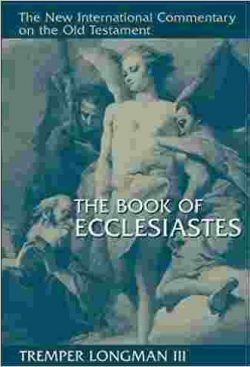
New International Commentary: The Book of Ecclesiastes
PRODUCT HIGHLIGHTS:
- Verse-by-verse commentary
- In-depth discussion of textual and critical matters
- Introductions to each book’s authorship, date, purpose, structure, and theology
- Detailed bibliography
DESCRIPTION
Ecclesiastes is one of the most fascinating—and hauntingly familiar—books of the Old Testament. The sentiments of the main speaker of the book, a person given the name Qohelet, sound incredibly modern. Expressing the uncertainty and anxieties of our own age, he is driven by the question, “Where can we find meaning in the world?”
But while Qohelet’s question resonates with readers today, his answer is shocking. “Meaningless,” says Qohelet, “everything is meaningless.” How does this pessimistic perspective fit into the rest of biblical revelation? In this commentary Tremper Longman III addresses this question by taking a canonical-Christocentric approach to the meaning of Ecclesiastes.
Longman first provides an extensive introduction to Ecclesiastes, exploring such background matters as authorship, language, genre, structure, literary style, and the book’s theological message. He argues that the author of Ecclesiastes is not Solomon, as has been traditionally thought, but a writer who adopts a Solomonic persona. In the verse-by-verse commentary that follows, Longman helps clarify the confusing, sometimes contradictory message of Ecclesiastes by showing that the book should be divided into three sections—a prologue (1:1–11), Qohelet’s autobiographical speech (1:12–12:7), and an epilogue (12:8–14)—and that the frame narrative provided by prologue and epilogue is the key to understanding the message of the book as a whole.
Recommendations:
On John Pipers recommended commentaries list.
….
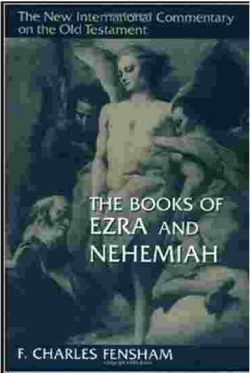
New International Commentary: The Books of Ezra and Nehemiah
PRODUCT HIGHLIGHTS:
- Verse-by-verse commentary
- In-depth discussion of textual and critical matters
- Introductions to each book’s authorship, date, purpose, structure, and theology
- Detailed bibliography
DESCRIPTION
Providing clear exposition based on solid contemporary scholarship, this commentary by F. Charles Fensham examines the books of Ezra and Nehemiah—two books of Scripture that are especially important for understanding the last century of Old Testament Jewish history and for marking the beginnings of Judaism.
A biblical scholar well known for his expertise in ancient Near Eastern studies, especially Ugaritic, Fensham places Ezra and Nehemiah against the ancient Near Eastern environment. In his introduction Fensham discusses the original unity of the books as well as the problems of authorship. He then treats the historical and religious background of the books, taking special note of the development of a Jewish religious society in postexilic times. Text and language are examined next, followed by a thorough bibliography.
The commentary proper, based on Fensham’s own fresh translation of the biblical texts, is richly documented and displays cautious good judgment, willingness to consider different options, a sensible approach, and keen insight into the religious meaning of these key Hebrew texts.
….
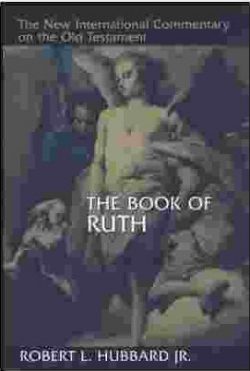
New International Commentary: The Book of Ruth
PRODUCT HIGHLIGHTS:
- Verse-by-verse commentary
- In-depth discussion of textual and critical matters
- Introductions to each book’s authorship, date, purpose, structure, and theology
- Detailed bibliography
DESCRIPTION
The Book of Ruth contains one of the Bible’s best-known and most-loved stories. This major commentary by Robert L. Hubbard shows how the author of Ruth used, with great literary artistry, the story of Ruth and Naomi to convey important theological themes.
In his introduction, Hubbard discusses the issues of text, canonicity, literary criticism, authorship and date, purpose, setting, genre, legal background, and themes and theology, and concludes with an outline of the book and a thorough bibliography. The commentary proper is based on Hubbard’s own fresh translation and is accented by copious footnotes on textual, philological, and literary matters.
Gleaning the best from recent research on Ruth, Hubbard gives the story’s rich literary, grammatical, and theological dimensions a careful, rigorous treatment. He allows for the possibility that the anonymous author was a woman and argues that the narrative itself aims to counter opposition to the Davidic monarchy in Israel and Judah during Solomon’s reign. Throughout, Hubbard’s sensitivity to the literary genius of Ruth’s author and his coherent explication of the outworking of the book’s theological themes make this volume an invaluable tool for anyone desiring to explore the beautiful story of Ruth in depth.
….
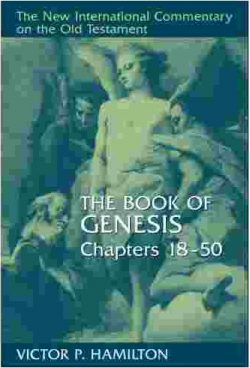
New International Commentary: The Book of Genesis, Chapters 18–50
PRODUCT HIGHLIGHTS:
- Verse-by-verse commentary
- In-depth discussion of textual and critical matters
- Introductions to each book’s authorship, date, purpose, structure, and theology
- Detailed bibliography
DESCRIPTION
The second of Victor P. Hamilton’s two-volume study of Genesis for the NICOT series, this prodigious and scholarly work provides linguistic, literary, and theological commentary on Genesis 18–50. Beginning with Abraham’s reception of the three visitors and his intercession before Yahweh on behalf of Sodom and Gomorrah (Gen. 18) and continuing through the end of the Joseph story (Gen. 50), the overarching theme of Hamilton’s commentary is Yahweh’s faithfulness to his promised word and his covenant commitments to those whom he has chosen to receive that promised word.
Special features of this commentary include its serious attention to important matters of biblical translation from the Hebrew language into English, copious footnotes that direct readers to further and more extensive sources of information, and frequent references to the New Testament writers’ reading of Genesis. Hamilton’s work will greatly benefit scholars, seminarians, and pastors who seek solid exegesis of the Bible’s foundational book.
….
Intermediate Hebrew Package
DESCRIPTION
Equipping the Saints – Discipleship Manual
Description
Russell (“Rusty”) L. Penney B.A., M.A„ Th.D. serves as Senior Pastor at Prairie Valley Baptist Church in Whitney, Texas, He is husband of Joann Squires Penney and father of Joseph, Hannah and Micah. Rusty and Joann have served the Lord as missionaries in Sophia, Bulgaria and Santa Cruz. Bolivia. In Santa Cruz, Rusty served as professor of theology, head of postgraduate studies, and later as President for 7 years at Hebron Theological Seminary. Rusty is the general editor of Overcoming the World Missions Crisis (Kregel, 2001), and contributor to six other books including the silver medallion award winner Dictionary of Premillennial Theology (Kregel, 1996).
“There is no greater need in the church in the United States today than the maturing of believers or, what the Bible calls, ‘making disciples’ (Matt. 28:18-20). Like a newborn babe, true spiritual growth is accompanied by a longing for spiritual food. This volume was written with that great need in mind. Equipping the Saints is ‘food for the soul’. If we lead someone to Christ, it is imperative to help them grow. The Christian life is properly seen as the process of God conforming us to the moral image of Christ (Rom. 8:28-30), and bringing us to ‘share in His holiness’ (Heb. 12:10). This volume gives the believer a foundational understanding of the Christian life. It is time for the church to abandon its unbiblical and debilitating church growth, strategies and return to what God called the church to do; making disciples by equipping the saints (Eph. 4:11-12).”
theWord Features:
- Verse popups
- Fully searchable text
- Footnotes
- Questions and Answers as .pdf files
- Easy navigation of topics via topics tree display.

Exploring the Bible: Ezra
Description
An easy to read guide to the main teaching and events of Ezra. Short chapters make use of alliteration and other catchy stylistic devices to make the key points of the book easily memorable. It traces the homecoming journey of God’s people from bondage to blessing under the leadership of one of Israel’s greatest historical heroes. In a fresh and forthright manner, it treats a diverse range of biblical and theological themes, including the sovereignty of God, the authority of Scripture, and the centrality of Scripture.
theWord Features:
- Verse popups
- Fully searchable text
- Footnotes
- Easy navigation of topics via topics tree display.
Note: Does not display commentary under Bible text.


Exploring the Bible: Esther
Description
The study of the providence of God is both exciting and profitable: it thrills our hearts as we see the wisdom and power of our Heavenly Father; it strengthens our resolve as we marvel at the sufficiency of his grace; and it brings comfort when we do not understand what is happening to us or around us. Esther is all about that marvellous providence. Studying it can deepen our trust, enrich our worship, and intensify our love for our great God. It will reassure us that though we may not always see him, he never looses sight of us. The history of Esther is one of the clearest examples of Paul’s great assertion in Romans 8:28: ‘We know that in all things God works for the good of those who love him.’
theWord Features:
- Verse popups
- Verse synchronization
- Fully searchable text
- Commentary link popup can be set in Bible view.
- Footnotes
- Easy navigation of topics via topics tree display.
Note: Does not display commentary under Bible text.
New International Commentary: The Books of Nahum, Habakkuk and Zephaniah
PRODUCT HIGHLIGHTS:
- Verse-by-verse commentary
- In-depth discussion of textual and critical matters
- Introductions to each book’s authorship, date, purpose, structure, and theology
- Detailed bibliography
DESCRIPTION
The close-knit bond between prophecy and history, according to O. Palmer Robertson, becomes particularly clear through the study of Nahum, Habakkuk, and Zephaniah. As the historical context of their messages is explored, it becomes ever more apparent that biblical history—in addition to providing the context for prophecy—actually embodies and functions as prophecy. The events that occurred to Judah and its neighbors spoke in anticipation of world-shaking circumstances that were yet to come.
In this commentary Robertson combines the insights of biblical theology with a keen awareness of the age in which we live. After first dealing with the relevant background issues of Nahum, Habakkuk, and Zephaniah—redemptive-historical setting, theological perspective, date and authorship, and so on—Robertson applies the care and precision of an exegete and the concern of a pastor to his verse-by-verse exposition of each book. The result is a relevant confrontation with the ancient call to repentance and faith—a confrontation greatly needed in today’s world.
….
New International Commentary: Song of Songs
PRODUCT HIGHLIGHTS:
- Verse-by-verse commentary
- In-depth discussion of textual and critical matters
- Introductions to each book’s authorship, date, purpose, structure, and theology
- Detailed bibliography
DESCRIPTION
Relationships are a wonderful, mysterious, often elusive, sometimes painful part of the human experience. The most intimate of all human relationships, according to the Bible, is that between a husband and a wife. It is no surprise, therefore, that there is a book of the Bible, the Song of Songs, that focuses on this relationship. What is surprising is how little attention is given to the Song of Songs by scholars, by the church, and by readers of the Bible. With this volume Tremper Longman III unpacks for modern people what this ancient love poem says about the male-female relationship—and, by analogy, about God’s love for his people.
Longman’s superb study begins with a thorough introduction to the Song of Songs and its background. Longman discusses the book’s title, authorship, date, literary style, language, structure, cultural milieu, and theological content. He also canvasses the long history of interpretation of the Song of Songs, a history too often characterized by repression of the text. In the commentary itself, Longman structures the Song of Songs according to its twenty-three poetic units and explains its message verse by verse. The exposition is made clearer by Longman’s adoption of an anthropological approach to the text and by his frequent comparisons of the Song of Songs with other ancient Near Eastern literature.
Learned yet highly accessible, innovative yet fully informed by past scholarship, this commentary shows the beautiful Song of Songs to be a timeless celebration of human love and sexuality.
….
New International Commentary: The Book of Job
PRODUCT HIGHLIGHTS:
- Verse-by-verse commentary
- In-depth discussion of textual and critical matters
- Introductions to each book’s authorship, date, purpose, structure, and theology
- Detailed bibliography
DESCRIPTION
This commentary on Job follows in the tradition of the NICOT series by providing an up-to-date evangelical commentary based on thorough scholarship. John E. Hartley deals carefully with this book whose language, text, and theology are not only among the most intriguing in the Old Testament but also among the most difficult to grasp.
Hartley begins with a thorough introduction that treats matters of title and place in the canon, text, language, parallel literature in the ancient Near East and Old Testament, author, date, literary features, poetry, structure and genres, and message. In the commentary proper, Hartley uses his knowledge of the cognate ancient Near Eastern languages and displays extensive research in offering a detailed, verse-by-verse exposition that relates each section of the text to the overall message of the book.
….
New International Commentary: The First Book of Samuel
PRODUCT HIGHLIGHTS:
- Verse-by-verse commentary
- In-depth discussion of textual and critical matters
- Introductions to each book’s authorship, date, purpose, structure, and theology
- Detailed bibliography
DESCRIPTION
David and Goliath, the call of Samuel, the witch of Endor, David and Bathsheba—such biblical stories are well known. But the books of 1 and 2 Samuel, where they are recorded, are among the most difficult books in the Bible. The Hebrew text is widely considered corrupt and sometimes even unintelligible. The social and religious customs are strange and seem to diverge from the tradition of Moses. In this first part of an ambitious two-volume commentary on the books of Samuel, David Toshio Tsumura sheds considerable light on the background of 1 Samuel, looking carefully at the Philistine and Canaanite cultures, as he untangles the difficult Hebrew text.
….
Exploring the Bible: Obadiah
Description
It is said that ‘the best things come in small packages’ and certainly the book of Obadiah bears that out. Weighing in at just twenty-one verses, it is packed full with good things: rich theology, powerful imagery, unsettling challenges to our thinking and living, and huge promise for the triumph of God’s purposes. Obadiah uses key biblical themes such as mountains and brothers, the kingdom of God and the day of the Lord; he challenges his hearers and readers by what he says about malice, pride and complacency; he encourages God’s people with the promise of their sure inheritance; and he raises wider matters of justice, spiritual warfare and the international spread of the kingdom of God. Furthermore, like all the prophets, Obadiah over and over points us to the kindness and justice of the Lord Jesus Christ and to the greatness of what he has done for us.
theWord Features:
Note: No verse synchronization.